RENUKA RAI | Tsirang
Farmers under Tsirang dzongkhag are facing mounting challenges in sustaining their agricultural livelihoods as shortages of mineral fertilizers and water threaten crop production.
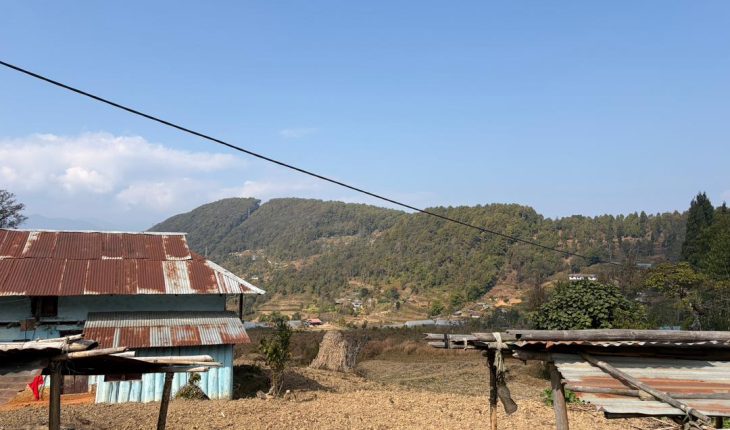
The difficulties are especially pronounced in rural gewogs such as Kilkhorthang and Mendrelgang, where many farmers depend entirely on subsistence and small-scale commercial farming.
For decades, agriculture in Tsirang has been the backbone of local livelihoods, supplying vegetables, fruits, and other crops both within the district and across the country.
But in recent years, farmers have increasingly reported difficulties in accessing essential inputs and resources required for productive farming.
Inevitably, the scarcity of fertilizers and reliable irrigation has emerged as a critical concern, impacting both yields and incomes.
“Finding mineral fertilizers has become a serious problem for us,” said Sharti Subba, 60, from Kilkhorthang. “Even when fertilizers are available, they often arrive late or in very limited quantities, which affects our crops and income.”
Sharti, a lifelong farmer, explained that the delay or lack of fertilizers has forced many families to rely on traditional compost and manure, which, though valuable, cannot match the productivity boost offered by mineral fertilizers.
For older farmers like her, balancing physical labor with the pressure to secure sufficient agricultural inputs has become increasingly strenuous.
The situation is compounded by water shortages, a challenge that has intensified during dry spells and periods of uneven rainfall.
“Access to water is becoming a big challenge for our farms. Without sufficient irrigation, our crops suffer, and it affects our livelihoods,” said NM Sharma, 74, from Mendrelgang.
Sharma, who has spent more than half a century cultivating the fertile soils of Tsirang, noted that traditional water sources such as streams and small irrigation channels are no longer reliable.
Many farmers now face uncertainty about when or how much water will reach their fields, making it difficult to plan sowing or harvest schedules.
Adding to the concern is the increasing unpredictability of the climate.
Sita Rai, 39, from Kilkhorthang, said, “Rainfall patterns have changed a lot in the last decade. Sometimes it rains too little, sometimes too much, and it disrupts our crops. Water availability is becoming uncertain, and it’s hard to know how to manage our farms.”
Sita’s concern highlights the broader impact of climate variability on agricultural planning, as farmers must now navigate not only shortages of inputs but also shifting weather conditions that affect crop growth and soil fertility.
In Rangthaling, another farming community in Tsirang, Nabin Sharma, 45, shared similar concerns about water scarcity and the effects of climate change.
“We used to rely on our streams, and they were sufficient for our fields. Now, the water is lower than before, and the timing of rainfall has changed. It’s not just about quantity; the quality of water is also affected,” he said.
Nabin noted that these changes have forced farmers to adapt their irrigation schedules and reconsider crop choices, adding uncertainty and labor demands to their already challenging work.
The dual challenges of fertilizer scarcity and water shortages, compounded by climate variability, have far-reaching consequences. Nutrient deficiencies in the soil reduce crop resilience, while irregular irrigation can stunt growth or even lead to crop failure.
For smallholder farmers, who often operate with limited savings and face market uncertainties, these challenges threaten not only food security but also household incomes.
In Kilkhorthang, Sharti Subba’s experience is emblematic of the broader struggle. She recounts how, in previous seasons, fertilizers arrived too late to benefit early-planted crops, forcing farmers to either delay sowing or rely on less effective alternatives.
“We want to work hard and improve our yields, but the resources we need are not coming on time,” she said.
Despite these challenges, Sharti continues to cultivate her land, driven by both necessity and a deep connection to her community’s agricultural traditions.
Meanwhile, in Mendrelgang, NM Sharma describes the strain caused by inconsistent water access. Farmers in the area rely on small streams and community-managed irrigation systems to water their crops, but these sources are increasingly affected by drought, sedimentation, and upstream usage.
“Even when it rains, the water doesn’t always reach all our fields,” Sharma explained. “We sometimes have to carry water manually or adjust our planting, which is exhausting and limits the amount we can grow.”
In Rangthaling, Nabin Sharma emphasizes that water scarcity is no longer a seasonal problem but a persistent challenge.
“We try to manage with the water we have, but the streams are not as reliable as before. Sometimes we have to rotate our fields or leave some areas fallow,” he said.
His experience reflects a growing reality for farmers across Tsirang, where traditional irrigation methods are increasingly insufficient to cope with changing climate conditions.
The combined effect of mineral shortages, water scarcity, and climate variability has not only impacted crop yields but also influenced local markets. With fewer vegetables and fruits available, prices fluctuate unpredictably, affecting both producers and consumers.
In addition, many younger farmers, observing the challenges and low returns, are hesitant to continue in agriculture, raising concerns about the sustainability of farming in Tsirang over the long term.
Experts suggest that addressing these challenges requires a multi-pronged approach. Improving supply chains for fertilizers, introducing efficient irrigation systems, and enhancing soil management practices are seen as critical steps.
Additionally, promoting the use of organic or alternative fertilizers, rainwater harvesting, and crop diversification could provide practical solutions for farmers working with limited resources.
Local communities have also started implementing small-scale solutions. In some areas, farmers are working together to clean and maintain irrigation channels, store rainwater, and experiment with organic fertilizers to supplement limited mineral inputs.
These initiatives, though modest, offer hope for farmers like Sharti, Sharma, Sita, and Nabin, who remain committed to their land despite the obstacles.
The issue also underscores the broader challenges faced by Bhutan’s agricultural sector. With climate variability, rising input costs, and an aging farming population, districts like Tsirang are illustrative of the pressures that threaten rural livelihoods across the country.
Without concerted intervention, experts warn, the cycle of limited resources, declining productivity, and economic vulnerability could intensify.
For the farmers themselves, the struggle is immediate and personal. Sharti Subba, despite being 60, rises before dawn to tend her crops, carefully rationing the limited fertilizers she can access.
NM Sharma, at 74, still supervises his irrigation channels and fields, determined to maintain his farm’s productivity despite the obstacles.
Sita Rai monitors rainfall and soil conditions closely, trying to adjust her farming methods to the unpredictable climate, while Nabin Sharma, at 45, continues to seek ways to make irrigation more efficient in Rangthaling.
Their resilience, however, can only go so far without structural support to address the shortages that hinder their work.
As the agricultural season progresses, the eyes of Tsirang’s farmers remain on the skies and on the supply chains that deliver essential inputs.
While their commitment to farming and the community is unwavering, the uncertainty surrounding fertilizers, water, and climate patterns continues to cast a shadow over what has long been one of Bhutan’s most productive and important farming districts.
Until then, farmers like Sharti Subba, NM Sharma, Sita Rai, and Nabin Sharma continue to persevere, embodying the determination and resilience of Bhutan’s rural agricultural communities.