NGAWANG JAMPHEL | Thimphu
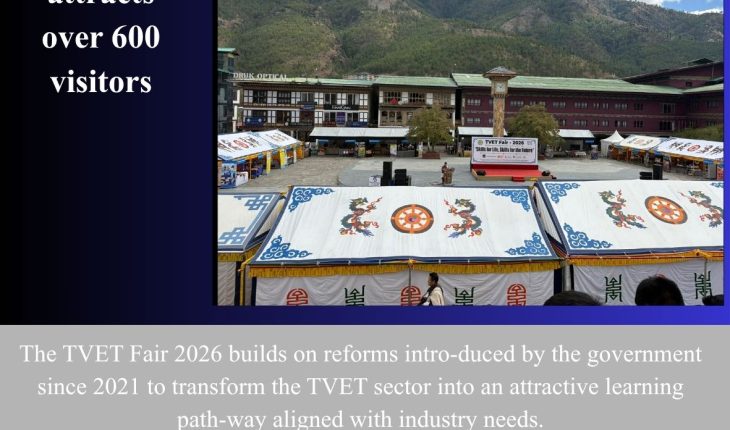
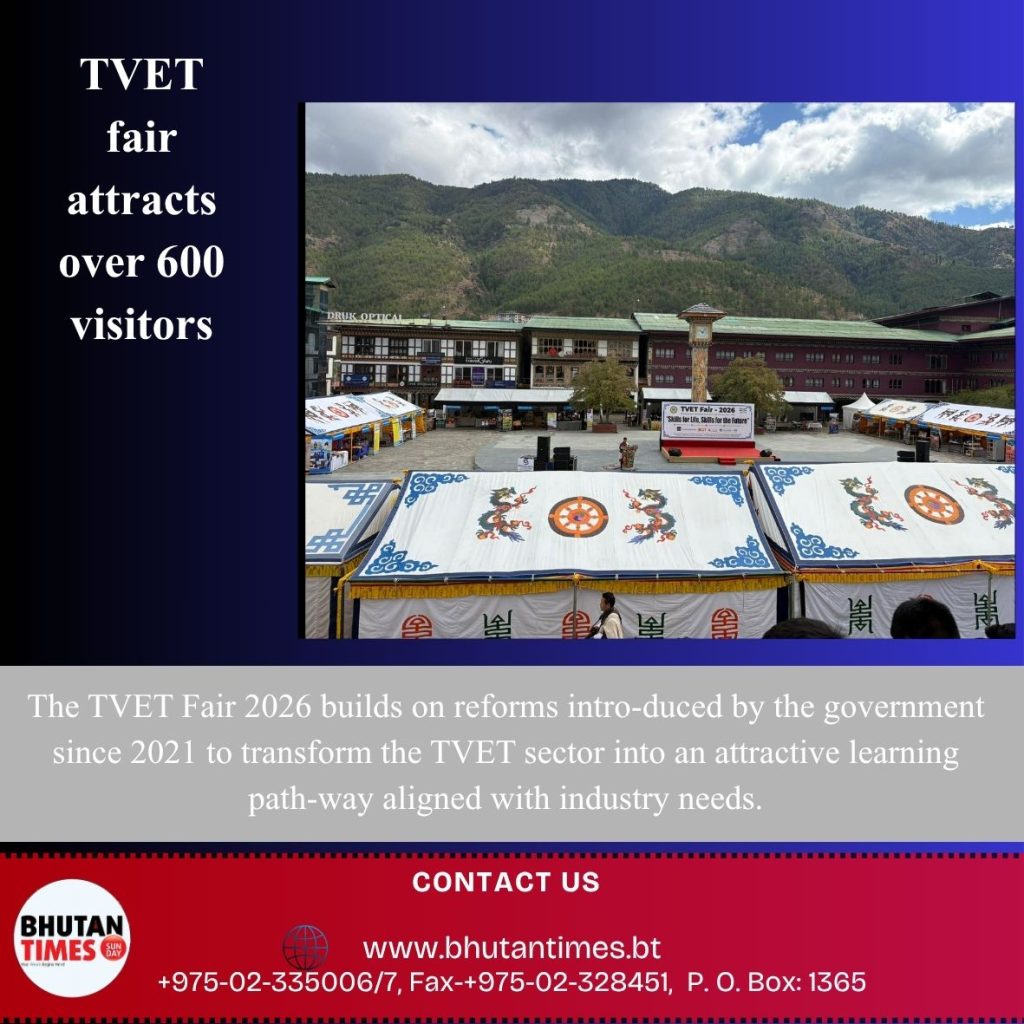
More than 600 visitors, the majority of them students from 18 different schools under Thimphu and Paro, attended the Technical and Vocational Education and Training (TVET) Fair 2026 in Thimphu this week at Clock Tower Square, reflecting growing interest among young people in skills-based learning and employment pathways.
The fair brought together 10 public training institutes and one private institute to showcase a wide range of technical training programs, including post-skilling opportunities and inclusive pathways designed for youth with different educational backgrounds and career interests.
Organized by the Department of Workforce Planning and Skills Development (DWPSD), the event targeted students from Classes IX to Class XII, out-of-school youth, unemployed youth who are not yet job-ready, parents and guardians, policymakers, local government leaders, and members of the media.
The initiative forms part of the government’s broader effort to strengthen awareness about technical education and promote TVET as a strong and meaningful career pathway for Bhutanese youth.
TVET is increasingly being recognized as an essential pillar for building a skilled national workforce capable of supporting Bhutan’s social and economic transformation.
With rapid technological advancement across the world, officials say a dynamic TVET system is necessary to prepare youth with both current and emerging skills required in the 21st-century labour market.
The importance of technical skills training has become even more evident with the implementation of the Gelephu Mindfulness City (GMC) initiative, which is expected to create growing demand for skilled workers across multiple sectors, including construction, services, green technologies, and emerging industries.
Through the fair, students were introduced to how skills training connects directly with employment opportunities and national development priorities.
The TVET Fair 2026 builds on reforms introduced by the government since 2021 to transform the TVET sector into an attractive learning pathway aligned with industry needs.
These reforms include the implementation of the “4P transformation model,” which focuses on improving infrastructure and training environments, strengthening trainers and professionals, modernizing course content, and enhancing systems and service delivery.
The reforms were further strengthened through the Skilling Roadmap under the 13th Five Year Plan launched in 2024.
As part of these initiatives, several new courses aligned with Industry 4.0 technologies and future job markets have been introduced, while training facilities across institutes have been upgraded to meet higher standards.
Thousands of TVET graduates have also entered the labour market and are currently working in different sectors both within Bhutan and abroad.
Despite these improvements, encouraging students and parents to view TVET as a first-choice pathway remains an important challenge, which events like the TVET fair aim to address.
One of the key highlights of the fair was the live demonstrations and interactive “try-a-skill” sessions conducted by participating institutes. These activities allowed students to experience practical learning environments and better understand how technical training translates into real-world employment.
Students explored training opportunities in areas such as electrical installation, plumbing, construction trades, hospitality services, automotive maintenance, and ICT-related programs.
Many participants said the experience helped them better understand career opportunities that they had not previously considered.
Tshering Dekey, a class XI student of YHSS who attended the fair said the exposure changed his perception about technical education.
“Before coming here, I thought TVET was only for students who were not doing well academically. But after seeing the demonstrations, I realized there are many professional opportunities through skills training,” she said.
“I am now interested in learning hospitality skills because I saw how practical and useful the training is. It also gives opportunities to work both inside and outside the country,” said Tshetrim Singye, a first-year college going student under Royal University of Bhutan.
Jigme Loday, who is jobless and stays with his parent said, “We usually hear more about academic routes, but today I understood that skills training can also lead to a stable career and personal growth.”
The fair also brought together key stakeholders from across the skills development ecosystem, including the Department of Employment and Entrepreneurship, the Department of Labour, and the Bhutan Chamber for Commerce and Industry.
Their participation demonstrated how government agencies and industry partners are working together to ensure that skills training programs remain aligned with labour market demands and employment opportunities.
The fair also emphasized the importance of gender equality, inclusivity, and the dignity of skilled work.
Participants were introduced to training pathways designed to support young women, persons with disabilities, and disadvantaged youth to access skills development opportunities.
In addition to entry-level training programs, the fair highlighted post-skilling pathways that allow learners to upgrade their qualifications and continue building their careers through lifelong learning opportunities.
Such initiatives are expected to help young people remain adaptable in a rapidly changing labour market and contribute meaningfully to national development.
The TVET Fair 2026 is being conducted across four regions of the country to ensure wider participation.
Following the western regional event in Thimphu, similar fairs will be held in Bumthang representing the central region, Trashigang covering the eastern region, and Samdrup Jongkhar representing the southern region. Earlier outreach activities also included engagement in places such as Dagana and Trashigang.