
DAWA ZANGMO | Thimphu
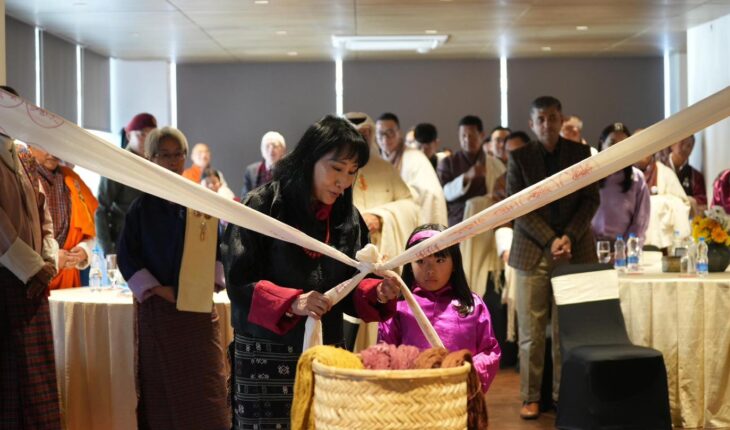
Bhutan’s approach to turning ecological challenges into sustainable livelihood opportunities was highlighted at the launch of a biodiversity-based craft collection by the Youth Development Fund (YDF) in Thimphu on December 7. The launch event was organized in honour of the 70th Birth Anniversary of His Majesty the Fourth Druk Gyalpo.
The event was graced by Her Majesty Gyalyum Tseyring Pem Wangchuck and marked the public debut of products created from the invasive Himalayan Iris clarkei, showcased for the first time in Bhutan.
The collection was presented under YDF’s RADA initiative, a highland community-based project that focuses on converting the invasive iris plant found in Dagala, Thimphu, into natural fiber. The plant has long been identified as a major threat to highland pastures, which are vital for yak-herding communities, as it reduces grazing land and undermines traditional livelihoods.
Project Director, RADA, YDF Yangka, said the spread of the invasive iris poses serious risks to rangelands. “Highland communities face the severe challenge of invasive iris, which degrades the pasture essential to yak-herding livelihoods,” he said.
To address this issue, YDF partnered with Nepal Knotcraft to provide technical training to community members on fibre extraction from the iris stem and the production of functional craft items. Yangka, Project Director said the initiative demonstrates how an environmental problem can be transformed into a viable economic opportunity. “These products represent a circle of renewal, transforming an ecological threat into a source of beauty, skill, and sustainable income,” he said, adding that the project also aims to encourage young people to continue their pastoral traditions.
The products on display were developed through a 10-day hands on workshop conducted with local residents. The materials used included Himalayan iris fiber, bamboo, and yak wool, all sourced locally from the highland areas.
The programme Officer at YDF, Tshering Choden, said the initiative marked the first time such products had been developed in the country. She noted that, in addition to income from yak-herding, communities in Dagala can now access an alternative source of livelihood. She added that the project has the potential to motivate younger generations to remain in their villages rather than migrate elsewhere for employment.
Alongside the Himalayan Iris craft, two other major collections under YDF’s flagship initiatives were also presented: the Bioacoustics Scarf Collection and the Bhutan–Bharat Textile Design.
The Bioacoustics Scarf Collection features an innovative approach to textile design by translating the calls of Bhutan’s iconic and endangered bird species into woven patterns. Bird calls from species such as the raven, black-necked crane, and white vented heron were converted into visual sonograms, which were then integrated into the textile designs.
Describing the concept, during launch Yangka said each scarf captures Bhutan’s living sounds cape. “Each scarf is a visual melody, a sonic map allowing you to wear and project the living sounds cape that forms the heartbeat of Gross National Happiness,” he said.
The Bhutan–Bharat Textile Design initiative represents a cross-cultural collaboration between Bhutan and India. The project combines traditional Indian weaving techniques with Bhutanese natural dyes and indigenous motifs, resulting in a distinctive textile collection.
Developed through a special YDF programme, the initiative facilitated knowledge exchange between master artisans from Kutch in Gujarat, India, and Bhutanese weavers. Indian artisans shared loom technology and technical expertise, while Bhutanese participants contributed traditional dyeing practices and design elements.
According to YDF, the collaboration has resulted in high-value textiles that support livelihood creation and strengthen economic opportunities, particularly for women and youth.
In addition to the three main collections, the event featured prototype displays showcasing various stages of craft development. These included demonstrations of natural dyeing processes, fiber extraction techniques, and design research undertaken by young Bhutanese artisans and designers as part of YDF-supported programmes.
The biodiversity-based craft initiative reflects a broader commitment to integrating environmental conservation with youth empowerment and community development. By creating marketable products from locally available and ecologically challenging resources, the programme seeks to promote sustainable livelihoods while addressing environmental degradation.
According to the organizers, the event also served as a tribute to the vision of His Majesty the Fourth Druk Gyalpo, particularly his emphasis on environmental stewardship, cultural preservation, and inclusive prosperity. Through initiatives such as RADA and the organization’s flagship craft collections, YDF aims to continue advancing approaches that balance conservation with economic resilience across Bhutan’s communities.
The launch brought together artisans, development partners, policymakers, and members of the public, highlighting how traditional knowledge, innovation, and collaboration can contribute to sustainable development while preserving Bhutan’s cultural and natural heritage.