However, the site at Pongchula in Mongar is deemed unsuitable
TIL BDR GHALLEY | Thimphu
The Ministry of Infrastructure and Transport (MoIT) has confirmed that the proposed domestic airports at Yoeseltse in Samtse and Samrang in Samdrup Jonkhar are feasible for development.
However, in contrast, the proposed Pongchula site in Mongar has been ruled out due to technical constraints.
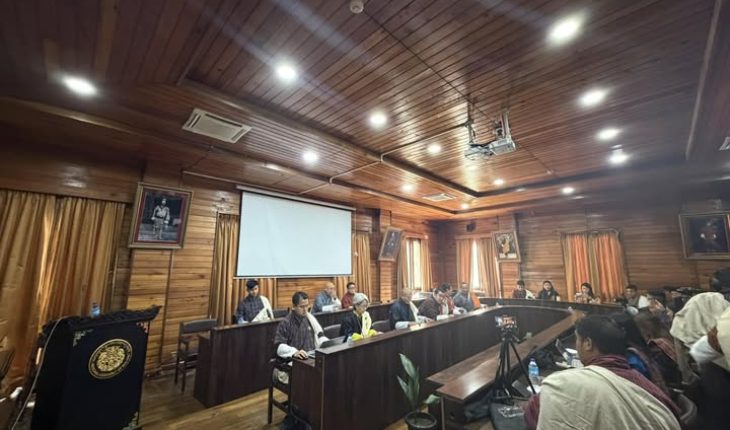
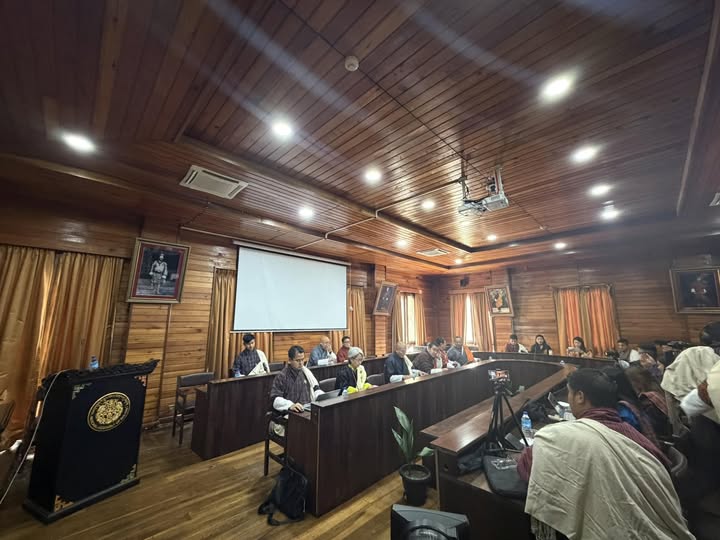
During the meet the press session held on 6th March, the cabinet secretary Kesang Deki emphasized that domestic airport projects are a key part of the government’s strategy to strengthen regional connectivity, promote economic growth, and ensure balanced national development.
“Infrastructure initiatives of this scale require comprehensive technical, environmental, and financial due diligence,” the cabinet secretary said, noting that all projects continue to progress according to plan.
The proposed airports at Yoeseltse and Samrang have successfully passed critical technical assessments.
Further, with support from the Bhutan Standards Bureau (BSB), geotechnical studies were completed in September 2025.
These evaluations assessed soil composition, ground stability, and other essential factors necessary to ensure safe airport construction.
Complementing these studies, detailed topographical surveys were finalized in August 2025 in collaboration with the National Land Commission.
The surveys mapped terrain elevations, slopes, and natural obstacles, providing crucial data for runway design, airport layout, and supporting infrastructure.
Following these assessments, the Department of Air Transport prepared draft detailed designs along with corresponding cost estimates. These reports will be submitted to the government for review, guiding decisions on project approval, funding allocation, and implementation timelines.
The cabinet secretary said the Ministry has determined that both Yoeseltse and Samrang sites are feasible for development following careful technical and topographical evaluations.
“The confirmation marks a significant step forward in the country’s domestic aviation plans, ensuring that these airports can be developed in line with technical, operational, and safety standards,” she added.
The reassessment of the proposed Pongchula site in Mongar revealed operational limitations that prevent further development. The site’s irregular ridge formation restricts the maximum achievable runway length to approximately 1,000 meters, even after potential modifications.
This length is below the minimum operational requirements for aircraft such as the ATR 42-600 and the PC-24, which require runways between 1,200 and 1,700 meters for safe operations.
While meteorological conditions and other operational factors are manageable, the Ministry concluded that the site is not suitable for further study or development.
“We are looking at other sites that can support national aviation needs. We don’t want to compromise on safety or limit our future fleet by building an undersized runway,” the cabinet secretary said.
Domestic airports are considered a critical component of Bhutan’s national infrastructure strategy. They are expected to improve regional connectivity, facilitate trade, promote tourism, and provide remote communities with better access to goods and essential services.
The Secretary highlighted that all domestic airport projects follow national technical standards and international aviation safety requirements.
From site selection to runway design and operational assessment, each stage of planning undergoes meticulous review to ensure safety, efficiency, and environmental sustainability.
“The Ministry remains committed to ensuring that domestic airport projects are technically viable,” the cabinet secretary said, stressing that rigorous assessments continue before construction begins.
For Yoeseltse and Samrang, the submission of detailed designs and cost estimates to the government represents a key milestone. These reports will guide decisions on project approval, funding allocation, and construction timelines.
For Pongchula, no further studies or development will proceed, reflecting the Ministry’s focus on operational feasibility and adherence to safety standards.
The cabinet secretary concluded by reaffirming that domestic airport development remains a priority under the government’s infrastructure strategy.
Ongoing assessments aim to ensure that all projects meet technical, environmental, and operational standards while supporting regional development and national growth objectives.