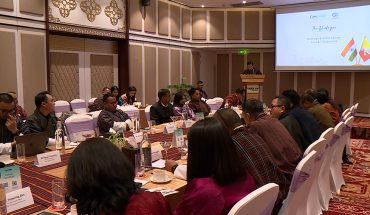

Despite surge in entrepreneurial aspirations among young Bhutanese, data show weak business progression and persistent disparities between men and women
TIL BDR GHALLEY | Thimphu
Youth entrepreneurship in Bhutan has expanded rapidly in recent years as young people respond to limited wage employment opportunities, but new data show that rising participation has not translated into sustained business growth or equitable income outcomes.
According to the Asian Development Bank (ADB), the number of potential entrepreneurs increased sevenfold between 2018 and 2022, with individuals aged 15 to 24 forming the largest group of aspiring entrepreneurs.
The surge reflects a growing reliance on self-employment as an alternative entry point into the labor market amid weak job creation and constrained youth employment prospects.
For 24-year-old Sonam Wangmo, who runs a small home-based bakery in Thimphu, entrepreneurship began as a necessity rather than a choice.
“I applied for jobs for almost a year after graduation,” she said. “When nothing worked out, I decided to start baking from home just to earn something.”
The ADB report finds that such experiences are common. While entrepreneurial entry has increased, progression remains limited.
Individuals aged 25 to 34 account for more than one-third of potential, nascent, and new entrepreneurs, yet represent less than one-quarter of established business owners.
Among younger youth, participation drops sharply after the aspiration stage, pointing to significant barriers in converting intent into sustainable enterprises.
ADB attributes weak progression to limited access to finance, lack of business experience, weak mentoring networks, and insufficient support beyond the start-up phase. As a result, most youth-led ventures remain small-scale and short-lived.
Birkha Dhan, 29, who runs a furniture shop in Thimphu, said early enthusiasm often fades once initial savings are exhausted.
“Starting was easy with small loans and family support,” he said. “But growing the business is difficult. Banks want collateral, and there is very little guidance once you pass the start-up stage.”
These experiences mirror ADB findings that support mechanisms in Bhutan remain heavily focused on ideation and start-up creation, with limited assistance for enterprise consolidation, scale-up, and market expansion.
The report distinguishes between necessity-driven and opportunity-driven entrepreneurship. Necessity entrepreneurs enter self-employment due to limited wage employment options, while opportunity entrepreneurs pursue ventures based on market potential and growth prospects.
From 2018 to 2022, youth entrepreneurship in Bhutan remained predominantly necessity-driven.
Across all years analyzed, opportunity entrepreneurs consistently earned more than necessity entrepreneurs, reflecting differences in sectoral concentration and business models.
For many young entrepreneurs, necessity-driven businesses provide income but limited growth.
“This business pays my rent, but I don’t see it growing,” said Sonam Wangmo. “It is more about survival than expansion.”
Gender-disaggregated data reveal substantial disparities in entrepreneurial outcomes, even as participation rates between men and women converge at early stages.
By 2022, average monthly earnings of female opportunity entrepreneurs reached Nu33,849 nearly double their 2018 levels and higher than earnings recorded by male opportunity entrepreneurs.
In contrast, female necessity entrepreneurs remained among the lowest earners across all employment categories.
Women entrepreneurs are disproportionately concentrated in low-paying service activities and remain underrepresented in manufacturing and other higher-growth sectors, even as businesses mature.
Pema Lhamo, 27, who operates a small tailoring unit in capital, said sectoral choices are often shaped by access and expectations.
“Most women start businesses they can manage from home,” she said. “Getting into manufacturing or bigger ventures needs capital, space, and confidence that many of us don’t have.”
ADB notes that such sectoral segregation contributes directly to income inequality and limits productivity gains among women-led enterprises.
The report also highlights persistent decent work deficits among young entrepreneurs, particularly women. Compared to salaried employees, entrepreneurs—especially at early stages—are more likely to experience working poverty, low pay, and long working hours.
Working poverty rates among female entrepreneurs are significantly higher than among female employees.
Although overtime work tends to decline as businesses mature, productivity gains diminish when weekly working hours exceed 40 hours, indicating limits to growth driven by extended labor alone.
“I work more hours now than when I was employed,” said Birkha Dhan. “But the income is not stable. Some months are good, others are not.”
The combined trends suggest a structural challenge: high entry into entrepreneurship coexists with low transition into sustainable, income-generating enterprises.
While youth entrepreneurship is expanding in response to labor market constraints, most ventures remain necessity-driven, small-scale, and vulnerable.
The report concludes that improving quality of youth entrepreneurship will be critical to strengthening entrepreneurship’s contribution to employment creation and income growth.