TASHI DEKI | Thimphu
The Government of India (GoI) has released Nu 613.675 million to Bhutan for the implementation of renewable energy projects, disaster management infrastructure and budgetary support under the 13th Five-Year Plan.
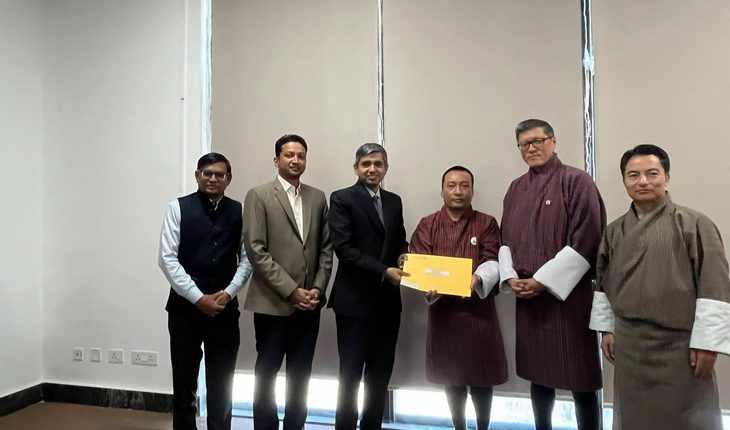
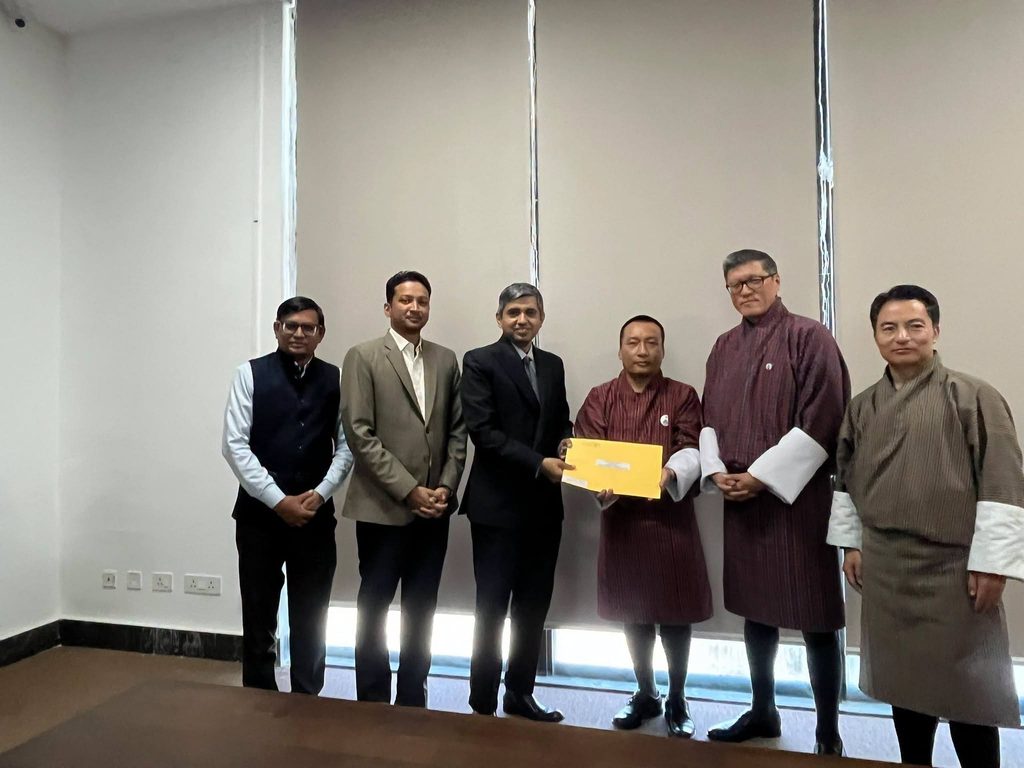
The funding was handed over through cheques to the Ministry of Finance during the 20th Monthly Coordination Meeting between the Royal Government of Bhutan and the Embassy of India in Thimphu on November 19.
The meeting reviewed the progress of development projects supported by the GoI under the 13th Five-Year Plan and discussed their implementation across different sectors.
Of the total amount released, Nu 310.175 million has been allocated for solar and wind energy projects, which have a total estimated cost of Nu 1 billion.
Another Nu 53.5 million has been released for the construction and operationalisation of the National Emergency Operations Centre (NEOC). The facility, with a total project cost of Nu 308 million, is being developed under the Department of Local Governance and Disaster Management, Ministry of Home Affairs. The centre is intended to strengthen the country’s capacity to coordinate emergency responses and disaster management.
The remaining Nu 250 million represents the 10th tranche of GoI’s budgetary support to the Royal Government of Bhutan.
The meeting also reviewed progress on several major infrastructure and development initiatives, including road connectivity, irrigation, urban transport, water supply and public spaces.
Under the Dzongkhag Road improvement project, construction is underway on 67 roads and 11 bridges across all 20 Dzongkhags. The initiative is expected to improve connectivity within districts and support the movement of people and goods.
Work is also progressing on five new inter-Dzongkhag Road alignments to improve connectivity between different parts of the country. These include Gayzamchu in Bumthang to Autsho in Lhuentse, Bardo in Zhemgang to Wama in Mongar, Chhukha to Dagana, Chumey in Bumthang to Shingkhar in Zhemgang, and Helela in Thimphu to Nahi in Wangdue Phodrang.
Another road project under review is the improvement of the Haa-Samtse Secondary National Highway along the Latshona-Phutsena stretch. The project aims to improve road alignment and make travel safer and smoother for vehicles. It is also expected to reduce travel time and vehicle operating costs.
In the agriculture sector, 24 irrigation schemes are being developed across 17 Dzongkhags to improve irrigation infrastructure and support agricultural activities.
Urban development in the National Capital Region is another major component of India’s development assistance. The Transport and Mobility Improvement project covers several infrastructure works, including bridges at Debsi and Lungtenzampa, a bus corridor, a freight logistics hub, an expressway, secondary roads, drainage systems and improvements to footpaths and taxi ranks.
The project also includes road signage and capacity-building activities aimed at improving the overall transport system.
Meanwhile, efforts to strengthen access to reliable water supply are being undertaken through the 24-hour water supply project in Thromde and peri-urban areas. The initiative covers several locations, including Dechencholing, Changzamtok, Chamgang-Simtokha, Jungshina, Kawajangsa, Lubding and Motithang.
The project also includes the procurement and installation of smart water management systems to improve water distribution and management.
In Thimphu, the Green Infrastructure and Open Spaces project includes the redevelopment of Clock Tower Square and the construction of parks at Tshalumaphey, Olakha and City Centre, including Zandopelri. It also covers the development of the Thimphu Ecological Park, neighbourhood parks and infrastructure improvements at Changlimithang Stadium, Centenary Park and Coronation Park.
The meeting further reviewed the Project Management, Monitoring and Evaluation initiative, which includes the development of a Project Monitoring Portal to strengthen the monitoring and evaluation of development projects.
Sports infrastructure was also discussed, particularly the construction of sports facilities and exchange programmes. The cricket infrastructure project, which incorporates the spillover project for a multipurpose cricket stadium, has a total estimated cost of Nu 867 million.
The initiative comes as cricket continues to gain popularity across Bhutan, with development activities such as training, infrastructure development and tournaments expanding to different parts of the country, including remote communities.
The 20th coordination meeting was co-chaired by the Director General of the Department of Macro-Fiscal and Development Finance under the Ministry of Finance and the Deputy Chief of Mission of the Embassy of India in Thimphu. Officials from the Indian Embassy and various Bhutanese ministries and agencies also attended the meeting.
The monthly coordination meetings provide a platform for the two governments to review the implementation of development cooperation projects and address issues related to their progress under Bhutan’s 13th Five-Year Plan.