KARMA CHOGYAL YOEZER | Thimphu
In many Bhutanese villages, mornings still begin in the same familiar way. An elderly parent wakes before sunrise, lights the stove, prepares tea, and steps outside to check the vegetable garden or feed the cattle. The house may once have been full of children, grandchildren and relatives moving in and out throughout the day. Today, in many homes, the sound is quieter.
Migration is changing more than where Bhutanese people live and work. It is also changing how families care for their ageing parents. Young people are moving to Thimphu, other towns and overseas in search of education, employment and better income. For many families, this movement has opened new opportunities. But for elderly parents who remain in the village, it can also mean loneliness, heavier daily responsibilities and uncertainty over who will look after them in old age.
Family care has always been an important part of Bhutanese life. Parents raise their children with the hope that, when they grow old, their children will be there for them. This support is not only financial. It is also about presence, gratitude, respect and the Bhutanese value of caring for one’s parents. But as more families live apart, this old system of care is being quietly tested.
“I am happy that my children are doing well, but the house feels empty most of the time,” said an elderly resident of Thimphu. “When I fall sick, I do not want to disturb them because they are busy with work.”
Tshering Dhendup, a 63 years old resident, said old age feels different when children are no longer close by. “Earlier, the house was always full. My children and grandchildren were around, and even small problems felt easier because someone was nearby. Now they call me and send money, but when I am sick or need help with daily work, I feel the distance. I do not blame them because they are working for their future, but old age becomes difficult when there is no one at home.”
The issue is becoming more serious as Bhutan’s elderly population grows. An ageing society is defined as one where people aged 65 years and above make up at least seven percent of the total population. According to the Population Projections for Bhutan 2017–2047, Bhutan is expected to cross this threshold in 2027, with older persons projected to make up 7.4 percent of the population. By 2047, this figure is expected to rise to around 13.4 percent, bringing the country close to becoming an aged society. This raises a difficult question for many families and communities: if more young people leave home, who will care for ageing parents?
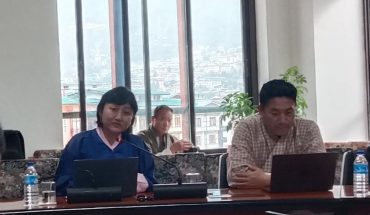
Tshering Namgay, executive director of Royal Services for Senior Citizen, said the concern is especially important for older people who are outside formal pension systems. “The social protection system is weak because the universal coverage of the pension system is lacking currently,” he said.
In rural communities, the problem is often more visible. Empty houses and fallow land show how much younger generations have moved away. Elderly residents are left to manage homes, fields, livestock and religious obligations on their own. Some receive money from children working elsewhere, but money does not always solve everyday needs. An older person who has difficulty walking, going to the health centre, collecting firewood or managing household chores may need more than monthly support through mobile banking.
The care gap is not always the result of neglect. Many sons and daughters who live away from home continue to support their parents as much as they can. They send money, call regularly and return home during emergencies. But for those working in towns or abroad, the emotional burden can be heavy. They often carry the guilt of being away while also feeling pressure to earn and support the family.
Tandin Wangchuk, a 26-year-old Bhutanese youth living in Australia, said migration was not an easy choice. “I came here because I wanted to support my parents better. But sometimes I worry that I am giving them money while taking away my presence.”
For many families, this has become the new contradiction of migration. The same movement that improves household income can weaken the daily support that elderly parents depend on. In the past, care was shared within extended families and neighbours. Today, smaller families, busy urban lives and overseas migration have changed that arrangement.
Health workers also see the impact. Elderly people often need regular check-ups, medicines, mobility support and emotional care. For those living alone, even a minor illness can become serious if there is no one nearby to notice the problem early or take them to a health facility.
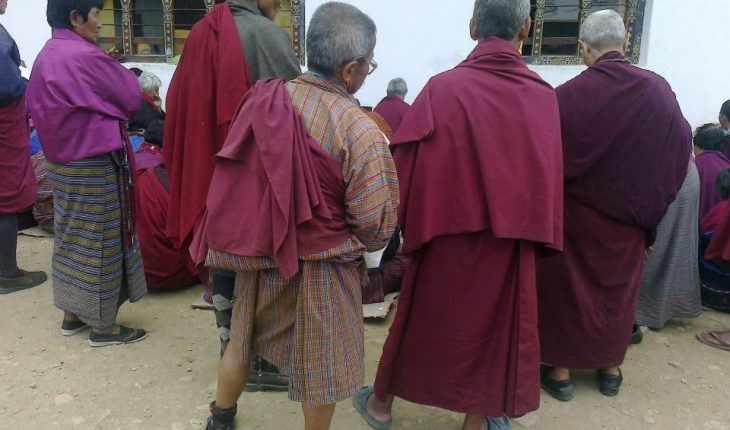
Loneliness is harder to measure, but it is strongly felt. In Bhutanese culture, old age is often associated with prayer, family, grandchildren and community life. When children are away and villages become quiet, old age can become isolating. Some elderly people may not openly complain because they do not want to sound ungrateful or become a burden to their children.
At the same time, the issue should not be reduced to blaming young people. Many leave because of limited opportunities, rising living costs and the need to build a better future for themselves and their families. The challenge, therefore, is not only a private family matter. It is also becoming a wider social and policy concern.
As Bhutan prepares for an ageing society, care for older citizens may need to move beyond being seen only as a family responsibility. Families will remain central, but communities, civil society organisations and the state may also have to play a stronger role. This could include better home-based care services, regular health follow-ups, elderly day-care centres, transport support to health facilities and stronger assistance for older people who do not have reliable family care.
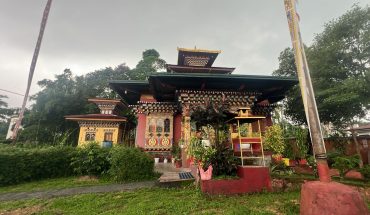
Tshering Namgay said one of the major steps has been the launch of the national policy for senior citizens. “One of the greatest achievements of CSSR is launching the NATIONAL POLICY FOR SENIOR CITIZENS,” he said. “Moreover, we have collaborated with one of the temples in Begena to establish a retreat centre, and currently it is housing 17 elderly people.” “The elderlies are kept engaged in religious activities, there are some with diminishing mental health who we are trying our best to help” he added.
However, he said civil society organisations working with older people continue to face practical challenges. “One of the main issues that the CSO faces is financial constraints because we have to mobilise the funds ourselves,” he said. “With a limited budget, it is hard to provide services. Another issue is the lack of experts in that field because such trainings have not been provided before. With that being said, our traditional family system is vanishing with time.”
For now, many elderly parents continue to wait quietly in their homes, proud of their children’s achievements but uncertain about their own future care. Their children may be studying, working in towns or building new lives abroad. The bond remains strong, but distance has changed what care looks like.
Tshering Namgay said care for elderly people must not be understood only in financial terms. “Money may provide you with some comfort, but it cannot buy compassion, presence and culture rooted in our core,” he said. “Let us uphold these values, keep our traditional practices alive and continue taking care of elderly people.”