
TIL BDR GHALLEY | Thimphu
Bhutan’s small ruminant farming sector is facing mounting pressure as ageing farmers abandon livestock rearing, younger generations turn away from the trade and persistent constraints undermine production, with the country’s sheep population falling to fewer than 10,000.
Wildlife predation, labour shortages and limited fodder were among the major challenges affecting sheep farming, while inadequate breeding programmes and limited institutional support continued to constrain goat production.
At a regional workshop on small ruminant value chains in South Asia, Dr Min Prasad Timsina, Specialist with the Department of Livestock under the Ministry of Agriculture and Livestock, identified these challenges as key factors affecting Bhutan’s sheep and goat farming communities.
“Most of the farmers who are now ageing, they have left this sheep farming, and the younger generation would not like to go for sheep farming,” he said.
Sheep farming requires regular herding and considerable manpower, making it increasingly difficult for ageing farmers to continue the practice.
Bhutan has four indigenous sheep breed types conserved through the National Sheep Centre, which produces breeding animals and supplies them to farming communities. However, the introduction of improved breeds has remained limited.
“More importantly, the genetic resources have also been deteriorating because we only have a native sheep breed, and we could not introduce improved sheep breeds in order to increase productivity,” he said.
Goat farming faces a different set of constraints. Although goats can survive under difficult conditions and with limited fodder, Bhutan lacks improved goat breeds and a dedicated centre for goat breeding and production.
Most farmers rear Black Bengal goats, which are popular for meat and fetch a premium market price. The department imported nearly 100 Beetal goats from India in 2016/17, but more than 30 died due to climate-related diseases and old age.
The ministry planned to introduce improved sheep breeds for wool and milk production and improved goat breeds for meat and milk.
Dr Min Prasad Timsina said regional cooperation and learning from countries such as India, Bangladesh and Nepal, which had made progress in livestock breeding, production and value chains, could benefit Bhutan.
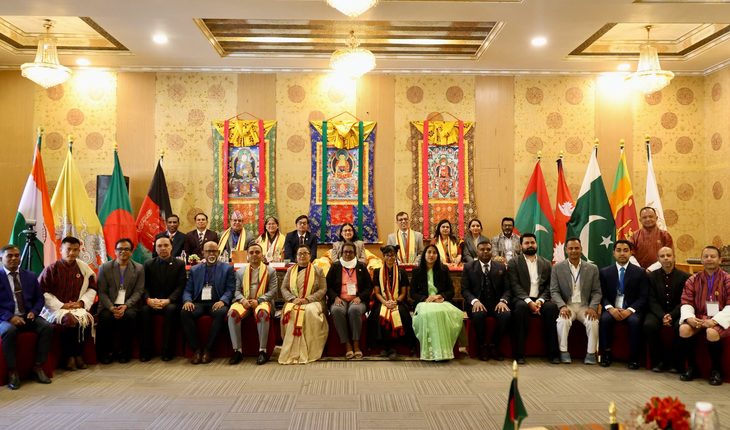
The two-day SAARC regional workshop on “Small Ruminant Value Chains for Food Security in South Asia” brought together participants to discuss ways to strengthen sheep and goat production and management systems, support rural livelihoods, improve food and nutrition security, and promote sustainable rangeland management and pastoralist communities across the region.
In his opening remarks, Minister of Agriculture and Livestock Younten Phuntsho said sheep and goats had sustained Bhutanese farming families for generations. Sheep rearing in the central valleys and eastern highlands had supplied wool for traditional weaving, while goats in warmer southern regions provided meat, manure and supplementary income.
He said indigenous livestock breeds were valuable genetic resources shaped by generations of adaptation and farmers’ knowledge. However, preserving traditional practices alone would not be enough to sustain livelihoods.
“Traditions cannot sustain livelihoods. Our challenge today is not simply to preserve sheep or goats, but to make rearing them economically worthwhile,” the minister said.
For Bhutan, our 13th year plan aims to transform our agriculture sector, strengthen food security effort and nutrition security, raise farmers’ income, and create new economic opportunities.
The minister called for improvements in breeding, feeding and animal health, alongside stronger market linkages through organised producer groups and cooperatives, better processing and quality standards. He also highlighted the need to strengthen the skills, access to finance and marketing capacity of women and young people to help them develop livestock-based enterprises.
“Let us remember more animals always do not mean more income. A smaller, healthier and better managed herd can deliver better returns,” he said.
Regional participants also discussed common challenges affecting small ruminant production, including feed availability, animal health, low productivity, limited market access, inadequate processing facilities and insufficient investment.
Dr Md. Golam Mahboob, Director of the SAARC Agricultural Centre, said livestock played an important role in food and nutrition security, employment generation, income improvement and poverty reduction across South Asia.
Bangladesh Ambassador to Bhutan M.S. Maleka Parveen highlighted rising agricultural input costs, market uncertainty, rural poverty and extreme weather as challenges facing farmers. She emphasised the importance of improving breeds, animal health, scientific feeding and management practices, as well as market access and value addition.
Tirtha Raj Regmi, Country Director of Heifer International Nepal, stressed the importance of research, farmer organisations and policies that respond to the needs of smallholder farmers.
“Research and innovation is one area. Strengthening farmer organisations is another area. Making farmer-friendly, smallholder-friendly policy is another area. So in these areas we can work together, and we can bring changes for the smallholder farmers of the country,” he said.
Md. Younus Ali, Senior Programme Specialist at the SAARC Agricultural Centre in Bangladesh, said small ruminant farming could help reduce poverty when farmers received support in the form of improved breeds, vaccination, feed and technical assistance.
“If you provide that support, I think farmers’ income will increase, and poverty will also be reduced,” he said.
Participants also highlighted fragmented supply chains and the role of intermediaries in reducing the prices received by producers.
Baby Rani Karmakar, Joint Secretary of Bangladesh’s Ministry of Fisheries and Livestock, said small-scale goat farming could create employment and encourage rural entrepreneurship.
“To achieve this, farmers need support to improve their services and sustain production along the small ruminant value chain,” she said.
Country presentations from Bangladesh, Bhutan, Maldives, Nepal and Sri Lanka informed discussions on livestock productivity, breeding, animal health, sustainable rangeland management, and access to markets and finance. Participants also explored ways to increase the participation of women and young people in livestock production, processing and marketing.
Held in observance of the International Year of Rangelands and Pastoralists 2026, the workshop built on the priorities of the 2025 Joint Communiqué and aimed to develop a framework for regional cooperation on sheep and goat value chains.
Discussions covered disease control, genetic improvement, climate-resilient fodder systems, digital tools, value addition, climate financing and regional knowledge-sharing.
The discussions highlighted the need to translate regional experience and cooperation into practical support for farmers.
Among others, organizers said addressing labour shortages, improving animal health and breeding, strengthening fodder systems and connecting producers to markets will be important to making sheep and goat rearing economically viable for existing farmers and the next generation.