Yoeja Goes Digital
The echoes of Om Mani Padme Hung that resound over the hills and valleys of Bhutan will now reverberate around the digital world. And digital chyem(rosary), on the screen, ensures consistent and accurate recitation of the chant, preserving an accurate lifetime count. In today’s screen age, the spiritual practice of Yoeja has moved online, with the times.
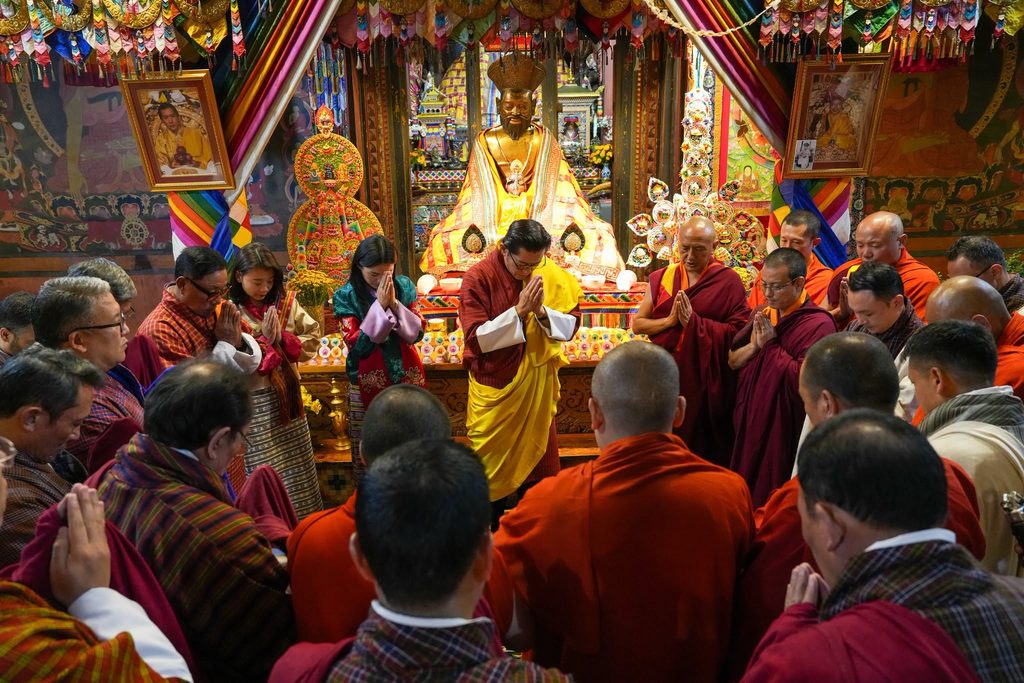
On October 22, 2026, His Majesty The King logged into yoeja.com, on his mobile phone, and became the first person to enter a digital prayer room. His Majesty recited the six-syllable mantra widely known across the Buddhist world, launching yoeja.com rotating the chyem with each touch of the screen. On the digital platform, yoeja.com will now record and consolidate the chant across the globe.
Bhutan’s transformation continues to find new depths.
A Sacred Tradition
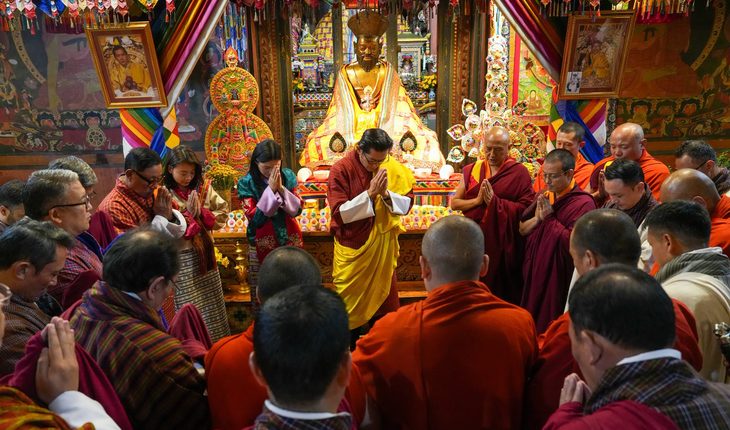
Over the centuries, Bhutan nurtured the tradition of sustaining the sangha – the religious system and spiritual community – with voluntary offerings by the people. This is Yoeja – individual devotees, families, communities, institutions making prayer offerings of cash and kind, including services, to Buddhist masters and practitioners, to temples and monasteries, as well as to lay and formally established monk bodies.
Yoeja is Buddhism in practice, undiminished and unbroken. It came to Bhutan in the seventh century with the founding of Kyichu Lhakhang and Jambay Lhakhang, the oldest monasteries in the country. In the 17th century, Zhabdrung Ngawang Namgyel institutionalised this tradition by establishing the Zhung Dratshang (Central Monk Body) with the mandate of ensuring the spiritual health of the nation. With spiritual origins connected far back in time, the Wangchuck dynasty continues to safeguard the practices that define the Bhutanese identity.
The prayers of the Zhung Dratshang and devotees are Bhutan’s “24×7” culture, offered for the protection and wellbeing of Bhutan and the world. Generation after generation, Bhutanese families have provided for the continuity of these prayers.
When His Majesty The King stepped into the digital prayer room on October 22, 2026, the living tradition of Yoeja moved into a new age, extending and expanding a vital human practice for the future.
What is Yoeja?
We know that meaning is often lost in translation. Yoeja – the offering of alms -is not charity, not donation, not even giving. There is different terminology, in different languages, for this profound concept but it is a living tradition in Bhutan.
Yoeja is an act that bestows on the one making an offering the opportunity to generate merit. Merit is not just for oneself but for all involved; in fact, for all sentient beings. The benefit of this gesture is not blessing on those involved but shared with all.
Masters and practitioners in Bhutan stress the concept of tendrel, an auspicious connection between those who pray, those who make the prayer possible, and the object or issues of the prayers, ultimately benefitting all life forms.
It is inevitable that stories and events focus on Kings, on the powerful, on the wealthy, on the famous. In Bhutan, with the influence of Buddhist teachings, generosity is not measured by the material value of a gift but by its value to and the intention of the one making the offering. Buddhist scriptures contain numerous teachings of the Buddha himself and known masters explaining to disciples and students the comparable value of wealthy persons offering treasures, property, and services with the well-intended offering of a simple flower by a poor person.
Yoeja has purpose. It supports governance systems, preserves human culture, and promotes human values. It keeps mindfulness alive. It reminds us of what is truly precious in life… This is the essence and beauty of Yoeja.
108 as Yoeja
It is deeply significant that the Royal focus directs us towards the practice of Yoeja today. We are on the eve of a spiritually and historically significant Yojana phenomenon – the raising of 108 Jangchub Chortens, a Royal vision that is defining the transformation of Bhutan into a new era. On November 1, 2026, 108 Jangchub Chortens will be constructed in Gelephu Mindfulness City (GMC), an offering of peace and wellbeing from Bhutan to the world.
The tradition of Yoeja has grown through times when Bhutan became a nation, to the founding and history of Monarchy, to a modern-day tech-savvy Democratic Constitutional Monarchy. The November 1 event opens to the world a tradition that has evolved through the centuries, to be kept alive for the next centuries.
Coinciding with the inauguration of the 108 Jangchub Chortens on November 1, His Majesty The King will introduce the Yoeja tradition to the world with an international launch of yoeja.com. The launch conveys an auspicious karmic offering from Bhutan to the world, a joint prayer for collective merit and a future of peace and harmony.
The 108 stupas dramatically symbolises aspiration: to sow the seeds of collective merit as a gift from Bhutan to the world. The 108 Jangchub Chortens give the nation’s prayers form; Yoeja carries them beyond its borders.
Organisers of the Yoeja digital platform say that, with the Royal launch, everyone is encouraged to register on yoeja.com and share prayers that will be linked through a digital tracker, measuring not just personal recitations, but the collective power of shared intention across the globe.
Contributed by: Dasho Kinley Dorji