Months of preparation culminated in nine hours, as 108 Jangchub Chortens rose along Mao Chhu through the efforts of thousands of volunteers
TIL BDR GHALLEY | Gelephu
While much of the world lay deep in sleep, Gelephu was already awake. The darkness of the early morning was broken by the sound of ceremonial horns, prayers and thousands of people preparing for an undertaking unlike anything Bhutan had witnessed before.
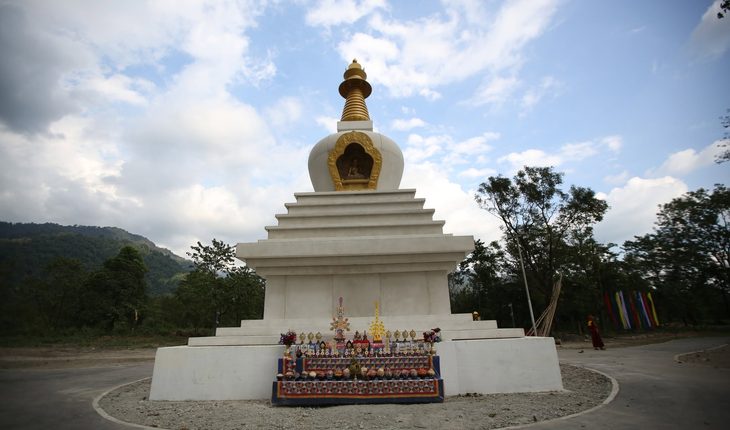
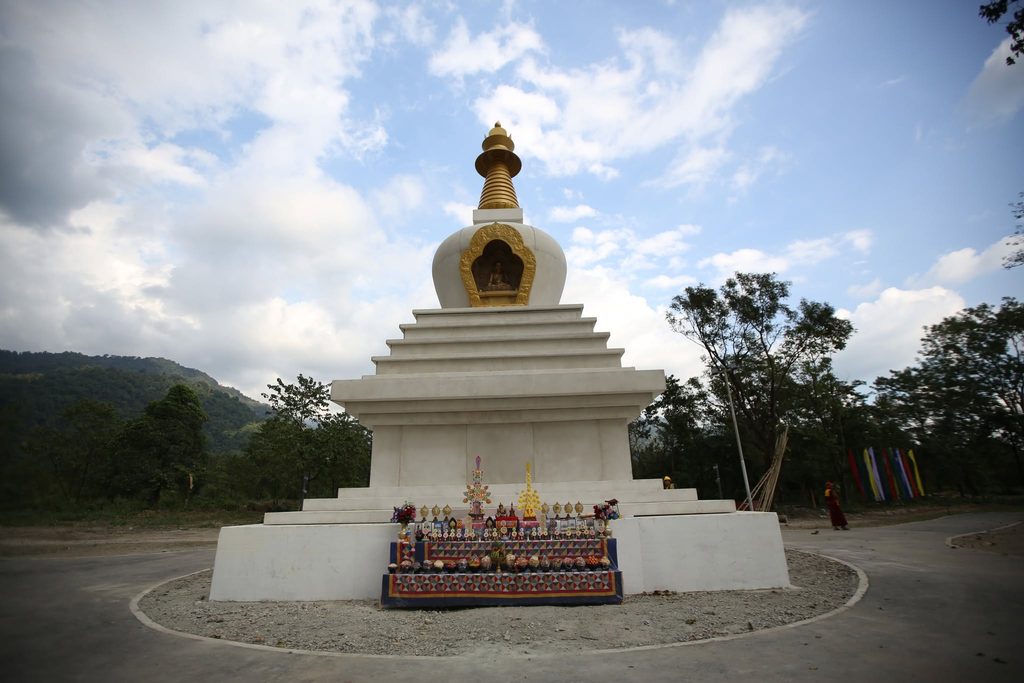
At 3am on November 1, as the sound of 58 sets of dungchen echoed across the banks of Mao Chhu, thousands of volunteers moved into action. Across a 12-kilometre stretch, teams began the coordinated construction of 108 Jangchub Chortens, each rising 15 metres into the sky, with a distance of 108 metres between each chorten.
As the sun rose over Gelephu, the 108 Jangchub Chortens rose alongside it, their silhouettes gradually emerging as golden rays spread across the banks of Mao Chhu.
By noon, all 108 chortens stood completed. Nine hours. That was all it took to turn months of preparation, training and collective determination into a remarkable national achievement, finishing approximately three hours ahead of the 12-hour target.
The achievement also secured Bhutan a place in the Guinness World Records for the most stupas or chortens consecrated simultaneously across multiple venues. With 108 newly constructed structures consecrated simultaneously, the record was achieved through the collective efforts of Bhutanese volunteers and religious communities. It marked international recognition of what thousands of people had accomplished together through faith, coordination and voluntary service.
But behind the extraordinary timing and world record were thousands of ordinary Bhutanese who had given their time, energy and physical labour to a spiritual undertaking they believed would carry significance far beyond the historic day.
For the volunteers who physically constructed the chortens, the moment was deeply personal. Every structure represented hours of preparation, coordinated effort and the determination of teams working towards one common goal.
“It was difficult to believe that we had completed everything in less than nine hours. We had spent months preparing for this day, and when we finally saw all 108 chortens standing, the feeling was beyond words. We were tired, but the happiness was much greater than the exhaustion,” said one of the volunteers involved in the construction.
For many volunteers, however, the most memorable moment was not the completion of the construction itself, but hearing His Majesty The King address the gathering.
After months of preparation and physical work, being acknowledged by His Majesty gave the volunteers a profound sense of fulfilment. Their contribution was no longer simply a construction task; it had become part of a historic spiritual offering.
“When His Majesty addressed us, I felt an emotion I cannot properly explain. We had come here to serve without expecting anything in return. Hearing His Majesty acknowledge our contribution made every difficult day and every sacrifice worthwhile. I felt that we had received a blessing that would remain with us not only in this lifetime but in our future lives as well,” another volunteer said.
Beyond the physical achievement, the undertaking carried deep religious significance. In Bhutan’s Vajrayana Buddhist tradition, constructing a chorten is regarded as an act of great merit. For the volunteers, participating in the raising of 108 Jangchub Chortens was also an opportunity to contribute to a collective religious offering.
“We came because we wanted to contribute something meaningful. Even if people never know our names, knowing that our hands helped build something that will remain for generations is a source of great happiness,” said a volunteer who took part in the undertaking.
The speed of the construction was not the result of a single day’s effort. It was the outcome of months of preparation, intensive training and coordination.
Volunteer teams were organised, responsibilities assigned and construction activities rehearsed to ensure that all 108 structures could be raised simultaneously. Each chorten involved around 23 to 24 volunteers.
For those involved, the training was physically demanding and required discipline and commitment. The teams had to understand their individual responsibilities while working in coordination with others.
“The training was not easy. We had to learn our responsibilities, practise repeatedly and understand how our work fitted into the larger operation. Sometimes it was physically exhausting, but we knew the importance of what we were preparing for. When the final chorten was completed ahead of schedule, all those months of training suddenly made sense,” said another volunteer.
Around 40,000 volunteers contributed to the wider undertaking, with people coming from different parts of Bhutan and different walks of life.
Some worked directly on the chortens, while others supported transportation, logistics, site preparation and other arrangements required for the event.
“What made this project special was that nobody was working alone. Everyone had a responsibility, and everyone understood why we were here. Whether someone was carrying materials, working on the structure or helping with arrangements, every contribution mattered. We completed the work because we worked as one team,” a volunteer said.
Nearly 200,000 people gathered along the banks of Mao Chhu to witness the occasion, reciting prayers and the sacred mantra Om Mani Padme Hung, alongside Buddhist masters from around the world.
The gathering coincided with three profoundly auspicious occasions: the 18th Coronation Anniversary of His Majesty The King, Lhabab Duchen, commemorating Lord Buddha’s descent from the heavenly realm, and the raising of the 108 Jangchub Chortens.
As prayers resonated across the riverbanks, the newly completed chortens stood as a powerful expression of Bhutan’s Buddhist heritage, devotion and collective aspiration.
For the volunteers, the significance of November 1 will not be confined to the nine hours it took to complete the construction.
They had come together for months, prepared for a single day and contributed to structures intended to remain for generations. Their reward was not simply the sight of 108 completed chortens, but the knowledge that they had participated in an undertaking they considered spiritually meaningful.
“Years from now, when people come here to pray, they may not know who helped build these chortens. But we will remember. We will remember the people we worked with, the difficulties we overcame and the moment everything was completed. It is something we will carry in our hearts for the rest of our lives,” one of the volunteers said.
As the world slept, Bhutan’s volunteers worked. By the time the morning was over, 108 chortens had risen along Mao Chhu, and an extraordinary collective effort had become part of the country’s history.