DAWA ZANGMO | Thimphu
In 2016, Kalyan Mahat left Thimphu for the rural village of Doonglagang in Tsirang with a simple idea to turn Bhutan’s locally available agricultural resources into economic opportunities for farmers while protecting the environment.
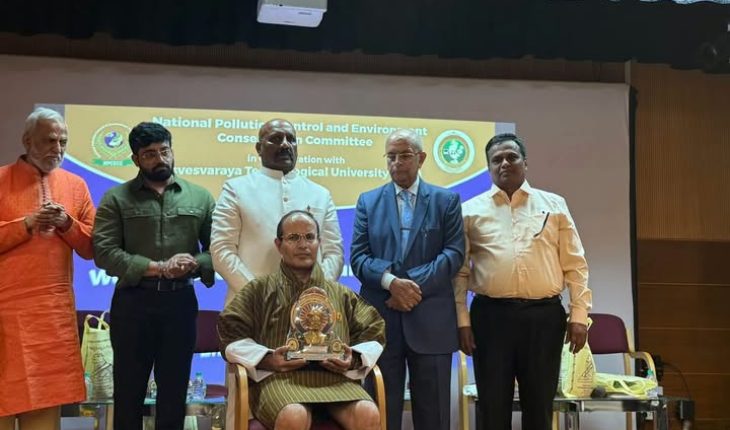
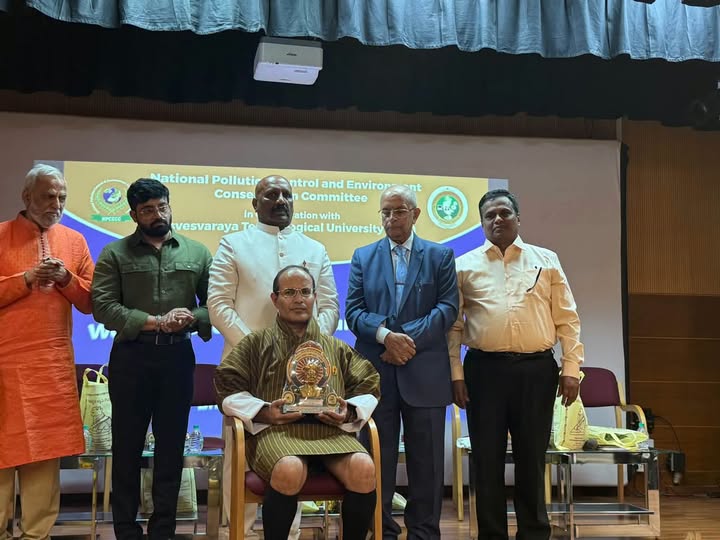
A decade later, his work in kiwifruit cultivation, organic farming and agro-processing has earned him the Sir M. Visvesvaraya World Ozone International Environment Fest Award 2026.
The founder of Ashish Horticulture and Jinlab Agro Products said the international recognition was both an honour and a responsibility, but viewed it as an appreciation of the collective efforts of farmers and rural communities working towards sustainable agriculture.
“I see this recognition not merely as a personal achievement, but as an appreciation of the collective efforts of farmers, local communities, and everyone working towards a more sustainable and environmentally responsible future,” he said.
Kalyan Mahat moved from Thimphu to the rural village of Doonglagang in 2016 to pursue kiwifruit cultivation. He said his decision was guided by a belief that Bhutan’s locally available resources could be used wisely to create economic opportunities for farmers while protecting the natural environment.
He began promoting commercial kiwifruit farming as a high-value cash crop, particularly for farmers with small landholdings. Over the years, he has worked to introduce improved varieties, including Red Enza, and encourage organic and sustainable agricultural practices.
His work later expanded beyond cultivation through Ashish Horticulture and Jinlab Agro Products, with a focus on value addition, waste reduction and the use of locally grown agricultural produce.
Through Jinlab Agro Products, fruits and other farm products are transformed into value-added products, with the aim of reducing post-harvest losses and creating better market opportunities for farmers. Mahat said the approach also promotes the principles of a circular economy by encouraging responsible use of resources and reducing agricultural waste.
“I believe this recognition reflects the importance of linking environmental conservation with rural livelihoods,” he said.
Kalyan Mahat said sustainable agriculture should not be viewed only in terms of food production. It also involves nurturing soil, conserving biodiversity, reducing dependence on chemicals, and ensuring that future generations inherit a healthy and productive environment.
He believes his work in kiwifruit cultivation and organic farming contributed to the award by demonstrating how agriculture can support both environmental conservation and rural economic development.
The introduction of high-value kiwifruit varieties, including Red Enza, has been part of his effort to encourage farmers to make productive use of their land while reducing dependence on synthetic chemicals and protecting soil health and biodiversity.
At Jinlab Agro Products, locally grown fruits and agricultural produce are processed into premium products. Mahat said this helps minimise post-harvest waste while creating additional market opportunities for farmers.
“Ultimately, my contribution lies in demonstrating that protecting the environment and improving farmers’ livelihoods can go hand in hand,” he said.
Kalyan Mahat received the award alongside fellow Bhutanese awardee Kinley Wangmo, Pradeep Khanal from Nepal and other distinguished personalities from India, Nepal, Sri Lanka and the Netherlands.
He expressed gratitude to the Horticulture Association of Bhutan for nominating him for the award.
Despite the recognition, Mahat said promoting sustainable agriculture in Bhutan has involved several challenges. One of the major difficulties is encouraging farmers to adopt new agricultural practices when they are accustomed to traditional methods and remain uncertain about market demand and returns on investment.
Limited landholdings, inadequate storage and processing facilities, transportation difficulties and a lack of assured markets for perishable produce are among the other challenges facing farmers.
Weather-related risks have also become a major concern. Mahat said farmers face erratic weather conditions, including inadequate rainfall during the agricultural season, excessive rainfall during the off-season, global warming and hailstorms that can damage crops.
Post-harvest losses are another significant challenge. Although many rural farmers produce high-quality fruits and vegetables, Mahat said they often struggle to sell their produce at the right time and at a fair price.
“Many farmers in rural areas produce high-quality fruits and vegetables but struggle to sell their harvest at the right time and price,” he said.
Kaylan Mahat said his experience had demonstrated that promoting cultivation alone was not enough to make farming economically sustainable. Reliable markets and value-addition facilities were also necessary to help farmers receive better returns from their produce.
He acknowledged the efforts of the Department of Agricultural Marketing and Cooperatives (DAMC) in creating international linkages but said further support was needed.
Looking ahead, Mahat plans to expand kiwifruit cultivation and introduce other high-value crops, including avocado, dragon fruit and organic spices, in collaboration with local farmers.
Through Jinlab Agro Products, he also plans to strengthen agro-processing, introduce modern technologies and develop premium products for domestic and international markets. He hopes these efforts will create more employment opportunities for rural communities, particularly women and youth, while encouraging environmentally responsible farming.
For Mahat, the award represents both recognition and responsibility to continue promoting sustainable agriculture and rural development.
“For me, this award is both an encouragement and a responsibility to continue promoting farming practices that benefit farmers, protect nature, and contribute to Bhutan’s vision of sustainable development,” he said.