RENUKA RAI | Thimphu
For Bhutanese artist Yeshi Pelden, perseverance is more than the title of his first solo exhibition. It is a principle that has shaped his journey from helping his uncle with painting as a young boy in Bumthang to becoming a painting instructor and contemporary artist.
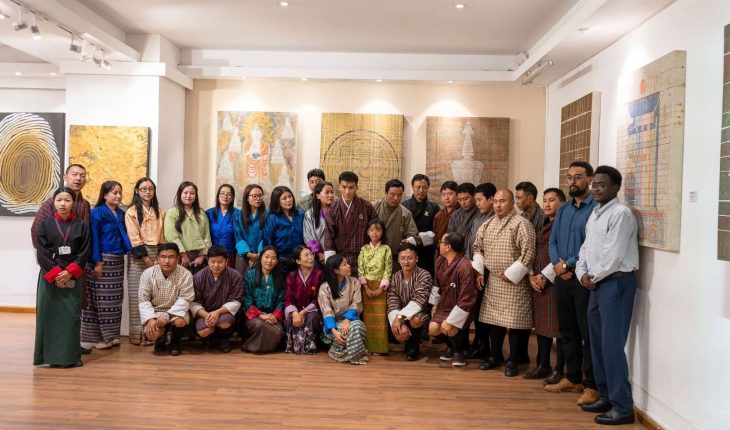
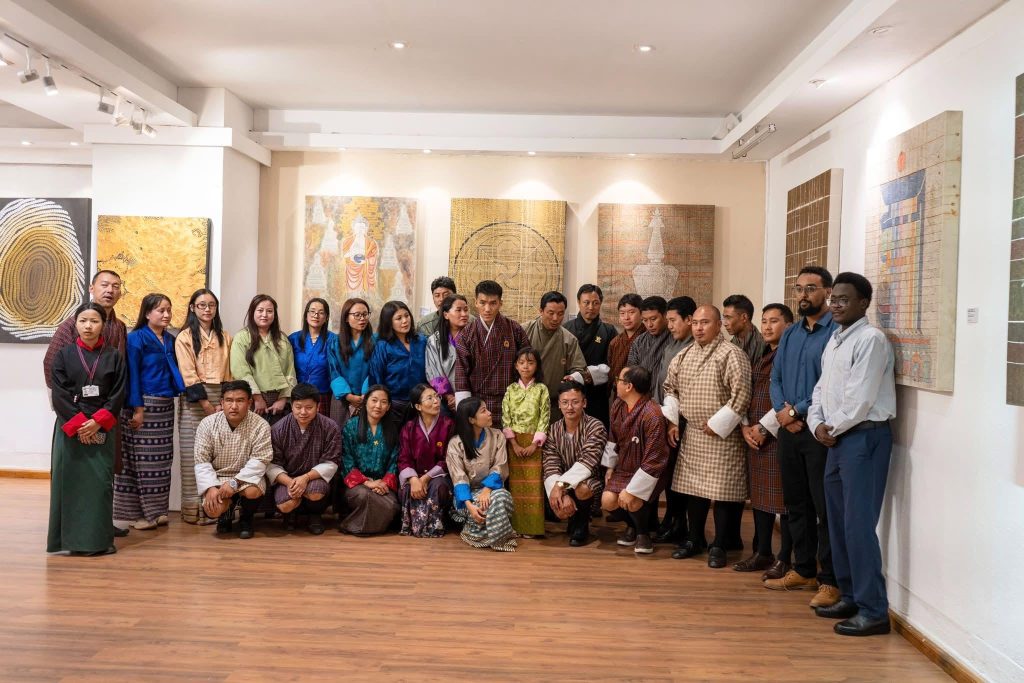
His solo exhibition, Perseverance, presented by VAST Bhutan as part of the Lungta Art Festival 2026, brings together works rooted in traditional Thangka painting while exploring contemporary materials, compositions and forms.
The exhibition opened on August 28 at the VAST Bhutan Centre in Chubachu, Thimphu, and will remain open until September 27.
For Yeshi, perseverance means having the patience and determination to continue learning, practising and creating even when progress is slow.
“My own journey as an artist has been shaped by perseverance,” he said.
His interest in painting began during his childhood in Bumthang, when he spent his school holidays assisting his uncle, who was a painter. The experience exposed him to the discipline of painting and eventually encouraged him to pursue art professionally.
After completing Class 10 at Jakar Higher Secondary School in 2008, Yeshi joined the National Institute for Zorig Chusum (NIZC) in 2009. His years at the institute became an important foundation for his artistic development, where he learned from experienced teachers, including Tshewang Tenzin.
The six years at NIZC taught him that becoming an artist required more than talent.
“Those years taught me that becoming an artist requires not only talent but also discipline, patience and continuous practice,” he said.
Today, Pelden works as a painting instructor at NIZC, where he contributes to the teaching and preservation of Bhutan’s traditional arts. At the same time, he has continued developing his own artistic practice.
His exhibition reflects that dual role respecting the traditions he teaches while exploring ways to reinterpret them through his own artistic language.
Yeshi’s foundation remains firmly rooted in traditional Bhutanese painting, particularly Thangka painting. He draws on its intricate line work, geometry, proportion, composition and symbolism, while experimenting with contemporary approaches.
“I see tradition as the foundation of my practice rather than a limitation,” he said.
Rather than rejecting traditional forms, Yeshi believes artists should first understand the principles behind them before experimenting. His works combine traditional visual elements with materials such as natural pigments, acrylic and colour pencils on traditional handmade canvas.
The result is an attempt to find a balance between inherited knowledge and individual expression.
“I am trying to find a balance between what I have inherited and what I want to explore as an individual artist,” he said.
This approach also reflects a broader question at the heart of Perseverance: how can traditional Bhutanese art remain meaningful in a changing society?
For Yeshi, tradition cannot remain completely fixed. As generations encounter new ideas, materials and ways of seeing the world, traditional art can also find new forms of expression.
He believes contemporary approaches can help younger audiences develop a stronger connection with Bhutanese traditional art, provided that experimentation is grounded in understanding and respect.
“We should not change tradition simply to make it fashionable. We should learn from it first and then explore how it can continue to grow,” he said.
Nature, spirituality and the five elements also influence Pelden’s work. His experience of living as a Bhutanese artist today has encouraged him to explore how cultural heritage can remain relevant in the present.
The process of creating the exhibition, however, was not without challenges.
One of his greatest difficulties was finding sufficient time for his own artistic practice while balancing his responsibilities as a painting instructor. After completing his professional duties, he had to create time to experiment, think and develop the paintings.
Another challenge was creating a body of work connected by the theme of perseverance while ensuring that each painting retained its own identity.
Some of the works also demanded considerable patience because of their detailed lines, patterns and layers of colour. For Yeshi, the meaning of the paintings lies not only in their finished appearance but also in the process behind them.
“There are moments when a painting does not develop as expected, and I have to step back, rethink it and continue again,” he said.
That process, he believes, mirrors perseverance itself. Mistakes, corrections, uncertainty and repeated attempts become part of the artistic journey.
Through the exhibition, Yeshi hopes visitors, particularly young Bhutanese, will understand that artistic development takes time.
He wants young artists to learn from Bhutan’s artistic heritage while also having the confidence to experiment and develop their own voices.
“Tradition is something we inherit, but it is also something we have a responsibility to carry forward,” he said.
For Yeshi, carrying tradition forward does not mean preserving it exactly as it is. Instead, it means allowing it to evolve while retaining its essence.
Looking ahead, he plans to continue developing his practice through experimentation, research and continued learning. He hopes to explore more ways of bringing traditional techniques, symbols and visual language into contemporary forms.
As an instructor, he also hopes his own artistic journey can encourage younger artists to see that tradition and experimentation can coexist.
“I believe an artist should never stop being a student,” he said.
Through Perseverance, Yeshi presents not only a collection of paintings but also a personal reflection on what it means to inherit, practise and transform Bhutanese artistic knowledge.
His work suggests that preserving tradition does not necessarily mean keeping it unchanged. Instead, its survival may depend on each generation finding the courage to engage with it, reinterpret it and carry it into the future.