TIL BDR GHALLEY | Lhuentse
Businesses in Lhuentse town are struggling to stay afloat as customer traffic declines, spending patterns shift and rising transportation and operating costs squeeze already-weak sales.
Shopkeepers say the business environment in Lhuentse has changed significantly since the pandemic, with migration to other urban centres contributing to a smaller customer base. Fewer customers, changing purchasing habits and high transportation costs are putting further pressure on sales and profitability.
Tshering Yangdon, 33, a shopkeeper in Phaling Throm, said her customer numbers have fallen by around 30 percent from pre-pandemic levels.
She said the introduction of the Goods and Services Tax (GST) had also changed customers’ purchasing habits, with many becoming more cautious about spending.
“After introducing GST, customers’ buying habits have changed a lot,” she said.
The impact is more pronounced for businesses selling clothing, footwear, household items and other non-essential goods, where purchases can be deferred when household budgets are under pressure.
Shopkeepers said customers are increasingly selective about what they buy, while some products remain on shelves for longer periods.
For businesses, lower sales have not been accompanied by a corresponding reduction in operating costs. Rent, electricity, transportation and other expenses continue regardless of customer numbers, putting pressure on profit margins.
Pema Namgyal, 64, a shopkeeper in Phaling Throm, said the business environment had changed significantly since the pandemic.
“It is not going the way I expected after pandemic. Many young people have migrated in search of better opportunities, and we are seeing fewer customers in the town. This has affected our business,” he said.
Transportation is among the biggest costs for businesses in Lhuentse, he said. A truckload of goods from Phuentsholing to Lhuentse costs more than Nu 70,000.
The cost of transporting goods can add to retail prices and leave shopkeepers with limited scope to absorb higher expenses or reduce prices to attract customers.
Grocery shops are also feeling the slowdown despite dealing in essential goods, while hardware shops are performing slightly better as demand for construction materials and household maintenance items remains relatively more consistent.
The owner of the popular fast-food outlet known as Gurung Restaurant said sales can vary sharply depending on the day. On some weekends, the restaurant sells only about three plates of rice, while sales reach around 20 plates on weekdays such as Monday and Tuesday.
While some restaurants are doing slightly better, others struggle to sell even a single plate of rice in a day.
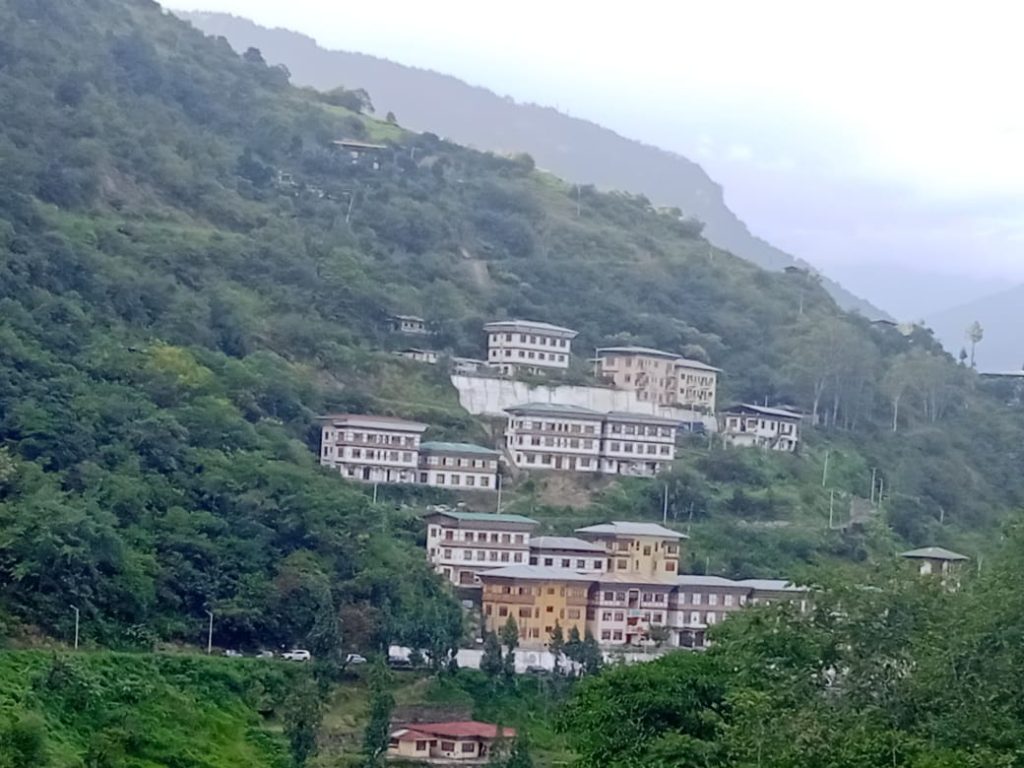
The town is built on steep terrain, and commercial buildings have been developed in phases. Shops along the front line, particularly those near the parking area, generally have better access to customers than those located farther uphill.
Shopkeepers located away from the parking area said customers are less inclined to walk uphill or farther into the town when similar goods are available closer to the main access points.
The lack of proper road and footpath connections between parts of the town has further complicated access, particularly for businesses that depend on walk-in customers.
Poor connectivity can also limit the visibility of shops located away from the main commercial areas, leaving them dependent on customers who make a deliberate effort to reach them.
As a result, businesses operating in the same town can experience markedly different levels of customer traffic depending on their location.
Residents have also raised concerns about the planning and layout of commercial buildings in Phaling Throm, particularly whether the steep terrain, parking requirements and pedestrian access were adequately considered during development.
Some residents have attributed the difficulties to planning or engineering decisions. Such claims, however, would require technical assessment by the relevant authorities to establish whether the design or construction of the commercial area contributed to the problems.
Lower customer traffic means slower turnover, while unsold stock ties up capital. This is particularly difficult for businesses selling discretionary goods, where customers can postpone purchases.
A shopkeeper said the decline in customer traffic has made it difficult to sell some goods within their shelf life. As a result, certain products expire before they are sold, leaving shopkeepers to bear the cost of unsold stock and adding to their overall business losses.
At the same time, shopkeepers cannot easily reduce prices because the cost of bringing goods into Lhuentse remains high.
The result is a difficult balance between maintaining affordable prices, covering operating expenses and keeping sufficient stock to meet customer demand.
For businesses near the parking area, greater visibility and easier access provide an advantage. For those farther uphill or away from established access routes, attracting customers remains a more persistent challenge.
Shopkeepers say improving internal road and better footpath connections, parking and accessibility could help distribute customer traffic more evenly across the town.
Businesses in Lhuentse town are facing a difficult period, with shopkeepers reporting weaker customer traffic and declining sales. Many say business has not been performing as well as expected, as changing spending patterns, migration and rising operating costs continue to affect commercial activity.