DAWA ZANGMO | Thimphu
The Gelephu Mindfulness City (GMC) has unveiled an ambitious tourism investment programme, presenting a broad portfolio of projects aimed at attracting both Bhutanese and international investors to help shape what officials envision as a globally recognised destination for sustainable, high-value tourism.
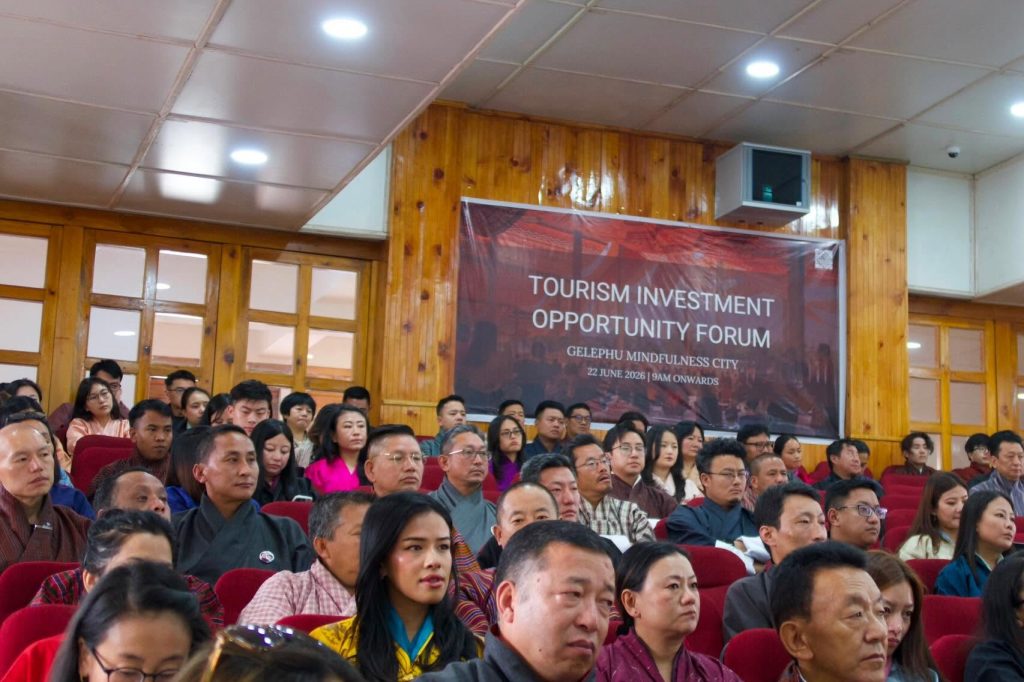
The investment drive was announced during the GMC Tourism Investment Opportunities Forum, where entrepreneurs, hoteliers, tour operators, financial institutions and potential investors were introduced to a portfolio comprising 20 tourism attractions and 20 tourism activities. The proposed developments span hospitality, wellness, culture, recreation and entertainment, reflecting GMC’s long-term vision of creating a diverse tourism economy.
GMC officials, however, emphasised that the list of projects should not be viewed as a fixed blueprint. Instead, it is intended to demonstrate the range of possibilities available within GMC while encouraging private sector innovation.
“The purpose of this forum is not to limit tourism development to these concepts alone. Rather, it is intended to demonstrate the breadth of opportunities within GMC and invite private sector participation, creativity and investment,” said the Managing Director for Tourism at GMC, Rabsel Dorji.
He added that investors are encouraged not only to improve upon the proposed concepts but also to introduce new tourism products and services that are consistent with GMC’s vision of mindfulness, sustainability and high-value tourism.
To help investors assess commercial viability, GMC presented investment guides outlining indicative capital requirements, land needs, visitor capacity and suitable investor profiles for each project.
Rabsel Dorji clarified that all proposals remain conceptual and will be subject to comprehensive feasibility studies, environmental assessments and regulatory approvals before implementation.
Investment opportunities range from approximately USD 100,000 for smaller tourism ventures to more than USD 40 million for large-scale flagship developments.
Among the largest proposed investments is a luxury hot spring resort estimated to require between USD 8 million and USD 20 million. Other major projects include an adventure theme park valued at between USD 5 million and USD 20 million, a water park estimated at USD 25 million and a cable car system expected to cost between USD 4 million and USD 15 million.
The broader investment portfolio also features heritage villages, waterfront promenades, birdwatching eco-lodges, wellness farm retreats, nature resorts, boutique hotels, culinary studios, aerial adventure parks and family entertainment centres.
Alongside these large developments, GMC is also promoting investment opportunities for small and medium enterprises through lower-capital projects. These include eco-cycle hubs, mini-golf facilities, Bhutanese culinary experiences, craft trails, farmers’ wellness markets, guided meditation programmes and river-based recreational activities.
Beyond permanent infrastructure, GMC is seeking to establish a year-round tourism calendar through a range of events and experiences designed to increase visitor arrivals and encourage longer stays.
Investment requirements for these tourism activities range from USD 10,000 to USD 300,000, creating opportunities for local businesses, tourism operators and event organisers to participate in the sector.
To further strengthen entrepreneurship within tourism, GMC has proposed the establishment of a Tourism Spark Fund. The initiative is expected to receive an initial allocation of approximately Nu 30 million to help bridge financing gaps for startups and young entrepreneurs.
The fund is expected to provide support through grants, concessional loans and revenue-sharing arrangements, targeting tourism experiences, festivals, sporting events and youth-led enterprises.
Rabsel Dorji added that tourism has the capacity to generate economic benefits far beyond the hospitality sector by creating demand for agriculture, transport, creative industries and a broad range of services connected to visitor spending.
He also said investors who do not currently own land in Gelephu are encouraged to submit project proposals. According to him, GMC will work with successful applicants to identify appropriate sites and facilitate suitable land arrangements for commercially viable investments.
To enhance investor confidence, GMC is considering several incentive packages, including lease waivers, tax holidays and moratoriums. Officials said the level of support will be negotiated based on the scale and nature of individual investment projects.
During the forum, tourism stakeholders also highlighted the need for greater flexibility in the Sustainable Development Fee (SDF).
Participants proposed dynamic pricing mechanisms and additional incentives that could encourage visitors to extend their stay and increase spending within the local economy.
As part of efforts to strengthen collaboration with the tourism industry, GMC has established a Tourism Advisory Committee comprising representatives from tour operators, hotels and tourist guides. The committee will provide ongoing advice on tourism policy, product development and destination marketing.
Environmental sustainability remains a key pillar of GMC’s tourism strategy. Officials said tourism projects will be implemented under strict environmental and social safeguards while being supported by an USD 80 million biodiversity and economic corridor programme designed to conserve ecosystems alongside sustainable development.
Supporting infrastructure is also being planned to facilitate long-term tourism growth. A proposed international airport is expected to serve as a major gateway to GMC and will be complemented by hotels, retail outlets, restaurants and commercial facilities within the airport precinct. Road networks and digital infrastructure will also be developed to strengthen regional connectivity and improve visitor access.
While acknowledging that labour availability remains one of the project’s most significant challenges, GMC officials said work is underway to develop a dedicated foreign direct investment policy that will facilitate investment while addressing future workforce requirements.
To further support investors, the Gelephu Mindfulness City Authority (GMCA) is partnering with DK Bank to provide financing support for eligible tourism investment projects, reinforcing efforts to mobilise private capital and accelerate tourism development within the city.