KINLEY KHANDU CHODEN | Thimphu
The Bhutan Olympic Committee said that Bhutanese athletes have won 46 medals in regional sports competitions.
This mainly attributes to getting additional budget to train athletes more, participate in more competitions and even hiring foreign coaches.The Committee targets a goal of winning 80 medals within the 13th Five Year Plan period.
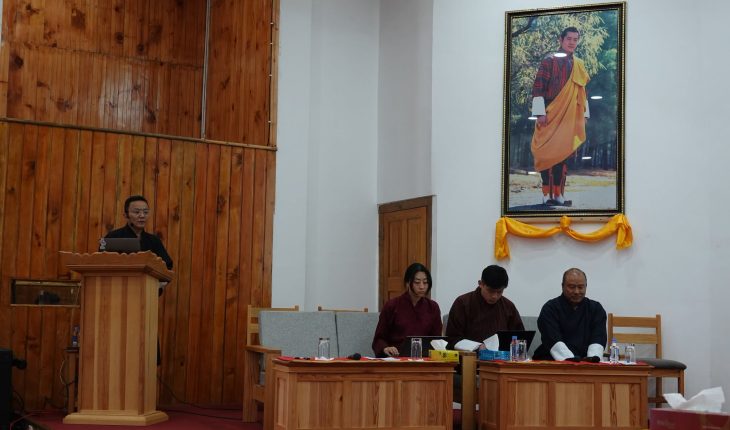
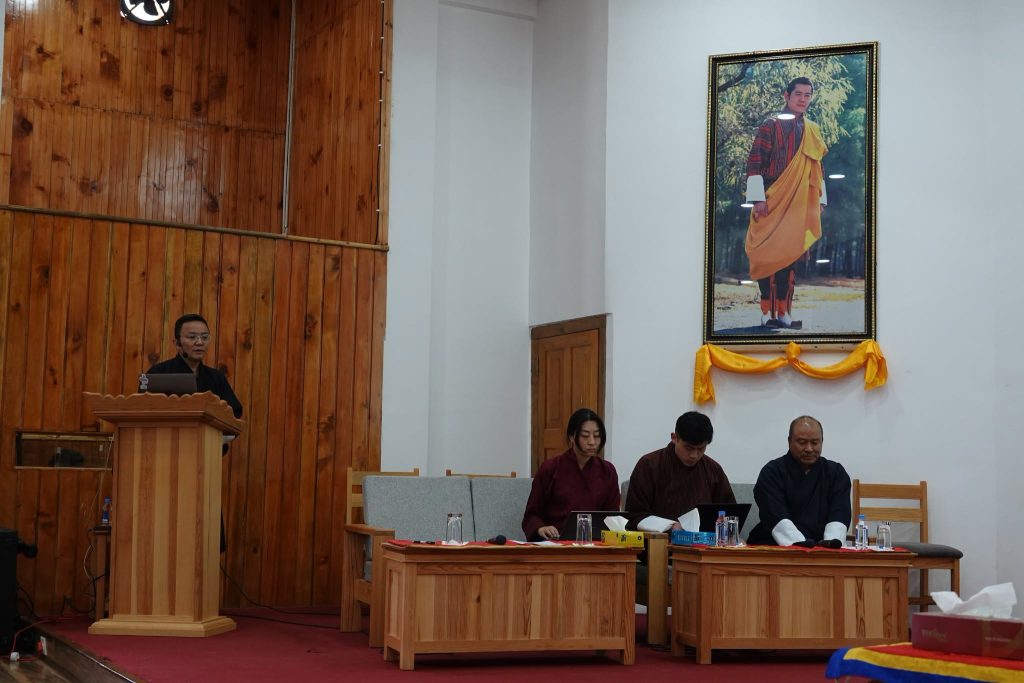
The remarks came during a mid- term review of the BoC’s implementation of projects under the 13th Five-Year Plan, where the committee presented its progress, financial performance and future priorities. The presentation covered achievements in athlete development, infrastructure projects, international participation and plans to strengthen Bhutan’s sports ecosystem.
Prime Minister Tshering Tobgay has called on the Bhutan Olympic Committee (BoC) to adopt a more strategic and sustainable approach to sports development, saying investments in infrastructure must reflect Bhutan’s long-term needs rather than ambition alone. While reaffirming the government’s commitment to financing sports, he stressed that facilities should be appropriately scaled, financially sustainable and matched by greater investment in athletes, coaches and sports administration.
Presenting the mid – term review,the BoC Secretary- General Sonam Karma Tshering highlighted a significant improvement in Bhutan’s sporting performance in recent years. The committee reported that the country has won 46 medals in regional competitions, attributing the success to increased government investment in sports.
According to the Secretary – General of BoC, additional funding has enabled national athletes to spend longer periods training overseas, compete in more international tournaments and receive specialised coaching from international experts. These interventions, the committee noted, have contributed directly to stronger regional performances while laying a firmer foundation for future international success.
The committee also updated the government on the implementation of projects under the 13th Five-Year Plan. Of the planned initiatives, two currently have committed funding: the construction of a national cricket stadium and a scholarship programme for national athletes pursuing higher education while continuing their sporting careers.
In addition, the BoC proposed several new initiatives, including the development of a multisport arena capable of hosting regional and international competitions, as well as the replacement of ageing sports infrastructure, particularly facilities that have been in service for more than two decades. The committee said these investments would strengthen Bhutan’s capacity to host international sporting events while improving training opportunities for domestic athletes.
The proposed national cricket stadium emerged as one of the meeting’s central topics.
The BoC Secretary- General explained that the project’s design had evolved considerably. While the original concept envisaged a stadium with a seating capacity of 15,000, the revised proposal increased capacity to 25,000, resulting in a substantial rise in projected construction costs.
The PM questioned whether such an expansion reflected Bhutan’s actual sporting requirements.
“Nothing worse than being in this area. It’s better to be a small, intimate stadium. I don’t think it will even fill the Changlimithang Stadium,” the Prime Minister said.
He cautioned that decisions on sports infrastructure should not be driven solely by aspirations to build larger facilities.
“Remember, down the line, a bigger stadium means bigger operating and maintenance costs, and the bigger risk is that you’re playing your game to an empty stadium.”
The PM clarified that his concern was not primarily about the construction budget but about ensuring that public investments deliver long-term value.
“Whether it’s Nu. 6 billion or Nu. 7 billion won’t affect the 13th Plan once it is approved. My concern is whether it is the right decision,” he said.
Responding to the concerns, BoC officials said discussions are already underway with relevant agencies and development partners to redesign the project. The revised concept would relocate some components of the development while engaging private partners to construct associated facilities.
These changes, the Secretary- General explained, could reduce the estimated project cost from approximately Nu. 6.5 billion to between Nu. 2.5 billion and Nu. 3 billion, making the project significantly more affordable while retaining its intended functionality.
The PM urged the committee to finalise the revised proposal without unnecessary delay.
“Do that fast. Whatever it is, take a decision fast, because we block money,” he said, referring to public funds that remain committed while decisions are pending.
Beyond infrastructure development, the PM placed equal emphasis on strengthening Bhutan’s human resource capacity in sports. He observed that athlete performance ultimately depends not only on facilities but also on the availability of qualified coaches, trainers and sports professionals.
He therefore encouraged the BoC to expand scholarship programmes, increase overseas training opportunities and invest more aggressively in coach education and certification.
“Increase the number of athletes you send for training. Increase the number of coaches you send out for training, upskilling and certification,” he said, adding that Bhutan must develop its own technical expertise to ensure sustainable growth across different sporting disciplines.
The Secretary – General said that efforts are already underway to strengthen domestic coaching capacity. He reported that 25 coaches are currently undergoing training, while scholarship support is being provided to national athletes pursuing undergraduate studies at home and abroad, including in Japan and India. The committee also noted that it has revived its national coaching programme, recognising that qualified coaches are fundamental to improving athlete performance.
Looking beyond the current Five-Year Plan, the BoC outlined its long-term vision for sports infrastructure development.
The committee explained that while previous Five-Year Plans focused on constructing sports grounds and facilities across the country, the priorities under the 13th and 14th Five-Year Plans will shift towards developing international-standard venues capable of hosting regional and international competitions.
It also acknowledged that maintaining existing facilities has become increasingly challenging and that future investments must place greater emphasis on preserving the infrastructure already built.
Supporting this shift in focus, the PM stressed that maintenance should become a priority.
“Maintain your existing facilities and come up with a proposal of how you want to maintain these facilities,” he said, noting that well-maintained infrastructure would serve communities better than continuously constructing new facilities without adequate maintenance plans.
To strengthen the long-term financial sustainability of the sector, the BoC also presented its National Sports Ecosystem Upgradation Agenda 2.0, an initiative aimed at reducing dependence on government funding while strengthening sports as a contributor to national development.
As part of the initiative, the committee recently incorporated Bhutan Sports, a commercial entity that will assume responsibility for managing sports infrastructure owned by the BoC. The company will generate revenue through commercial operations, partnerships and improved utilisation of sports facilities.
The committee emphasised that the objective is not to replace government funding but to diversify revenue sources and ensure that sports infrastructure remains financially sustainable over the long term.
The PM welcomed the initiative but reiterated that sports remain a public good deserving continued government investment.
“It’s actually cheaper for the government to put money into sports,” he said.
He explained that healthier citizens reduce long-term healthcare costs while contributing more productively to the economy. At the same time, he encouraged the committee to capitalise on Bhutan’s unique geographical advantages by developing high-altitude training centres that could attract international athletes and create new economic opportunities.
“If Bhutan Sports can make money from running these, that is very good. But don’t do it because you think it’s not the government’s responsibility to finance sports. I think it is—as long as the finance is used well.”
Concluding the presentation, the Secretary- General highlighted achievements made through externally funded programmes. The committee reported support for 40 sports programmes, assistance to more than 800 athletes and coaches, preparations for the upcoming Asian Games, and record participation in the Bhutan International Marathon, which attracted 585 participants following increased public engagement through social media campaigns.
The discussions reflected the government’s broader vision of building a stronger and more sustainable sports sector—not simply through new infrastructure, but by investing in athletes, coaches, institutions and long-term financial sustainability. As Bhutan expands international participation and modernises its sporting ecosystem, the emphasis is increasingly shifting from building more facilities to ensuring that every investment delivers lasting value.