TASHI DEKI | Thimphu
Bhutan and India are looking to strengthen economic ties and expand cooperation in trade, connectivity, education, tourism and healthcare, with greater emphasis on turning their longstanding partnership into new opportunities for businesses, students and communities.
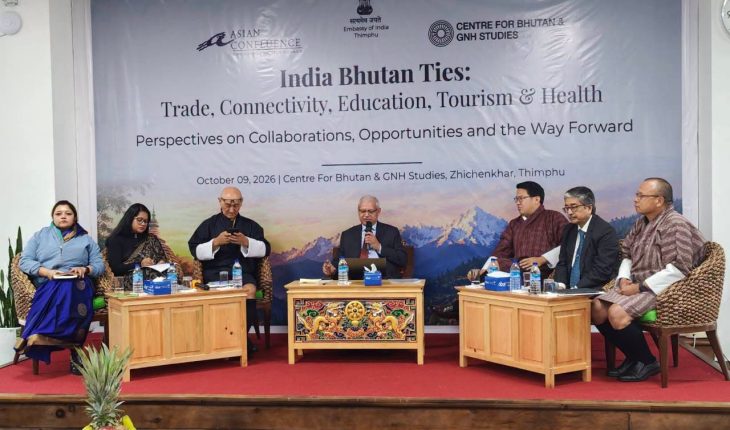
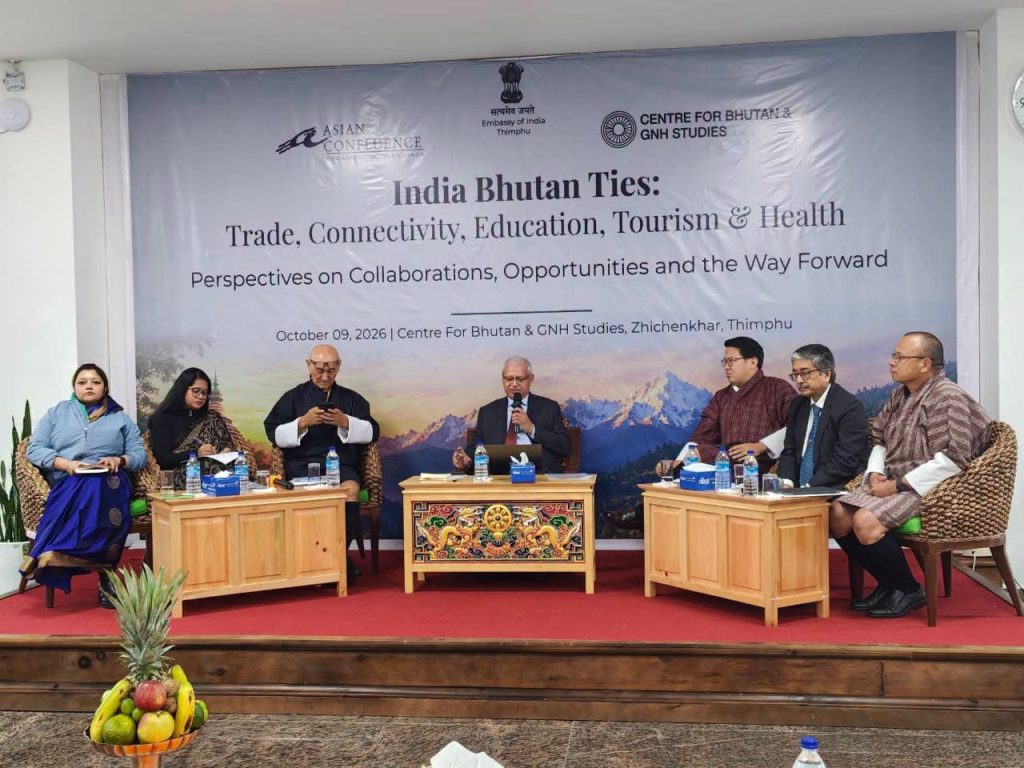
The issues were discussed at a one-day seminar titled India-Bhutan Ties: Trade, Connectivity, Education, Tourism & Health: Perspectives on Collaborations, Opportunities and the Way Forward, held at the Centre for Bhutan and GNH Studies (CBS) in Thimphu.
The seminar was organised jointly by the Embassy of India in Thimphu, CBS and Asian Confluence, an Indian think tank based in Shillong, Meghalaya. It brought together policymakers, researchers and other stakeholders to discuss existing cooperation and identify areas for deeper engagement between Bhutan and Eastern and Northeastern India.
Speaking at the seminar, Minister of Industry, Commerce and Employment (MoICE) Lyonpo Namgyal Dorji highlighted the opportunities Bhutan could gain from India’s investment, technology and market experience, while emphasising the distinctive strengths Bhutan could offer in return.
“India is already bringing, and we have a lot of confidence that it will bring investment, technology, market experience,” Lyonpo said.
He said Bhutan could strengthen its economic position by building on its clean environment, reputation for trust and commitment to sustainability, which he described as “Brand Bhutan”.
“For a small economy like ours, we need not compete on scale alone; we can compete through quality, reliability, and products that carry the distinct identity of Bhutan,” Lyonpo said.
His remarks highlighted the potential for Bhutan to develop an economic identity based on the quality and distinctiveness of its products and services, while attracting investment and drawing on India’s experience and access to markets.
Lyonpo also referred to the opportunities he had observed through investment roadshows and forums in New Delhi, Mumbai and Bengaluru, pointing to Assam as an important neighbouring state with potential for closer economic engagement.
Indian Ambassador to Bhutan Sandeep Arya said the seminar was an opportunity to examine emerging areas of cooperation between the two countries and encourage more focused discussions on practical opportunities.
He said the economic growth of both countries was creating further possibilities for collaboration.
“The second influence is that this vibrant growth in both nations is creating opportunities, further opportunities for cooperation between us,” Ambassador Arya said.
He also stressed the importance of identifying emerging opportunities across areas such as business collaboration, tourism, education, investment and healthcare.
The seminar comes as Bhutan and India continue to build on a relationship founded on historical connections, mutual trust and cooperation across development sectors. India remains Bhutan’s principal trading partner and an important development partner, supporting initiatives in infrastructure, energy, education, health, agriculture and community development.
One of the key areas discussed was the need to strengthen physical connectivity and trade relations between Bhutan and the eastern and northeastern states of India.
Bhutan’s geographical links with West Bengal and the Northeast provide opportunities to improve cross-border trade, facilitate the movement of goods and people, and strengthen economic cooperation. The countries also share ecological, cultural and social connections that can support wider regional engagement.
Bhutan relies on Indian transport routes and customs facilities for bilateral and third-country trade. Improving these connections could help businesses access markets more efficiently and create opportunities for economic activity on both sides of the border.
The proposed Kokrajhar-Gelephu railway link was identified as an important development that could improve transport connectivity and support trade, tourism and regional integration.
The Gelephu Mindfulness City project, initiated under the vision of His Majesty The King, also presents opportunities to strengthen economic links between Bhutan and Eastern and Northeastern India. As the project progresses, improved connections with neighbouring Indian states could support investment, commercial activity and tourism.
The programme included a dedicated session on building trade relationships through physical connectivity, covering issues such as integrated land ports, expanded border trade routes and emerging railway connections.