DAWA ZANGMO | Thimphu
Women entrepreneurs in Bhutan are establishing businesses across diverse sectors, including landscaping, software development, digital content production, and food processing, but continue to face challenges related to financing, customer confidence, and business expansion.
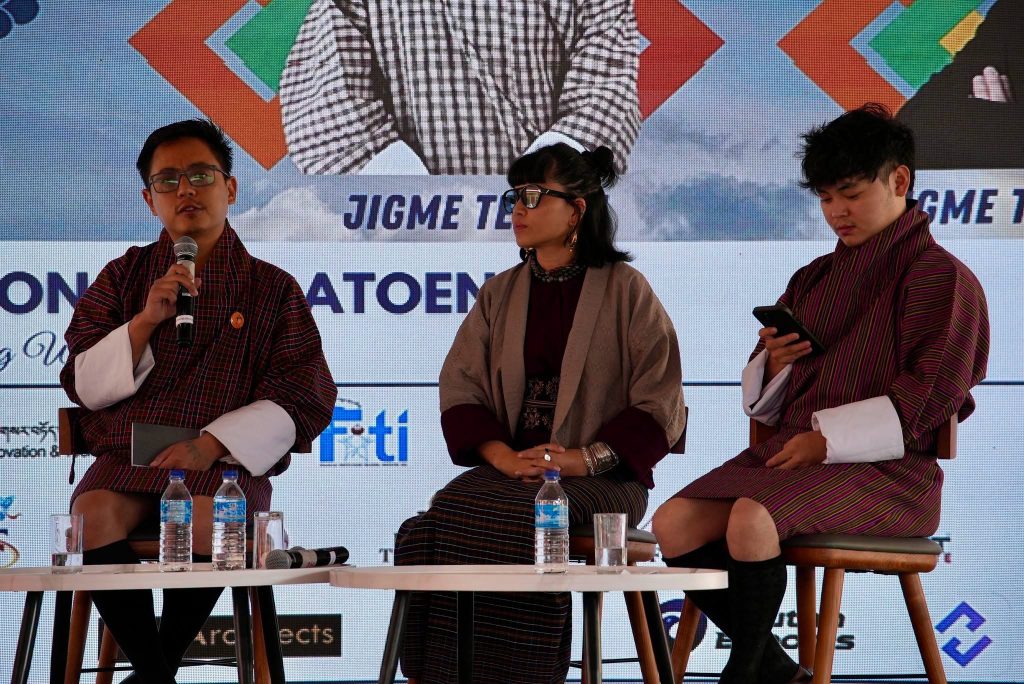
The challenges and experiences of seven women-led businesses were highlighted during a discussion titled “From Idea to Independence: Women Founders Building for Themselves” at the Startup Centre in Changzamtog, Thimphu, on 16th to 17th october.
The session was part of the two-day Druk Tshongrig Gatoen 2026, organised from October 16 to 17, bringing together entrepreneurs and other stakeholders to discuss business development and entrepreneurship.
The founders shared how they established their businesses, overcame early difficulties and worked to sustain their ventures in different industries.
For Melam Zangmo, founder of Kith Tshel Garden, entering the nursery and landscaping business meant working in a field where her capabilities were initially questioned because she was a woman.
Coming from a media background, she had to acquire the necessary skills through hands-on experience and training. Over time, she built her expertise and gained customers’ confidence in her ability to manage the work.
Her experience highlighted the difficulties women may encounter when entering industries where their skills and capabilities are not always readily recognised.
In the technology sector, Leki Choden, founder of Dragon Coders, said gaining clients’ trust was one of the major challenges in establishing her company.
The company eventually secured an opportunity from a private client to demonstrate its capabilities. Dragon Coders has since developed Polyadula, a multi-seller e-commerce platform integrated with a payment gateway from the Royal Monetary Authority.
The experience illustrated the importance of securing opportunities to demonstrate technical capabilities and establish credibility with clients in a competitive business environment.
Nyema Zam, founder of Samuh Medtech Private Limited, said access to capital remained a major challenge for businesses involved in content production, where projects can take months to generate revenue.
She also identified piracy and high internet costs as difficulties affecting the sector. Alongside developing her business, she is working to promote opportunities for women in the film and media industry, particularly female directors, screenwriters and stories led by women.
Other entrepreneurs at the discussion spoke about the challenges of developing businesses based on local products, including food processing and tea production.
Umami produces crispy fish balacha and shrimp products, while Black Mountain Green Tea faces constraints related to financing and the availability of raw materials.
Finn Food, which was established in 2021, encountered difficulties in its early stages, particularly with packaging and financing. The business has since expanded into export markets, supplying products to India, and plans to enter Singapore in the near future.
The company received incubation support from the Department of Employment and Entrepreneurship (DoEE), as well as cost-sharing assistance for packaging and equipment.
The support helped the business address some of the practical requirements involved in developing and expanding its products.
For the founder of Duk Lhaki, a meat-based food business, entrepreneurship is closely linked to providing for her family and achieving financial independence.
Running the business allows her to support her three children while working to repay debt and maintain her financial independence.
Duk Lhaki has received investment support through the Development of Small and Medium Enterprises Programme and the Bhutan Foundation.
The businesses also provide employment opportunities, particularly for women. Umami employs five women, while Black Mountain Green Tea hires around 30 workers when required, most of whom are women. The workers are employed temporarily, generally for periods of about one month, depending on the business’s needs.
The discussion also highlighted the different stages of business development, from establishing a customer base and securing initial contracts to obtaining the resources needed to increase production and reach new markets.
While the entrepreneurs operate in different sectors, their experiences reflected common challenges in accessing finance, building customer trust, and securing the resources necessary to sustain and expand their businesses.