A legacy of development, environmental stewardship, Gross National Happiness and democratic transformation continues to define the country’s national identity
TIL BDR GHALLEY | Thimphu
Every year on November 11, Bhutan observes a day that carries significance beyond the birth anniversary of a monarch. It is an occasion to reflect on the ideas, institutions and national aspirations that shaped modern Bhutan under the leadership of His Majesty the Fourth Druk Gyalpo, Jigme Singye Wangchuck.
Born on November 11, 1955, at Dechencholing Palace in Thimphu.
His formal coronation took place on June 24, 1974, beginning a reign that would span 34 years and bring profound changes to Bhutan’s political, economic, social and institutional landscape.
The Fourth Druk Gyalpo inherited a country whose modernisation had begun under his father’s leadership. However, the challenges before the young monarch were considerable. Bhutan was emerging from relative isolation, its economy was largely agrarian, and access to education, healthcare, communications and infrastructure remained limited, particularly in rural communities.
Over the following three decades, Bhutan would undergo a remarkable transformation. Roads connected previously isolated settlements, schools and health facilities expanded, hydropower emerged as an important economic sector, and the country gradually strengthened its engagement with the international community.
Yet, the significance of His Majesty’s reign cannot be measured through infrastructure and economic indicators alone. His enduring contribution was the development philosophy and institutional framework through which Bhutan sought to modernise while preserving its cultural identity, environmental heritage and sovereignty.
A different understanding of development
One of the most distinctive contributions of the Fourth Druk Gyalpo was the introduction of Gross National Happiness (GNH), a philosophy that challenged the conventional understanding of national progress.
In the early 1970s, when economic growth was increasingly treated as the principal measure of development, His Majesty questioned whether Gross Domestic Product (GDP) could adequately capture the well-being and happiness of a population.
The underlying idea was that economic prosperity was important, but it could not independently determine whether a society was progressing. A country could experience economic growth while its cultural traditions weakened, its environment deteriorated and social inequalities widened.
His Majesty believed that development should improve people’s quality of life while maintaining a balance between material and non-material well-being.
This philosophy gradually developed into four pillars: sustainable and equitable socio-economic development, preservation and promotion of culture, conservation of the natural environment, and good governance.
GNH subsequently evolved from a national development philosophy into a framework for evaluating public policies and measuring people’s well-being.
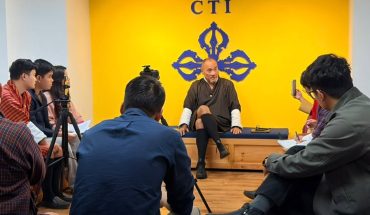
The establishment of the Centre for Bhutan Studies in 1998, under His Majesty’s guidance, provided an institutional foundation for research and the development of GNH indicators. Bhutan later conducted national GNH surveys, turning the philosophy into a more systematic approach to understanding people’s living conditions and aspirations.
The significance of GNH was further established through the Constitution of 2008. Article 9, Section 2 states that the State shall strive to promote conditions that enable the pursuit of Gross National Happiness.
Today, GNH remains an important part of Bhutan’s development identity and has contributed to international discussions on alternative measures of human progress.
Development that changed people’s lives
The Fourth Druk Gyalpo’s reign coincided with a period of substantial expansion in Bhutan’s social and economic infrastructure.
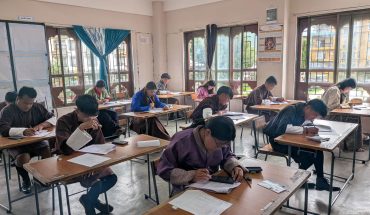
Education and healthcare were among the sectors that experienced significant growth. Schools, hospitals and basic health units expanded, creating opportunities for communities that previously had limited access to public services.
The scale of this transformation is reflected in the Royal Government’s development vision document, Bhutan 2020: A Vision for Peace, Prosperity and Happiness, published in 1999.
According to the document, the number of primary schools increased from 92 in 1977 to 250 in 1999. Junior high schools increased from 14 to 44, while high schools grew from six to 18.
Student enrolment increased from 14,553 in 1977 to 100,198 in 1999. The same document recorded an increase in the number of hospitals from 10 to 28 and basic health units from 31 to 145 between 1977 and 1999.
Life expectancy also improved substantially. World Bank historical data show that life expectancy at birth increased from approximately 42.5 years in 1972 to 66.5 years in 2006.
These indicators provide an important picture of Bhutan’s social transformation during the Fourth Druk Gyalpo’s reign. They also demonstrate the expansion of public services that helped improve people’s access to education and healthcare.
Infrastructure development was equally important. Roads, bridges, electricity and telecommunications gradually connected communities, supporting the movement of people and goods and creating opportunities for economic activities.
Hydropower also became increasingly important to Bhutan’s economic development, providing electricity for domestic consumption and generating revenue through exports.
The development approach sought to ensure that economic growth contributed to broader national well-being rather than becoming an end in itself.
Protecting the natural environment
Environmental conservation was another defining feature of the Fourth Druk Gyalpo’s vision.
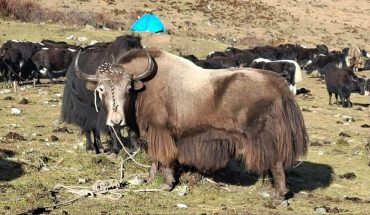
At a time when many developing countries pursued industrialisation and resource extraction as primary routes to economic growth, Bhutan maintained a development approach that placed considerable importance on protecting its forests, rivers, wildlife and biodiversity.
His Majesty recognised that Bhutan’s natural environment was not simply an economic resource but an essential part of the country’s identity, ecological security and long-term prosperity.
This vision helped establish the foundations of Bhutan’s conservation policies and its commitment to maintaining extensive forest cover.
The importance of environmental protection was subsequently enshrined in the Constitution. Article 5 requires the Government to ensure that at least 60 percent of Bhutan’s total land remains under forest cover for all time.
The Constitution also recognises every Bhutanese as a trustee of the Kingdom’s natural resources and environment for the benefit of present and future generations.
Bhutan’s environmental commitment received international recognition. In 2005, His Majesty and the people of Bhutan received the United Nations Environment Programme’s Champion of the Earth award. In 2006, His Majesty received the World Wildlife Fund’s J. Paul Getty Award for Conservation Leadership.
These recognitions reflected an approach to development in which economic progress and environmental protection were considered interconnected responsibilities.
Today, as countries confront climate change, biodiversity loss and environmental degradation, Bhutan’s conservation principles remain relevant to international discussions on sustainable development.
The decision that changed Bhutan’s political future
Perhaps the most consequential decision of the Fourth Druk Gyalpo’s reign was his initiative to introduce democratic constitutional governance.
Bhutan’s transition to democracy was distinctive because it was initiated by the monarch rather than emerging from a popular revolution or political upheaval.
The process began well before the first parliamentary elections.
In 1981, His Majesty introduced the Dzongkhag Yargye Tshogchung, strengthening people’s participation in district-level decision-making. This was followed by the establishment of the Gewog YargyeTshogchung in 1991, creating opportunities for people at the grassroots level to participate in local development and governance.
A major political reform followed in 1998 when His Majesty devolved executive powers to an elected Council of Ministers. The decision marked a significant shift in governance by placing greater responsibility for the country’s administration in the hands of elected representatives.
In September 2001, His Majesty issued a Royal Decree commanding the drafting of a written Constitution for Bhutan.
The 39-member Constitution Drafting Committee, chaired by former Chief Justice Lyonpo Sonam Tobgye, brought together representatives from different institutions and sections of Bhutanese society. It comprised representatives from all 20 dzongkhags, two members from the Dratshang, the Speaker of the National Assembly, seven members of the Royal Advisory Council, three representatives from the Judiciary and six members from the government, ensuring that the country’s diverse institutions and communities were represented in drafting the Constitution.
The draft Constitution was subsequently distributed to the public, and consultations were conducted across the country to allow people to understand and provide feedback on the proposed political framework.
The process culminated in the adoption of the Constitution on July 18, 2008, by the first democratically elected Parliament.
However, before that milestone, His Majesty made another historic decision.
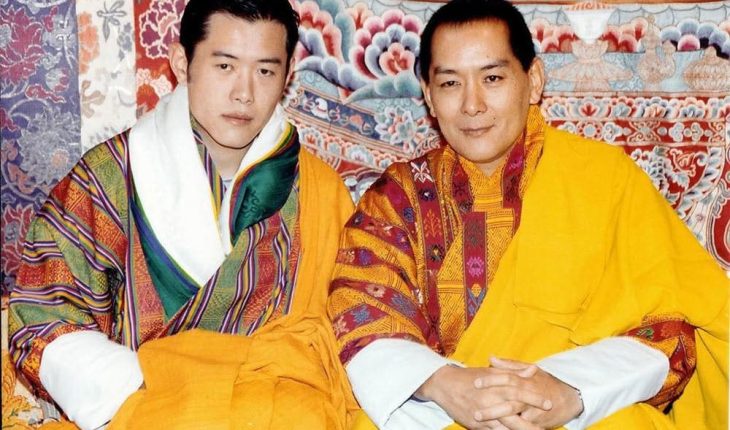
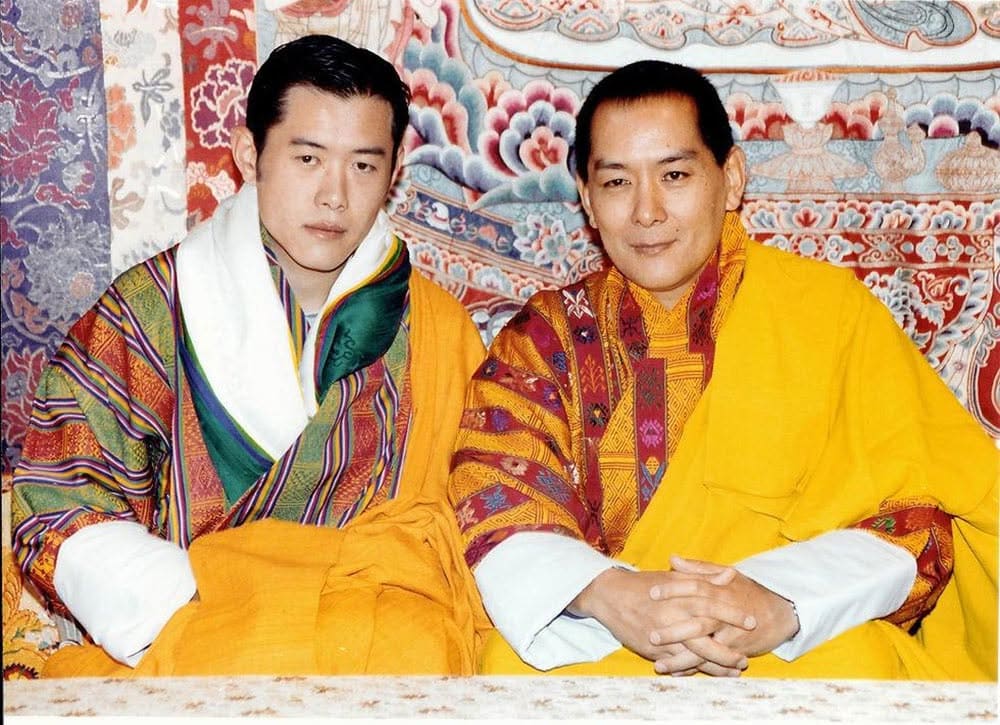
On December 14, 2006, His Majesty abdicated the throne in favour of His Majesty the Fifth Druk Gyalpo, Jigme Khesar Namgyel Wangchuck, allowing the democratic transition to proceed under the new monarch.
Bhutan held its first parliamentary elections in 2008, formally establishing a democratic constitutional monarchy.
The transition represented a fundamental change in the country’s governance structure. Political authority and executive responsibility were placed within a constitutional framework, with elected governments accountable to the people.
The decision also reflected His Majesty’s belief that Bhutan’s long-term stability should rest on strong institutions and the active participation of its citizens.
November 11 is consequently observed as Constitution Day, commemorating the constitutional vision initiated by the Fourth Druk Gyalpo.
A nation and its responsibilities
The significance of the Fourth Druk Gyalpo’s reign extends beyond the achievements of the past.
The principles he championed continue to shape Bhutan’s development priorities, but they also place responsibilities on the country’s institutions and people.
Gross National Happiness must translate into improvements in people’s everyday lives. Economic development must create meaningful opportunities, particularly for young people. Public institutions must remain accountable, and environmental conservation must be upheld even as the country pursues new economic ambitions.
The transition to democracy also requires citizens to understand their constitutional rights and responsibilities and participate meaningfully in the country’s democratic processes.
These responsibilities are particularly important as Bhutan navigates new development priorities, including economic diversification, youth employment, digital transformation and the development of Gelephu Mindfulness City.
The challenge is to pursue these ambitions without losing the values that have distinguished Bhutan’s development journey.
For a small Himalayan nation, maintaining its cultural identity, environmental integrity and sovereignty while engaging with a rapidly changing world remains a significant national undertaking.
The Fourth Druk Gyalpo’s legacy offers a framework for navigating that challenge. It is a reminder that development should be measured not only by what a country builds or earns, but also by the opportunities it creates, the environment it protects, the institutions it strengthens and the well-being of its people.
As Bhutan marks His Majesty’s 71st birth anniversary, November 11 is an opportunity to reflect on a reign that reshaped the country’s development trajectory and political future.
The enduring measure of that legacy will be how successive generations preserve, strengthen and translate its founding principles into a better future for Bhutan.