KINLEY KHANDU CHODEN | Thimphu
The Gross National Happiness Centre Bhutan (GNHCB), in partnership with the United Nations Development Programme (UNDP) Bhutan, successfully convened the Global GNH Forum 2026 from November 9 to 11 in Punakha and Thimphu, bringing together national and international participants to explore the role of traditional wisdom in shaping a more balanced and sustainable future.
Held under the theme “Traditional Wisdom for Well-Being in an Age of Accelerated Development,” the three-day forum brought together policymakers, academics, global thinkers, entrepreneurs, civil society leaders, youth changemakers and development practitioners to discuss how traditional knowledge, ethical leadership and contemporary development approaches can contribute to human well-being.
The forum was graced by Her Royal Highness Princess Kesang Choden Wangchuck, President and Patron of the Gross National Happiness Centre Bhutan. The gathering formally commenced with traditional Buddhist prayers and blessings, invoking peace, wisdom and compassion for the participants.
The forum builds on the partnership between GNHCB and UNDP Bhutan, established through a Memorandum of Understanding signed on June 18, 2026. The agreement provides a framework for cooperation in three key areas: the Global GNH Forum, youth empowerment and conscious food systems.
Over three days, discussions explored how Bhutan’s development philosophy of Gross National Happiness (GNH) can contribute to global conversations on development, particularly at a time when technological advancements, climate change and social transformation are reshaping societies.
Participants examined how traditional knowledge, ethical leadership and cultural values can help promote human dignity, collective well-being and ecological balance. The discussions also focused on the importance of ensuring that economic and technological progress remains aligned with the broader interests of people and the planet.
Held across Punakha and Thimphu, the forum combined high-level discussions on regenerative and well-being economies with exchanges among policymakers, scholars and cultural practitioners, alongside Bhutanese cultural and contemplative experiences.
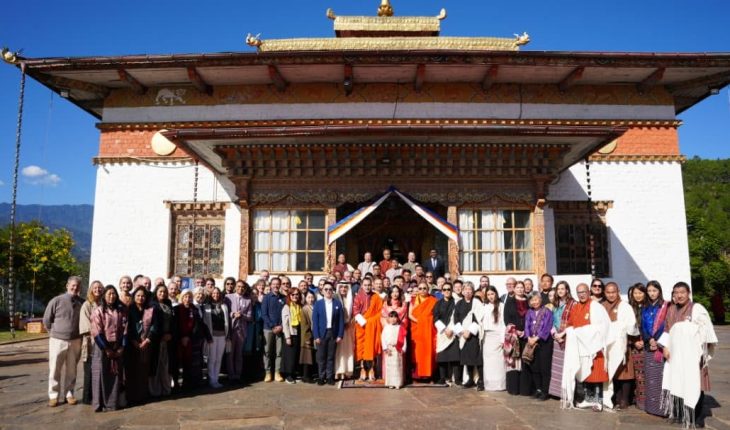
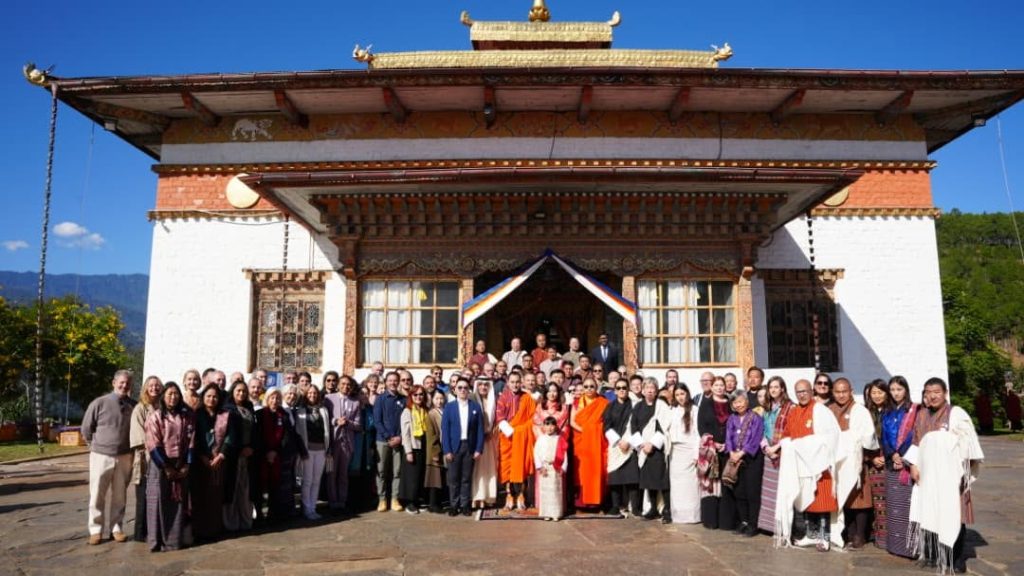
During the opening ceremony at Sangchhen Dorji Lhuendrup Nunnery in Punakha on November 9, Her Royal Highness Princess Kesang Choden Wangchuck highlighted the importance of balancing technological and economic progress with wisdom and ethical responsibility.
“Progress in what we can do must be accompanied by wisdom in what we ought to do,” Her Royal Highness said.
She also emphasised that Gross National Happiness should be viewed as a perspective for global reflection rather than a development model that every country must follow.
“We recognise that Bhutan does not have all the answers and that our experience cannot be applied to every society. Each nation has its own history, circumstances and aspirations. But we believe GNH offers a perspective worth sharing and a question worth asking everywhere: Do our measures of progress reflect what matters most to human well-being?” she said.
Executive Director of the Gross National Happiness Centre Bhutan,Lhatu, said the forum provides an important platform to bring Bhutan’s experience of GNH into conversation with global perspectives and contemporary development challenges.
He said that as the world experiences rapid technological and social transformation, traditional wisdom offers valuable guidance in ensuring that progress remains grounded in ethics, compassion and respect for the well-being of people and the planet.
UNDP Bhutan Deputy Resident Representative, Fadhil Bakeer Markar, highlighted the importance of bringing traditional wisdom and contemporary development thinking together.
He said Bhutan’s development experience offers important perspectives to the global conversation on what progress and prosperity should mean.
The forum, he added, provides an opportunity to explore how traditional wisdom and modern development approaches can inform practical action. Through its partnership with GNHCB, UNDP remains committed to supporting Bhutan’s development priorities while connecting the country’s experiences and insights with wider global discussions.
On the opening day, Lyonpo Namgyal Dorji, Minister of Industry, Commerce and Employment, also shared his perspectives on the relationship between economic development and human well-being, highlighting the importance of considering broader measures of progress.
As artificial intelligence, biotechnology and digital technologies continue to reshape societies, economies and human relationships, the forum examined a central question: Can traditional wisdom guide the future of progress?
Discussions explored how Bhutan’s experience of GNH can contribute to development approaches that place human dignity, collective well-being and ecological balance at their centre.
Nun Kinley Bidha reflected on the relevance of traditional Buddhist wisdom in an era of rapid development. Drawing on the Buddhist concept of the Middle Path, she emphasised the importance of balance, mindfulness and compassion in shaping a future that embraces progress without losing sight of human well-being.
The forum also featured the launch of Lyonpo Thakur S. Powdyel’s book, Gross National Happiness: A Better World is Possible, and UNDP’s Asia-Pacific report, Redefining Security: Development Circuit Breakers for a More Secure Future. Both publications were launched by Her Royal Highness Princess Kesang Choden Wangchuck.
The publications contributed to discussions on well-being, human development and the importance of building a more secure and sustainable future.
The Global GNH Forum 2026 reflected the shared commitment of GNHCB and UNDP Bhutan to advancing the relevance of Gross National Happiness beyond Bhutan and strengthening its contribution to the Sustainable Development Goals.
Building on the inaugural Global GNH Forum held in 2025, which brought together participants from more than 10 countries, the 2026 gathering further strengthened the forum’s role as a platform for international dialogue, knowledge exchange and collective reflection.
The discussions reinforced the importance of looking beyond conventional economic indicators when assessing development and prosperity, while recognising the need to place people, communities and the environment at the centre of progress.
As countries navigate rapid technological advancement, economic transformation and environmental challenges, the forum provided an opportunity to reflect on how traditional wisdom and contemporary knowledge can work together to shape a future that is not only prosperous but also compassionate, inclusive and sustainable.