DAWA ZANGMO | Thimphu
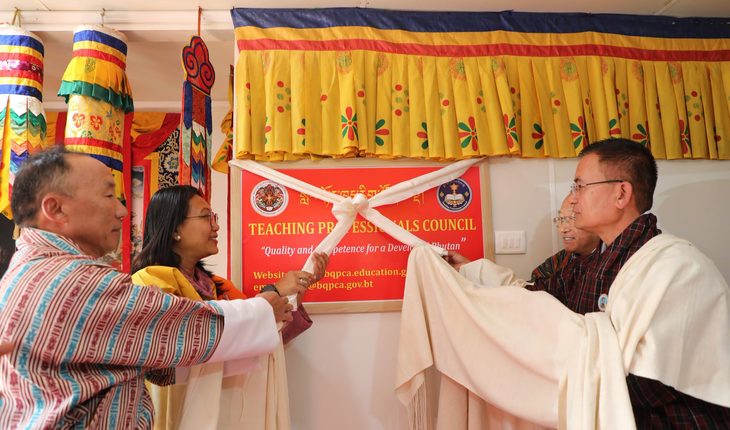
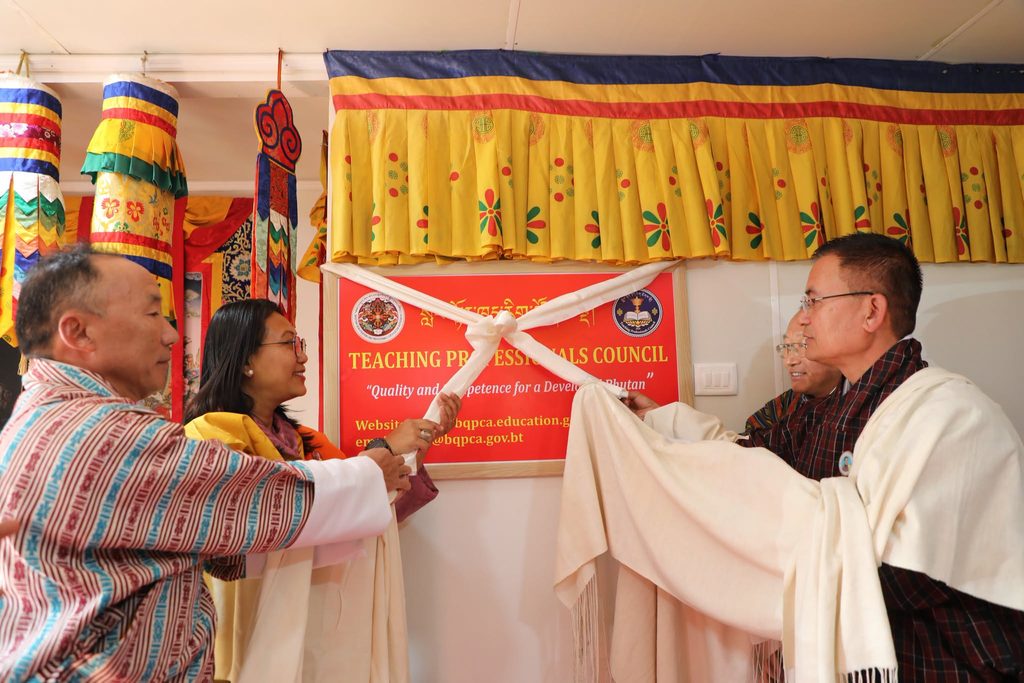
Teaching will soon have a formal professional registration and certification system, with around 9,000 teachers across the country required to register under the newly launched Teaching Professionals Council (TPC) on November 19.
The Council is expected to change how the teaching profession is recognised in Bhutan by establishing professional standards and a system that acknowledges teachers’ competencies, experience and commitment to improving their skills.
The initiative seeks to give teaching a distinct professional identity, moving beyond its traditional recognition as an occupation within the government system.
Under the proposed framework, teachers will be evaluated in three areas: classroom performance, continuing professional development (CPD) and professional knowledge. The assessment will determine their professional competencies and provide opportunities for recognition at different stages of their careers.
Classroom practice will be assessed against the Bhutan Professional Standards for teachers, focusing on how effectively teachers apply professional knowledge and skills in their daily teaching activities.
The CPD component will recognise teachers who take part in training, workshops and other professional learning activities. Participation in these programmes will help teachers strengthen their knowledge and teaching abilities while earning credit points towards their professional certification.
The third area will examine teachers’ understanding of their respective subjects, their professional responsibilities and the knowledge required to deliver effective teaching.
According to Yesh B. Ghaley, Executive Specialist Head with the Teaching Professionals Council, the professional standards consist of seven criteria divided into four levels, with specific expectations outlined for teachers at each level.
He said that, “the framework would establish clear professional benchmarks, enabling teachers to understand the standards they are expected to demonstrate as they progress in their careers”.
The Ministry clarified that the assessment would not be used to re-examine teachers’ academic qualifications or question their ability to teach. Rather, it would serve as a mechanism to evaluate their professional competencies and recognise their development.
Through the certification process, teachers will be classified into professional categories, including proficient, accomplished and distinguished, based on their demonstrated standards and competencies.
Yesh B. Ghaley said the categorisation would allow teachers to receive formal acknowledgement of their professional achievements and strengthen their identity within the teaching community.
He added that the recognition would give teachers a greater sense of professional standing and distinguish their levels of expertise and development.
Director of the Bhutan Qualifications and Professionals Certification Authority (BQPCA), Dr. Ugyen Tshewang, said the Council would also focus on improving the professional credibility of Bhutanese teachers and making their qualifications and credentials more widely recognised internationally.
He said the adoption of internationally benchmarked standards and practices would help strengthen the recognition of Bhutanese teaching professionals beyond the country while improving the portability of their professional credentials.
In developing the framework, the Council has studied professional regulation systems in Australia, New Zealand and the United Kingdom. Relevant practices from these countries are being adapted to align with Bhutan’s education system and requirements.
Dr. Ugyen Tshewang said the purpose of regulating the profession should be to create opportunities for teachers to advance their careers, improve their professional capabilities and gain recognition for their contributions.
The Council has also received institutional support from the Royal Civil Service Commission (RCSC), which approved 10 staff positions to support its operations. Among these is the Head of the TPC position at the Executive Specialist level, with a salary grade equivalent to that of a department head.
The Council was established on August 20, 2025, and received its first batch of officials on January 26, 2026. Since its establishment, it has been working on the policies, guidelines and institutional arrangements needed to regulate the teaching profession.
Its key achievements include developing registration guidelines, a Continuing Professional Development Framework, a Code of Conduct and Ethics, and a 10-year Strategic Roadmap.
The Bhutan Professional Standards for Teachers and the CPD Framework are also being reviewed further with technical support from the Cambridge team to strengthen their implementation. The Council’s responsibilities will extend beyond registering and certifying teachers, with an emphasis on maintaining professional standards and encouraging continuous improvement across the education sector.
Dr. Ugyen Tshewang said the Council’s performance should ultimately be assessed through tangible improvements in classroom teaching, greater professional recognition for teachers and better learning outcomes for students.
He said the real measure of the Council’s contribution would be whether its work could raise the quality of teaching, strengthen the professional status of educators and positively influence children’s education and future opportunities.
The Council expects to introduce the registration and certification system by the middle of next year.