TIL BDR GHALLEY | Thimphu
The government will launch the Third Child Incentive Programme next month, providing Nu 10,000 monthly support to families for their third and subsequent children until the age of three, as part of efforts to address Bhutan’s declining birth rate and growing demographic challenges.
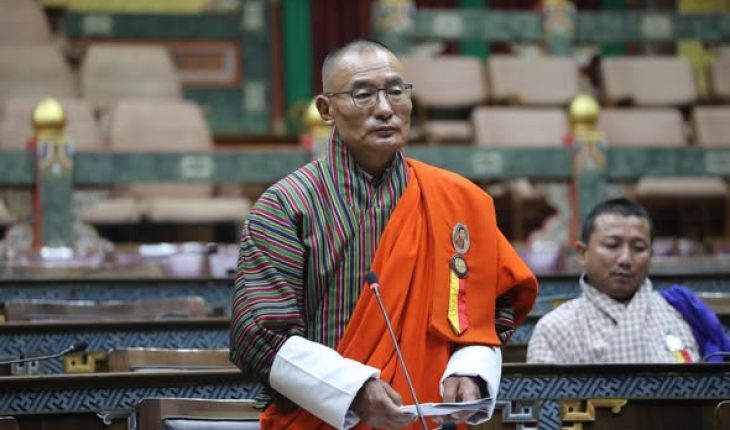
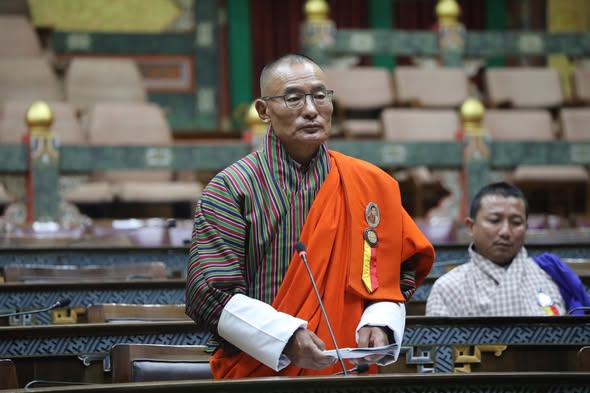
Prime Minister Tshering Tobgay announced the timeline during the National Assembly’s Question Hour session following concerns raised by the Member of Parliament from Kengkhar-Weringla Constituency Dorji Wangmo over falling fertility rates, youth outmigration, and the country’s ageing population.
“We expect to roll out the programme next month,” the PM said. “In addition to the financial incentive, the government will introduce a range of supporting measures and initiatives.”
Bhutan faces a sharp decline in population growth. According to the PM, the country’s total fertility rate has dropped from 6.4 children per woman in 1982 to around 1.4 today, significantly below the replacement level of 2.1 required to maintain a stable population.
“It means that a woman will give birth to an average of only 1.4 children in her lifetime,” PM said. “In other words, parents are not replacing themselves.”
The PM described the issue as a major national concern with long-term implications for the country’s economy, labour force, and social systems.
He said the decline is linked to broader socio-economic changes, including urbanisation, changing lifestyles, delayed marriages, and increasing migration of young Bhutanese abroad for education and employment opportunities.
During the session, the MP Dorji Wangmo said Bhutan’s birth rate has declined by more than 60 percent over the past 35 years. She pointed out that the number of births in the country fell from more than 15,500 in 1990 to about 5,784 births in 2025.
She said that the trend could create serious challenges in the future, including shrinking workforce participation and increasing pressure on the working-age population to support elderly citizens.
The MP said economic uncertainty and rising living expenses are among the main reasons discouraging young Bhutanese from having children.
“Living expenses continue to increase while earnings remain stagnant,” she said. “At the same time, childcare and Early Childhood Care and Development centres (ECCD) services are still inadequate, forcing many young couples to carefully weigh the financial and practical challenges of raising children.”
She added that many young people are postponing marriage and parenthood because of financial insecurity, limited childcare options, and concerns about long-term economic stability.
In response, the PM acknowledged that financial support alone would not be sufficient to reverse the declining fertility trend.
He said the government is pursuing a broader package of family support measures, including free healthcare and education services, expansion of childcare and crèche facilities, and strengthening of ECCD centres across the country.
The PM also said the government is reviewing long-term demographic and social protection policies to prepare for the challenges associated with an ageing population.
According to the government, the Third Child Incentive Programme is intended to ease some of the financial burden faced by families raising multiple children and encourage higher birth rates.
The initiative was one of the government’s major pledges and is expected to become one of Bhutan’s largest direct family support schemes.
Bhutan’s demographic concerns have increasingly drawn attention in recent years as outward migration, especially among young people, continues to rise while birth rates continue to fall.
The prolonged low fertility rates could eventually result in labour shortages, reduced economic productivity, and increased pressure on healthcare and pension systems.