TIL BDR GHALLEY | Thimphu
Members of Parliament raised concerns over persistent communication challenges in Bhutan’s remote highland regions, warning that poor mobile connectivity continues to endanger lives, disrupt emergency response, and isolate communities despite years of rural network expansion.
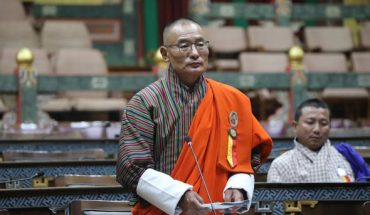
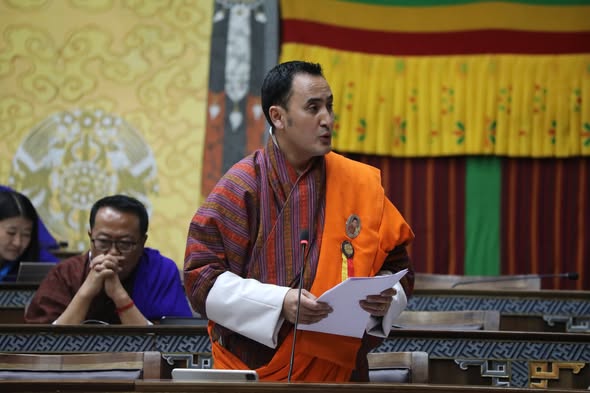
Presenting the Action Taken Report (ATR) by the Minister for the Ministry of Industry, Commerce and Employment on resolutions adopted during the Fourth Session of the Fourth Parliament concerning weak mobile network and telecommunication services in underserved areas.
MoICE minister Namgay Dorji said the government has made “significant progress” through successive phases of the Rural Connectivity Programme (RCP), which has expanded 2G and 4G access to more than 850 villages across all 20 dzongkhags.
“Almost all rural areas have now been connected through seven phases of the Rural Connectivity Programme and supplementary initiatives,” the minister said. “However, a few remote highland pockets and technically difficult locations still remain unconnected because of the high infrastructure costs compared to the small number of households.”
The minister said the supplementary phase of RCP 7, launched on May 6, 2025, aims to connect 17 villages in 12 gewogs covering around 255 households in seven dzongkhags.
The House was also informed that the ministry, in collaboration with Bhutan InfoComm and Media Authority, has begun a nationwide technical assessment to identify underserved regions and evaluate network quality, including signal strength, data speed, and reliability.
According to the minister, assessments have already been completed in Lhuentse, Samtse, Samdrup Jongkhar, Trashiyangtse, and Mongar. The findings will be used to prepare a national connectivity improvement plan to guide future interventions and investments.
On financing, the minister said the Universal Service Fund remains the main source of funding for rural connectivity projects. The fund is financed through a four percent annual revenue contribution from telecom operators Bhutan Telecom Limited and Tashi InfoComm Limited.
The minister added that the ministry is also exploring ways to streamline land clearance and right-of-way approvals for telecommunication infrastructure by considering a more integrated single-window clearance system.
However, for several Members of Parliament, the numbers offered cold comfort against accounts from the ground.
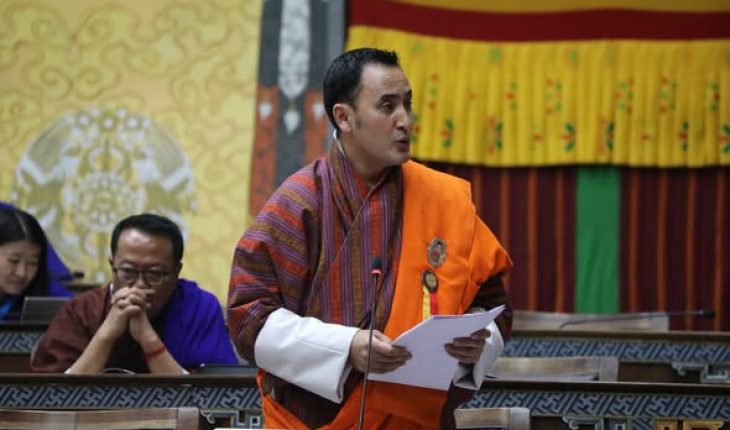
Kuenga, MP from Nyisho-Saephu in Wangdue Phodrang, said emergency communication remains a major concern during the cordyceps harvesting season.
“For some highlanders, especially during the cordyceps harvest season, people have to walk for nearly two days to reach areas with network coverage during emergencies,” Kuenga said. “As I have raised repeatedly in previous sessions, it would be beneficial to provide satellite phones in groups as a temporary measure.”
Lamdra Wangdi, MP from Nganglam in Pemagatshel, raised concerns about travellers travelling to southern and eastern dzongkhags via India, saying many remain completely cut off during transit.
“While travelling, if any emergency happens on the way, there is no way to communicate because Bhutanese SIM cards do not work and travellers also cannot access Indian SIM cards,” he said. “I have heard that some travellers were stranded for two to three days because of such problems.”
Lamdra Wangdi acknowledged that international regulations may limit cross-border telecommunications arrangements but questioned whether the minister had any plans or proposals to address the issue as a public service concern.
Kuenzang Thinley, MP from Choekhor-Tang in Bumthang, said weak connectivity was also affecting emergency medical services.
“Due to poor connectivity, even medical evacuations cannot be arranged on time, causing significant inconvenience,” he said. “During election campaigns as well, we pledged to provide satellite phones in groups. Therefore, we need clarity on whether this can actually be implemented.”
Responding to the concerns, the Industry, Commerce and Employment Minister said regulations governing satellite phones are strictly controlled by BICMA.
“The regulatory authority, Bhutan InfoComm and Media Authority, has clear guidelines regarding satellite phones,” the minister said. “Not everyone can import or use them. Only government offices and organisations are permitted to procure satellite phones, and only for purposes such as security, disaster management, and medical emergencies. Therefore, they cannot be made widely available to meet public expectations.”
Some Members suggested alternative communication tools such as handheld radios and walkie-talkies for temporary or seasonal use in remote areas.
Sonam Tashi, MP from Lamgong-Wangchang in Paro, said communities should also consider practical alternatives instead of relying entirely on government intervention.
“Highlanders collecting cordyceps do not stay there permanently, and many go there to earn an income,” Sonam Tashi said. “Since BICMA permits the use of walkie-talkies within a range of five to twenty kilometres, this could be a possible solution.”
Members also questioned the affordability of mobile phones and sought updates on efforts to reduce mobile data charges. In response, the minister said regulating phone prices falls outside BICMA’s mandate as prices are determined by market forces, although the government continues market surveillance to ensure fair competition and consumer protection.
The minister added that BICMA already conducts monthly dzongkhag-wise service quality assessments and publishes quarterly reports, while telecom operators submit operational reports every month to support monitoring and complaint resolution.
Following deliberations, the House directed the Good Governance Committee to further review the concerns raised by Members, identify gaps not addressed in the ATR, and submit findings and policy recommendations during the next parliamentary session.
Several Members stressed that improving connectivity in Bhutan’s remote regions will require more than expanding geographical coverage, calling instead for targeted interventions focused on service reliability, emergency communication access, and practical solutions for isolated highland communities.