NGAWANG JAMPHEL |Thimphu
As the monsoon season approaches, health authorities in Bhutan are intensifying efforts to prevent a possible rise in malaria cases in the southern dzongkhags, particularly along border areas vulnerable to cross-border transmission from India.
The concern comes after Bhutan recorded 144 malaria cases in 2024, marking more than a fourfold increase compared to 2023. According to the Ministry of Health, the surge was mainly linked to malaria outbreaks in the neighbouring Indian states of Assam and West Bengal.
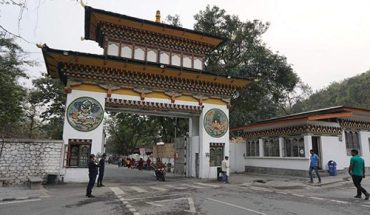
Responding to questions during the 23rd Meet the Press session, Karma Jamtsho, Director, Department of Public Health under the Ministry of Health said Bhutan’s porous borders and increasing movement of people and goods continue to pose risks of imported malaria cases.
“The surge in malaria cases reported in 2024 was primarily linked to outbreaks in the neighbouring Indian states of Assam and West Bengal,” the director said. “Given Bhutan’s porous land borders and close proximity to affected areas, there is always risk of cross-border transmission.”
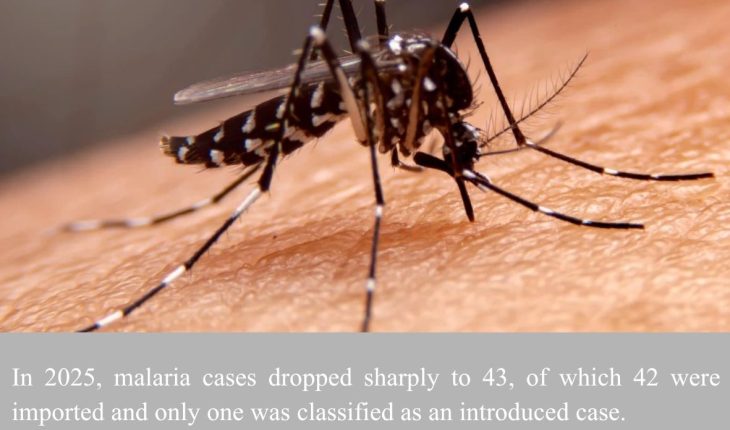
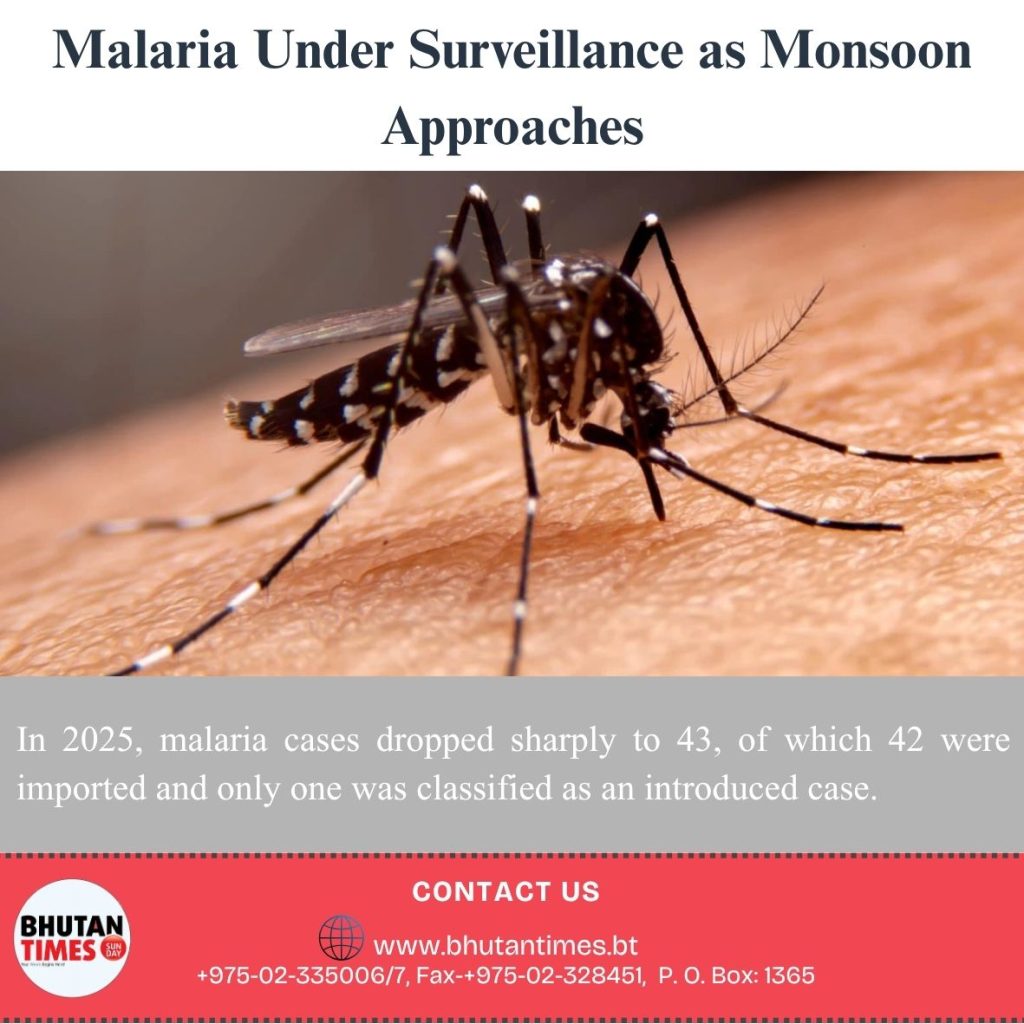
The director explained that mosquitoes can naturally travel between one and three kilometres and may disperse up to 10 kilometres under favourable wind conditions. This makes communities living near border regions particularly vulnerable during the monsoon season, when mosquito breeding increases rapidly.
Despite the rise in cases in 2024, Bhutan has made significant progress in controlling the disease. In 2025, malaria cases dropped sharply to 43, of which 42 were imported and only one was classified as an introduced case. No indigenous or local transmission was reported.
The director stated that only four malaria cases have been detected so far this year, and all were imported through cross-border travel, migration, and trade activities.
Bhutan has not reported any indigenous malaria case since November 2021, allowing the country to maintain its malaria-free status for more than three consecutive years.
However, the director warned that the threat of reintroduction remains high because of climate change, increased trade, and frequent cross-border movement.
To prevent spillover and local transmission, the Ministry of Health has strengthened several interventions in high-risk districts.
One of the key measures is early diagnosis and prompt treatment. All fever cases in the seven high-risk districts are routinely tested for malaria to ensure early detection and immediate treatment before the disease spreads.
The ministry has also intensified vector control measures by providing Long-Lasting Insecticidal Nets (LLINs) to at-risk populations. In addition, two rounds of Indoor Residual Spraying (IRS) are conducted annually in high-risk areas to kill mosquitoes carrying the malaria parasite.
Health officials say these measures are particularly important during the rainy season, when stagnant water creates breeding grounds for mosquitoes.
The government has also strengthened surveillance systems and mosquito monitoring in vulnerable areas. Quarterly mosquito surveillance, larval source management, and monitoring of mosquito density and behaviour are being carried out at eight sentinel sites across high-risk dzongkhags.
The eight monitoring sites include Devitar in Dagana, Depujura in Samtse, Pemathang in Samdrup Jongkhar, Pantang in Zhemgang, and Norbuling, Singye, Chokhorling, and Jampeling in Sarpang.
According to the director, Bhutan is also working closely with Indian counterparts through joint fever screening, surveillance activities, and information sharing in border areas.
“Cross-border collaboration remains essential because imported cases continue to pose risks,” he said.
The ministry has further engaged local communities, De-suups, armed forces, non-governmental organisations, and community groups in malaria prevention activities.
These groups are being trained to promote awareness, encourage early reporting of fever cases, and support local ownership of malaria control efforts.
Targeted awareness campaigns are also being conducted in southern districts, especially in communities considered vulnerable to outbreaks.
Health workers are educating residents about the importance of sleeping under insecticide-treated bed nets, seeking medical attention early, and maintaining clean surroundings to reduce mosquito breeding.
As part of seasonal preparedness, the ministry will launch a nationwide malaria and dengue prevention campaign from May to June this year in high-risk southern regions ahead of the peak monsoon period.
Health officials say the campaign aims to reinforce public awareness and encourage communities to take preventive measures before mosquito populations rise during the rainy season.
Bhutan has now reached a major milestone in its fight against malaria. Having maintained zero indigenous malaria cases for three consecutive years, the country has formally applied to the World Health Organization for malaria elimination certification.
The country is currently awaiting the next steps in the certification process.
The director said this achievement reflects decades of effort by health workers, strong disease surveillance systems, and active participation from communities across Bhutan.
“Bhutan stands at the threshold of becoming officially malaria-free,” he said.
However, the director stressed that public vigilance remains critical despite the progress achieved so far.
He urged people living in high-risk areas to continue using insecticide-treated bed nets, especially for children and pregnant women, and to remove stagnant water around homes where mosquitoes breed.
The ministry also advised the public to seek immediate testing and treatment if they develop fever symptoms, particularly in southern districts during the monsoon season.
“Malaria remains a serious threat to our health and well-being, but together we can stop its spread,” the director said.