RENUKA RAI | Thimphu
Sonam Tobgay, 28, is emerging as a powerful literary voice in Bhutan, using storytelling to explore themes of emotional pain, healing, identity, and inner strength.
An evolving Bhutanese author, he hails from Pelling, Tseza Gewog under Dagana Dzongkhag and currently teaches at the Gedu Higher Secondary School in Chukha.
By day, he stands in front of a classroom teaching language to students. By night, the same teacher sits alone with black coffee, memories, and unwritten emotions that refuse to stay silent.
From those sleepless nights emerged three emotionally powerful books Yeega: My High School Love, The Phoenix Within: A Mother’s Triumph, and the latest release, I Am Still Becoming – A Voice That Found Its Way Back works that are steadily carving a space in Bhutan’s growing literary landscape.
But the journey into writing did not begin with dreams of becoming an author. It began with loss, silence, and emotional survival.
“My journey did not begin with a pen, it began with silence,” the author said. “A silence that lived between lessons, behind smiles, and within the unspoken struggles of my students.”
For the teacher-turned-author, words were never simply part of education. They became emotional lifelines bridges between suffering and expression. Inside classrooms, the author witnessed students carrying invisible burdens: heartbreak, fear, loneliness, family struggles, and emotions they often could not speak about openly. Over time, those silent realities began shaping something deeper within.
“I watched stories heal those who could not speak,” he said. “And in doing so, I realized I too was carrying stories that refused to remain buried.”
One tragedy in particular changed the course of life forever. While studying in Class 12, his house was destroyed in a fire an event that left more than physical damage.
“When my house burned, I did not just lose a home. I lost the dreams that once sheltered all my hopes,” he said.
The trauma remained buried for years beneath responsibilities, expectations, and the routine of teaching. But pain has a way of demanding a voice.
“Teaching gave me purpose, but writing gave my wounds a voice,” he said.
What followed was not a pursuit of literary fame, but a deeply personal need to transform suffering into something meaningful.
“I do not write for fame,” he said. “I write to awaken hearts.”
That emotional honesty became the foundation of the author’s first novel, Yeega: My High School Love, a story cantered on the fragile emotional world of youth, first love, heartbreak, and silence.
He says the novel was inspired not only by personal experiences, but also by the untold emotions carried quietly by many young people.
“There is a quiet, almost sacred pain that belongs only to youth the kind we rarely speak about, yet never truly forget,” the author said.
Within school corridors and classrooms, the author saw students struggling with emotions too heavy for their age yet too hidden to be understood.
“Every high school holds echoes of first glances, unspoken confessions, and heartbreaks that feel too heavy for young hearts,” the author said.
The novel quickly became more than a love story. It became a reflection of emotional vulnerability among young people who often feel unheard. Behind the author’s resilience stands another important figure elder brother Samten Jamtsho, the Gup of Tseza Gewog in Dagana.
“A man who builds not just communities, but hope,” the author said while describing the brother’s influence. The second book, The Phoenix Within: A Mother’s Triumph, marked a darker and more emotionally demanding phase in the author’s literary journey.
Focused on motherhood, sacrifice, suffering, and survival, the book forced the author to confront pain with complete honesty.
“This book broke me before it rebuilt me,” he said.
Unlike the emotional softness of the first novel, The Phoenix Within demanded rawness and truth. “It taught me that resilience is not loud,” the author explained. “Sometimes, it is simply the quiet decision to survive another day.”
The experience reshaped not only the author’s writing style but also personal understanding of strength and suffering. “This book did not just shape my writing,” the author said. “It reshaped my soul.”
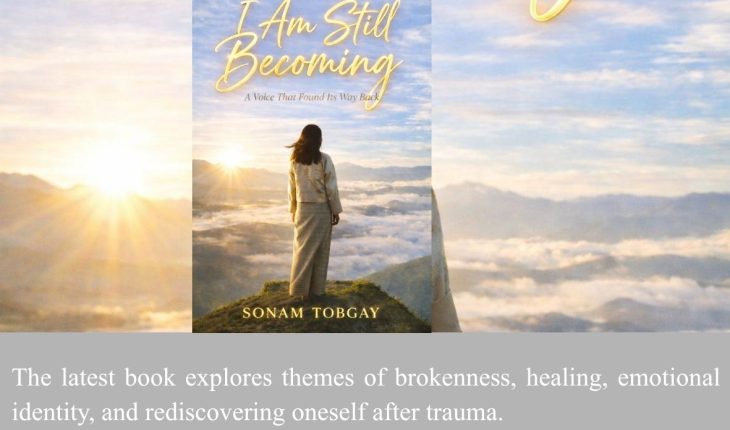
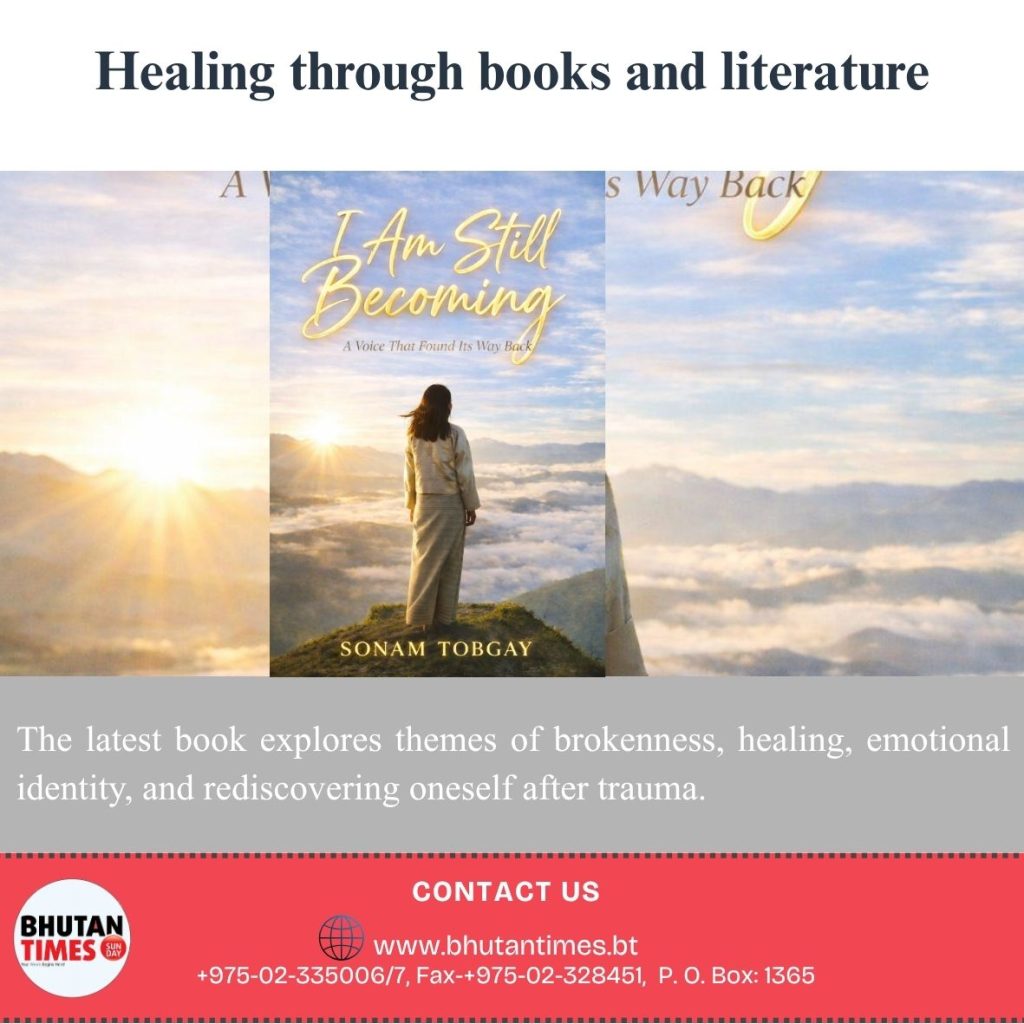
Now, with the release of I Am Still Becoming a Voice That Found Its Way Back, the author enters perhaps the most powerful chapter yet one deeply connected to identity, healing, and emotional recovery.
The book emerged from stories shared online through TikTok under the account “Sonam Tobgay 77,” where the author posted short but emotionally piercing reflections on women’s pain, identity struggles, emotional trauma, and silent suffering.
What followed surprised the author. “People did not respond with applause,” the author said. “They responded with confessions.”
Messages began arriving from strangers who saw themselves within the stories. “They told me, ‘This is my story. You have written what I could never say.’” Those reactions became impossible to ignore. “That was when I knew I could not stop writing, he said.
The latest book explores themes of brokenness, healing, emotional identity, and rediscovering oneself after trauma. It speaks especially to those who feel invisible in society people carrying silent wounds while pretending to be whole.
“This book is not just a story; it is a mirror” he said. According to the author, healing is rarely beautiful or simple. “Healing is messy, painful, and often invisible,” he said. “Strength is not what the world sees. It is what we carry when no one is watching.”
The stories within the book are not entirely autobiographical, but they are deeply rooted in real emotions and lived realities.
“My stories are stitched from truth,” he said. “Some are lived, some are witnessed, and many are silently endured by others.”
For him, observation itself has become a form of storytelling. “I listen more than I speak,” the author said. “And in quiet observations, I find stories that demand to be told.”
Balancing teaching with writing remains one of the greatest challenges. The author often writes deep into the night after long days in the classroom.
“My days belong to my students, but my nights belong to my words,” he said. There are nights when exhaustion wins. But there are also nights when emotions refuse to stay silent. “I often write until 2 AM with nothing but black coffee and a restless mind,” he shared.
Beyond personal struggles, he says Bhutanese writers continue to face difficult realities within the country’s small literary industry. “One of the heaviest struggles is invisibility”.
Limited publishing opportunities, high printing costs, and the absence of strong promotional platforms make it difficult for local authors to reach readers. “In Bhutan, an author is rarely just a writer,” he explained. “We become our own publishers, marketers, and storytellers all at once.”
Despite those difficulties, he refuses to stop writing. “When the path is unclear, you learn to create your own,” he said. At the heart of I Am Still Becoming lies a simple but powerful message: breaking does not mean ending. “Falling apart does not mean you are finished,” he said. “It means you are human.”
The author hopes readers leave the book carrying a sense of quiet hope the belief that healing is possible even after devastation. “Even in the darkest moments, giving up is not the answer,” he said. “There is always a way forward.”
For aspiring writers, the advice comes from lived experience rather than theory. “Do not write to impress write to express,” he said. “The world does not need perfect stories. It needs honest ones.”
In a society where many struggles remain hidden behind silence, the teacher-turned-author is using literature not only to tell stories, but to create emotional refuge for readers who feel unseen, unheard, or broken.
And through every page written in the quiet hours of the night, one message continues to echo.
healing begins the moment silence finds a voice.