NGAWANG JAMPHEL | Thimphu
The Construction Development Corporation Limited (CDCL) is emerging as one of the country’s leading engineering and construction companies.
Expanding beyond roads and bridges, the state-owned company is now taking on hydropower projects and other large-scale national infrastructure works.
However, even as CDCL grows rapidly and strengthens its technical capacity, the company says it is struggling to retain skilled Bhutanese engineers and workers amid increasing migration opportunities abroad and rising pressures in the construction sector.
CDCL officials said the company has completed infrastructure projects worth several billion ngultrums while continuing to improve its engineering expertise, project management systems, and workforce capacity to meet growing national expectations.
According to Lok Bahadur Ghalley, the General Manager at Corporate Strategy Office, the company has completed 13 permanent concrete bridges across the country with a total contract value of Nu 1.1 billion. In addition, CDCL has launched and de-launched 163 bailey bridges, generating earnings of around Nu 135.44 million.
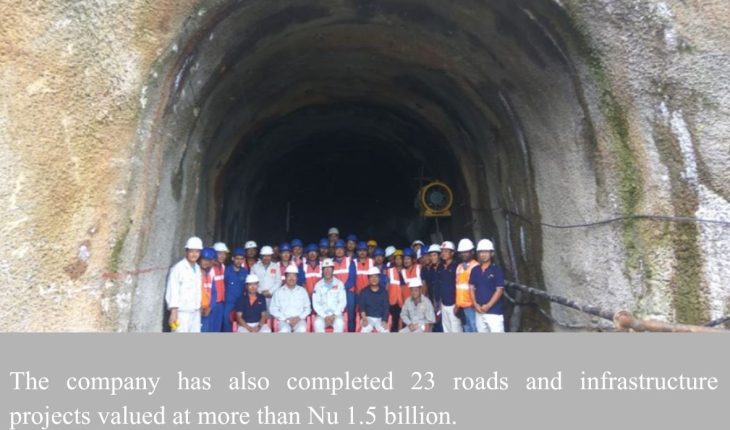
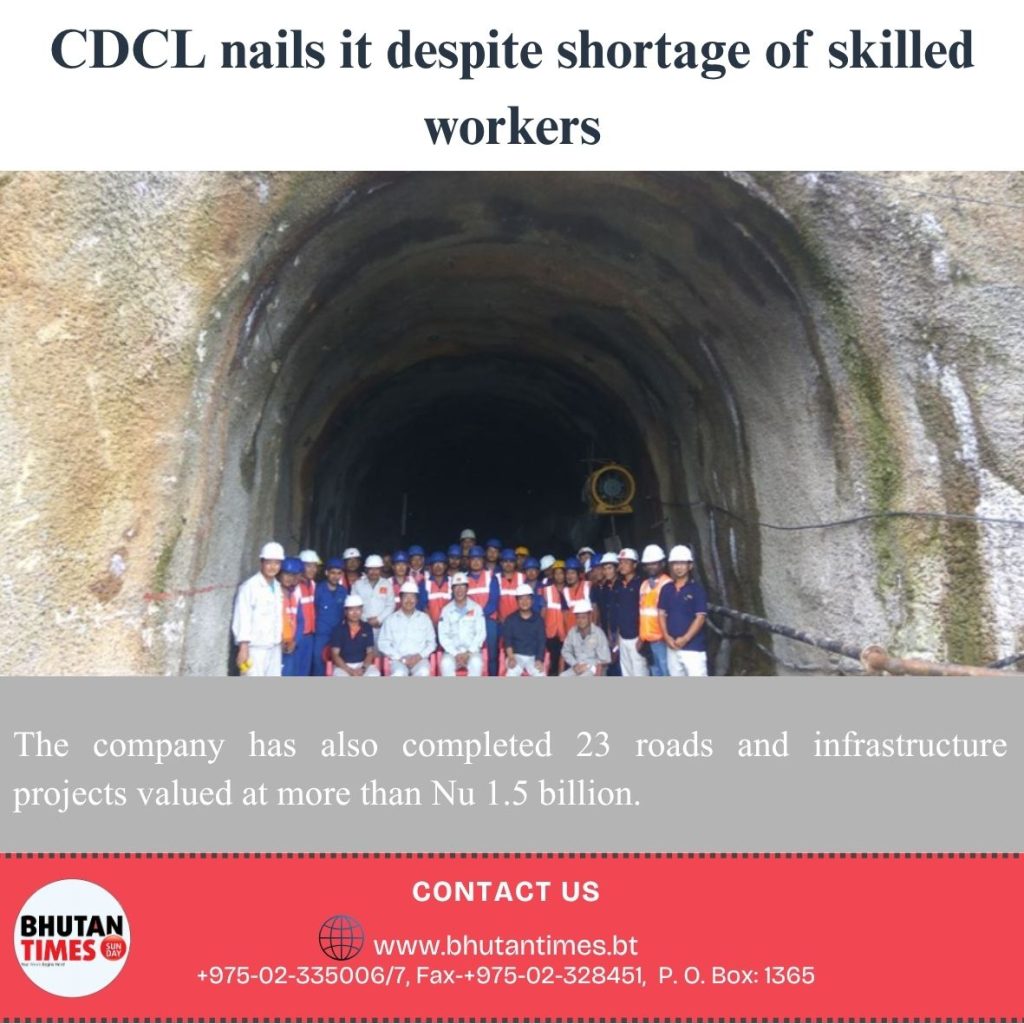
The company has also completed 23 roads and infrastructure projects valued at more than Nu 1.5 billion.
Officials said these projects have played a significant role in improving connectivity, accessibility, and economic activities across different parts of the country.
“Beyond the financial value, these projects form critical components of Bhutan’s transport and trade connectivity,” Lok Bahadur Ghalley said. “The projects have played a vital role in improving regional accessibility and supporting economic development.”
CDCL’s transition into hydropower construction marks a major shift in the company’s operational focus. Officials said preparations for this transition began more than a decade ago after the company identified hydropower as a major future area of work.
The company began recruiting and training engineers and technical manpower as early as 2015, even before receiving its first hydropower project toward the end of 2016.
Today, CDCL is simultaneously implementing four hydropower projects, which officials say demonstrates the success of its long-term investment in capacity building.
To strengthen technical expertise, CDCL has been conducting continuous training programs for engineers, technicians, and equipment operators, particularly in hydropower construction.
Existing employees are also being upgraded through specialized training, certifications, and exposure to advanced engineering sectors.
The company is additionally preparing project management training programs aimed at improving the capabilities of project engineers and project leads.
Officials said CDCL’s status as a subsidiary of Druk Holding and Investments (DHI) has enabled the company to invest in specialized machinery and equipment needed for complex engineering works.
Despite these achievements, retaining experienced professionals remains one of the company’s biggest challenges.
According to Lok Bahadur Ghalley, increasing migration opportunities abroad, especially to countries such as Australia, have affected the retention of skilled Bhutanese professionals in the engineering and construction sectors.
“We continue to invest in training and skill development, but retaining experienced manpower has become increasingly difficult,” Lok Bahadur Ghalley said.
The challenge reflects a wider national issue, as many Bhutanese professionals seek higher salaries and better opportunities overseas.
In sectors like engineering and construction, the departure of experienced workers creates additional pressure because infrastructure projects require highly specialized technical skills and long-term experience.
Apart from manpower retention, CDCL said maintaining project timelines is one of the most difficult aspects of infrastructure development in Bhutan.
The company identified cash flow constraints, supply chain disruptions, difficult terrain, and workforce shortages as some of the major challenges affecting project implementation.
Lok Bahadur Ghalley explained that construction projects often require large upfront payments to suppliers to ensure timely delivery of materials and equipment. However, payments from clients can sometimes take months due to verification and approval processes.
This creates financial pressure, particularly for large-scale infrastructure projects that require continuous procurement of construction materials and machinery.
To manage such challenges, CDCL said it relies on overdraft facilities and inter-corporate borrowing arrangements to maintain project momentum and avoid delays.
Supply chain disruptions have also become a persistent issue, especially because many specialized construction materials and tunneling equipment must be imported from countries such as India, China, and several European nations.
Officials said tunneling equipment sourced from Europe and China often involves long delivery timelines. Bhutan’s mountainous terrain and unpredictable weather conditions further complicate transportation and logistics.
Rising fuel prices have also increased operational costs across projects.
To reduce disruptions, CDCL has signed memorandums of understanding with suppliers and manufacturers for dedicated supply arrangements of essential construction materials such as steel, cement, sand, and aggregates.
The company has also adopted what officials describe as a “buffer-based planning model” to manage uncertainties and minimize delays.
This approach includes the use of high-capacity mechanization, advance planning systems, and monthly performance reviews designed to identify bottlenecks early and implement corrective measures before delays become severe.
Another major issue facing the company is the shortage of manpower within Bhutan’s construction sector.
Officials said Bhutan’s relatively small population limits the availability of skilled workers required for large infrastructure projects. While foreign workers are recruited during periods of acute shortage, retaining them for long durations is often difficult.
Despite this, CDCL said it continues to prioritize the development of a national workforce, with the majority of employees being Bhutanese.
As the company takes on larger and more technically demanding projects, questions have also emerged about whether Bhutanese firms possess sufficient in-house expertise to independently manage complex infrastructure works.
CDCL officials said the company now has strong in-house expertise in construction execution and can independently implement large infrastructure and hydropower projects.
The company currently has experienced engineers capable of managing major construction works, along with two Prince2-certified engineers who are expected to provide project management training to other technical staff.
However, officials acknowledged that certain gaps remain in specialized design expertise.
“At present, our in-house design expertise is mainly limited to building projects,” Lok Bahadur Ghalley said.
For highly specialized technical designs involving large bridges and hydropower systems, CDCL still relies on external consultants.
Officials said the company previously had internal expertise for large bridge design, but many experienced engineers have since left the organization.
To address this gap, CDCL plans to train a new generation of structural and bridge engineers in the coming years.
The company said engaging external consultants for specialized design work remains the most cost-effective option for now while also providing opportunities for internal teams to learn through knowledge transfer.
With several projects being implemented simultaneously, officials admitted that manpower and technical resources are being stretched.
To prevent overstretching, CDCL follows a centralized resource-sharing system in which experienced engineers and heavy machinery are strategically deployed across projects depending on project needs and timelines.
The company also uses project lifecycle-based manpower allocation systems to optimize efficiency and ensure that scaling up one project does not negatively affect another.
Officials said continuous recruitment and training remain critical components of this strategy.
CDCL also highlighted its organizational structure and management systems as key advantages over many private contractors.
As expectations continue to rise for Bhutanese companies to deliver large infrastructure projects efficiently, officials said accountability and monitoring systems have become increasingly important.
The company has established a dual-level progress tracking system involving weekly internal project reviews and monthly management-level review meetings.
Officials said this system helps identify implementation problems early and allows corrective measures to be introduced quickly.
Each project additionally signs a performance compact with management outlining annual targets and expected outcomes.
Failure to meet targets affects Employee Appraisal System scores, which subsequently influence incentives, performance-based allowances, promotion opportunities, and training prospects.
CDCL said it also enforces strict quality control measures through its Quality Control Manual and Project Implementation Manuals.
Non-compliance can result in disciplinary actions ranging from reprimands and financial penalties to termination, depending on the severity of the issue.
The company also conducts internal quality audits and talent development initiatives, including its High Potential Employees program aimed at preparing future leaders through professional growth opportunities and stretch assignments.
Officials said retaining skilled employees remains a major priority, with incentives and allowances being used to improve staff retention and encourage long-term commitment to the company.