TIL BDR GHALLEY | Samtse
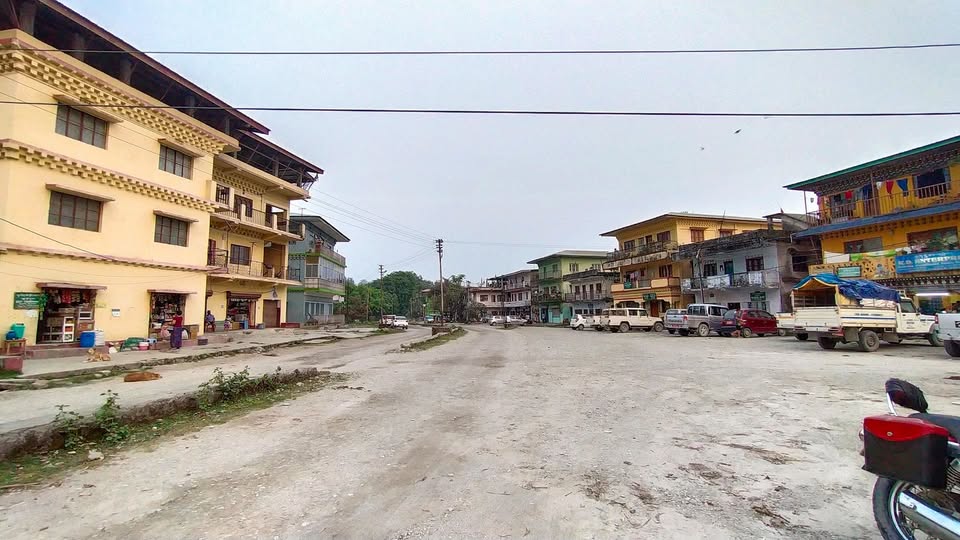
Gomtu town in Samtse dzongkhag remains locked in prolonged administrative limbo more than a decade after development slowed, as unresolved land disputes and delayed institutional responses continue to stall town planning, worsen housing shortages, and halt infrastructure growth.
Despite being declared a Yenlag Throm (satellite town) in 2015, the town has yet to transition into a planned urban centre.
Authorities attribute the delay primarily to unresolved land transactions involving the National Land Commission Secretariat (NLCS) and ongoing negotiations between Penden Cement Authority (PCAL) and 28 individual sub-lease holders.
“The delay is mainly due to pending responses regarding land transactions and unresolved discussions with sub-lease holders,” the official from dzongkhag said.
Urban development of the proposed town has effectively come to a standstill due to the lack of clarity over land ownership and lease arrangements.
Much of the town’s land is owned by PCAL and sub-leased to private individuals, creating overlapping claims that complicate planning and regulatory approvals.
Without finalized land transactions and agreed lease conditions, authorities are unable to issue construction permits or enforce building regulations.
Additionally, the absence of an implemented Local Area Plan or Area Action Plan has left the town without a formal framework for zoning, infrastructure, or building design.
“The construction remains effectively on halt due to these constraints,” said Robat Lepcha, the Gup of Phuentshogpelri .
He said that the land issue has now been resolved, adding that there is renewed hope and a possibility of a positive response in the near future.
He said he has served two terms as Gup and first heard about Gomtu’s town plan while he was still in high school, but no significant development has taken place since then.
He added that due to the long delay in implementing the town plan, Gomtu has remained stagnant and has now reached its current state.
The prolonged halt in construction has significantly worsened housing conditions, particularly for industrial workers and small businesses operating in Gomtu.
Bal Bdr Biswa, 41, a resident said the shortage has forced many into overcrowded and unsafe living conditions.
“We are sharing small rooms, and some of my colleagues are staying in temporary sheds. Rent is high, but we have no choice,” he said.
Robat Lepcha said the lack of town planning has directly contributed to the crisis, with residents unable to build new houses despite rising demand.
“If they construct houses and those fall within future town planning areas, or in plotting zone they have to dismantle them,” he said, adding that such uncertainty discourages investment in housing.
He also noted that industries that have acquired land are unable to develop it, forcing them to operate from rented premises. “They continue paying rent, and eventually their resources will be exhausted,” he said.
“The situation has reached a point where people are forced to construct makeshift huts or tents outside town.” he added.
He said if the town planning can be implemented, it should be done immediately; otherwise, the freeze on construction of buildings should be lifted. He added that this proposal has already been submitted to the Dzongkhag.
Karma Wangmo a local resident shares similar concerns, saying land uncertainty has frozen personal investment. “Even if we have money, we cannot build because we don’t know what will happen to the land later,” she said.
Despite being an established industrial hub, Gomtu also lacks basic hospitality infrastructure to support visitors and business travellers.
The town has only one small lodging facility with around five to seven rooms, and beyond this, there are no proper hotels offering comfortable accommodation.
The absence of cozy restaurants and well-equipped lodging facilities means that visitors, including officials, contractors, and business representatives, often struggle to find suitable places to stay.
This gap highlights the mismatch between Gomtu’s industrial importance and its underdeveloped urban amenities, reflecting a broader neglect in service sector planning.
Key planning initiatives, including the Gomtu Area Action Plan, remain pending with no confirmed timeline for implementation.
The Dzongkhag indicated that land ownership and lease negotiations are expected to be finalized, after which stakeholder consultations will determine lease rates.
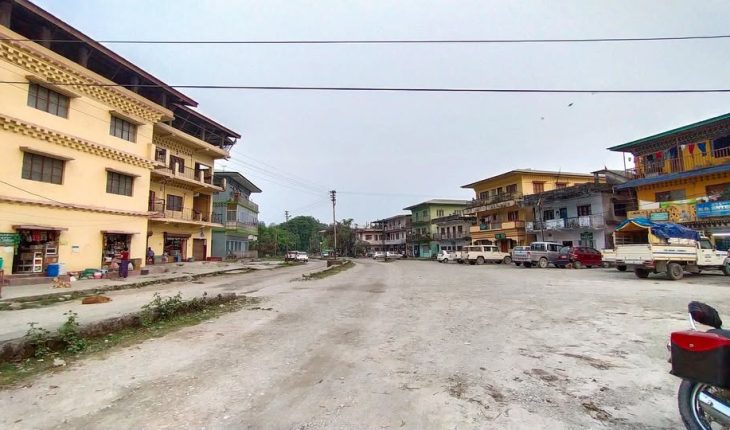
Infrastructure challenges such as poor road conditions, drainage problems, and dust pollution continue to affect residents. While dzongkhag authorities say solutions are “in the pipeline,” progress has been slow due to the absence of a comprehensive development framework.
Efforts to coordinate with central agencies have also faced setbacks. “Follow-ups were done in the past, but no proper responses were received,” the official from Dzongkhag said.
Karma Galay business owner said the uncertainty is affecting long-term operations.
“We want to expand, but without land clarity, we are stuck paying rent with no long-term security,” he said.
The official from Samtse Dzongkhag responded that if the situation remains unresolved, Gomtu could face long-term consequences, including illegal construction, worsening infrastructure, waste management challenges, and growing public dissatisfaction, ultimately affecting public service delivery.
The official also raised concerns over the town’s deteriorating aesthetic and cultural identity.
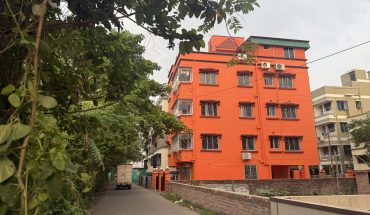
Many buildings are described as outdated and lacking Bhutanese architectural elements, reflecting the absence of regulated development.
“Gomtu risks becoming an unplanned ‘ghost town’ if these issues persist,” the administration stated.
Gomtu’s evolution reflects Bhutan’s early experiment with industrial led settlement rather than organic urban growth.
The town began taking shape in the early 1980s with the establishment of the PCAL in 1982, which transformed a sparsely populated area into a hub for workers and migrant communities.
By around 1984, Gomtu had emerged as a functional township, further driven by dolomite mining and later industrial expansion, including operations linked to Lhaki Cement.
Despite its early economic significance, development remained largely unplanned and tied to industrial operations, with land and infrastructure dominated by corporate control rather than municipal governance.
Although Gomtu was declared a Yenlag Throm in 2015, signaling its intended transition into a structured urban centre, decades of land tenure complications, limited state intervention, and fragmented planning have left the town in prolonged administrative stagnation.
The industrial township is still grappling with housing shortages, halted construction, and deteriorating infrastructure.
Until land ownership and lease issues are resolved, the town’s transformation into a planned urban centre is likely to remain stalled, leaving residents and businesses to navigate mounting challenges with no clear timeline for relief.