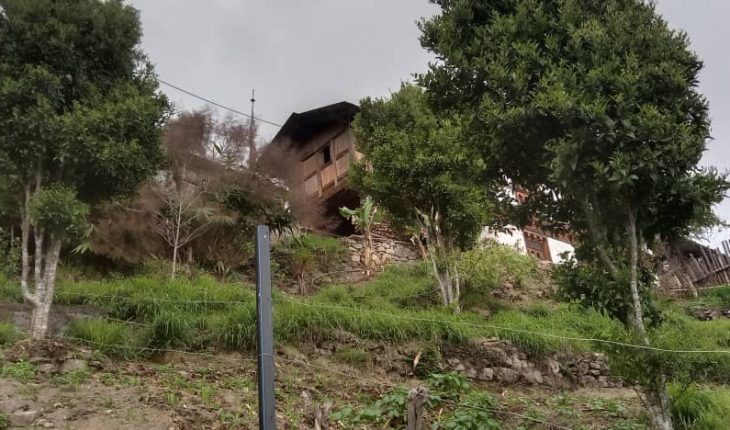
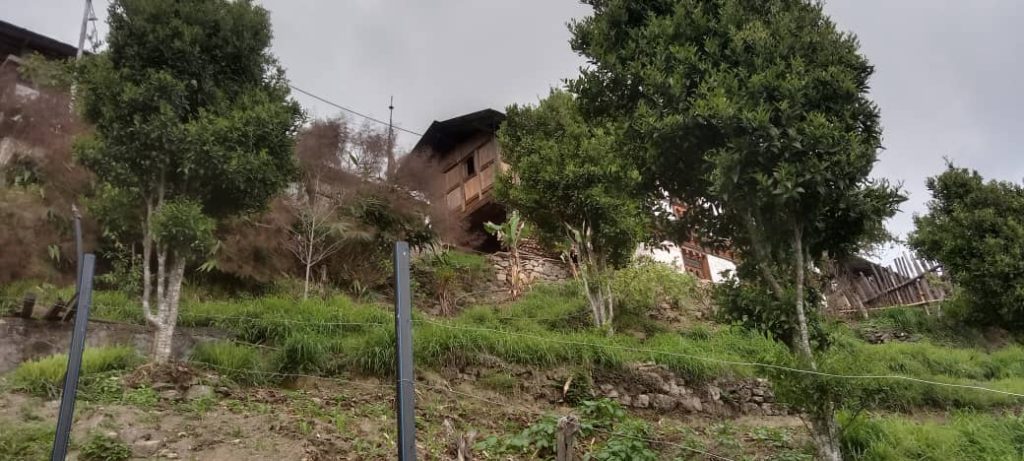
Narang Gewog in Mongar, a partially cold region, is recording growth of mandarin in recent years
DAWA ZANGMO | Thimphu
Narang gewog in Mongar, a high-altitude area traditionally characterized by cold climatic conditions, has in recent years seen the emergence of orange cultivation.
This development marks a shift in local agricultural patterns, as oranges were not known to grow in the area approximately 50 years ago.
According to officials from the Dzongkhag Agriculture Office in Mongar, orange trees have been present in the gewog for the past five to six years.
Initially, planting was limited in scale, with only a few scattered saplings introduced in select locations. Over time, the number of trees has increased, and some have begun to bear fruit, drawing attention to the changing agricultural landscape.
Historically, Narang Gewog has been associated with crops suited to colder environments. The absence of orange cultivation in earlier decades was linked to temperature conditions that were not considered favorable for such crops. Oranges, in contrast, have typically been associated with warmer regions.
Local representatives and residents have also shared their observations regarding this change.
Neten Jamtsho, Tshogpa of Narang- Pangthang chiwog, described the presence of oranges as something that felt almost like a “miracle” after many years without such cultivation. He indicated that, in his view, the change could be related to global warming.
Elderly residents have reflected on earlier attempts at growing oranges in the area.
Tshewang Penjor, an 86-year-old resident, recalled that during his twenties he had tried planting orange trees, but the effort was unsuccessful and the fruits produced were very small.
He noted that in the present year he has replanted orange trees and observed that they are now producing larger fruits.
The recent appearance of orange trees has led to gradual adjustments in orchard planning and site selection. Farmers have been identifying areas with higher sunlight exposure, particularly south-facing slopes, as suitable locations for planting. At the same time, low-lying areas prone to frost have generally been avoided.
Attention has also been given to maintaining proper air movement in orchards to reduce the accumulation of cold air.
Temperature variability has remained an important consideration in managing orange trees. Measures such as the use of windbreaks, including hedges or surrounding vegetation, have been applied to reduce the impact of cold winds.
During periods of extreme cold, simple protective methods such as organic coverings or smoke have been used in some cases. Ground cover has also been maintained to help reduce heat loss from the soil.
Naten Jamtsho said, “Soil management practices have been part of the ongoing cultivation process. Gewog administration has given some soil management training. So, organic compost has been applied to maintain soil fertility, while mulching has been used to retain moisture and moderate soil temperature.”
He added that in areas where heavy rainfall occurs, attention has been given to drainage in order to prevent waterlogging, which can affect plant health.
The selection of planting material has followed observed local performance. Farmers have been choosing orange varieties that have shown the ability to survive under existing conditions in the gewog.
The use of healthy and disease-free seedlings has been emphasized, and expansion of orchards has generally been gradual rather than immediate or large-scale
Monitoring of pests and diseases has formed part of routine orchard care. Trees are regularly checked for signs such as leaf damage or fruit rot.
Orchard hygiene practices, including the removal of fallen fruits and affected plant parts, have been carried out to reduce the spread of disease. Where necessary, low-impact or organic control methods have been applied.
Orchard maintenance includes pruning to improve sunlight penetration and air circulation within the trees. Proper spacing between trees has also been maintained to support healthy growth conditions and reduce the risk of disease.
The expansion of orange cultivation in Narang gewog has generally followed a gradual approach. Planting has often begun on a small scale, with further expansion based on observed survival rates and yield consistency.
This approach has allowed for continued observation of how the crop performs under local conditions.
At the community level, information sharing has taken place among farmers regarding cultivation practices and site performance.
Observations on which areas support better growth and which methods contribute to improved outcomes have been exchanged within the gewog. Coordination in planting and harvesting periods has also been noted in some cases.
The presence of orange cultivation in Narang Gewog represents a change in crop patterns within the area. The landscape, once without such orchards, now includes trees that were previously not part of local agriculture.
The development continues to be observed through ongoing farming practices and seasonal cycles.