NGAWANG JAMPHEL | Thimphu
The Ministry of Agriculture and Livestock (MoAL) has officially reported that it has achieved nearly 80 percent of its production targets under the ambitious 13th Five-Year Plan (FYP).
As of early 2025, the primary sector has contributed a significant Nu 39.6 billion to the national economy, marking a major milestone in the country’s journey toward economic stability.
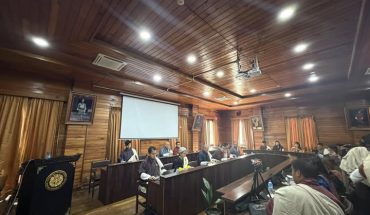
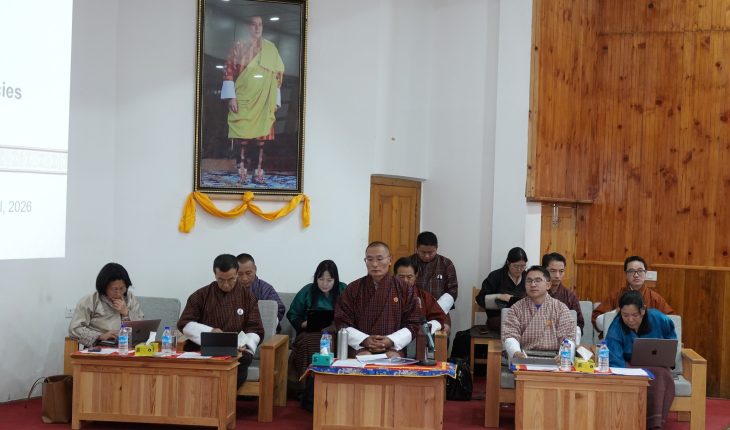
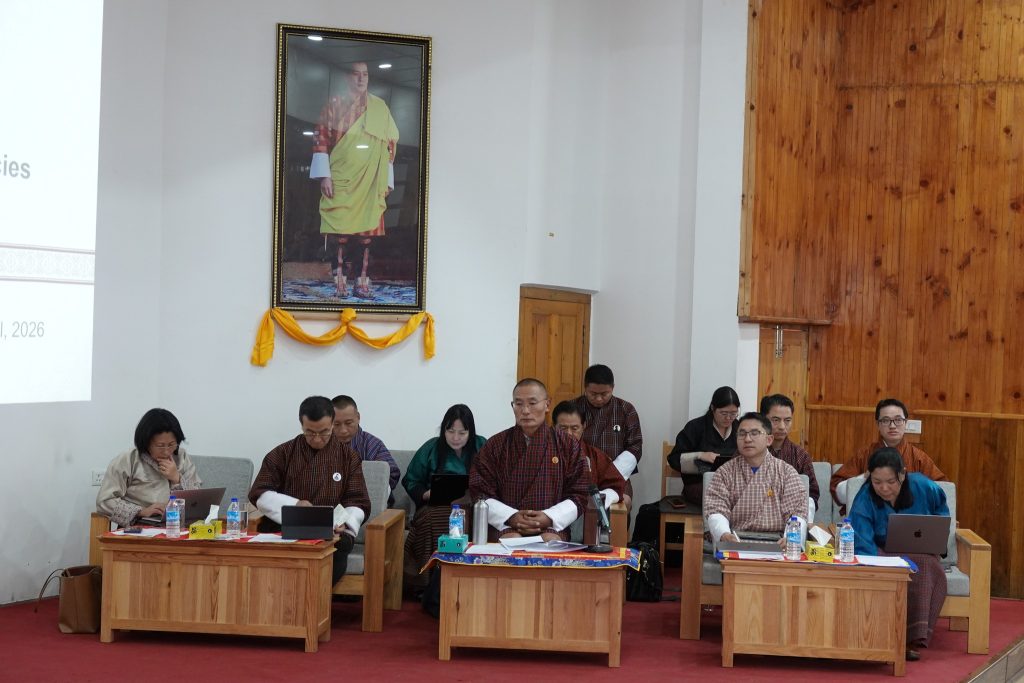
The ministry, which was the first to present the Mid Term Review (MTR) on 17 April for the 13th plan period, empathized the ministry aims to raise the agriculture sector’s total GDP contribution to Nu 50 billion by 2029.
This growth strategy is heavily focused on high-value agriculture, livestock processing, and expanding modern marketing networks for rural farmers.
To support these economic goals, the ministry has successfully rolled out several nationwide initiatives designed to empower the farming community.
These include the establishment of new credit access facilities to provide much-needed capital to rural entrepreneurs and the launch of the National Crop and Livestock Insurance Scheme (NCLIS).
Furthermore, the ministry has made significant strides in protecting farmers’ hard work by installing 1,107 kilometers of chain-link fencing to prevent crop destruction by wildlife.
Such structural improvements are paired with educational programs, as the ministry has achieved 100 percent of its goal in linking farmer groups and cooperatives with the Gyalsung Academies and export markets.
The data presented shows a landscape of both remarkable successes and areas requiring urgent attention. On the winning side, maize production reached 32,042 metric tonnes (MT), successfully crossing its target.
Farm mechanization also saw a boost, with modern machinery now covering over 31,000 acres of land, which is well above the initial plan.
In the livestock sector, pork production emerged as a standout success, achieving 131.6 percent of its target.
Other livestock products, including milk, chicken, and honey, are currently sitting at approximately 74 to 75 percent of their goals, showing a steady and reliable upward trend in domestic production.
Despite these positive numbers, the report also identified several critical shortfalls that threaten the goal of total food self-sufficiency.
Rice cultivation, which is essential for the national diet, produced 45,530 MT, falling nearly 9,000 MT short of its target.
Even more concerning was the performance of the fisheries sector; fish production saw a steep decline, yielding only 47.4 MT against a target of 250 MT.
The ministry clarified that this failure was primarily due to a shortage of fingerling production, which reached only about one-third of the required units.
Similarly, quinoa production reached only 39 MT, a small fraction of the 250 MT goal originally set by planners.
In terms of international trade, Bhutan’s agricultural exports have generated Nu 3.95 billion so far, which represents about 65 percent of the 2029 revenue goal of Nu 6 billion.
Cardamom remains the country’s most successful export crop, bringing in Nu 2 billion, while oranges and potatoes contributed Nu 680 million and Nu 320 million, respectively.
To further enhance the quality of livestock and agriculture, the ministry has also signed international agreements, such as a Memorandum of Understanding with Mongolia, focused on improving livestock health and breeding techniques.
The presentation was met with both praise and constructive criticism from the Prime Minister. While acknowledging the hard work of the ministry, the PM raised serious concerns about Bhutan’s ongoing dependence on imported food.
He pointed out the irony of importing fruits like bananas from India, noting that such crops take only a year to bear fruit and should be grown in abundance locally.
He also highlighted that the “Million Fruit Tree Project” is currently underperforming by nearly 50 percent and called for better strategies to boost local production and market opportunities.
The PM specifically emphasized that Bhutan should strive to be self-sufficient even in areas like flower production, reducing the need for foreign imports.
As the ministry looks toward the final years of the 13th Five-Year Plan, the focus is expected to shift toward addressing these production gaps.
While the financial contributions to the GDP are strong, the government’s priority is ensuring that this wealth translates into actual food security for the people.
The challenge for the coming years will be to maintain the momentum in successful sectors like maize and pork while fixing the supply chain issues that have hindered paddy and fish production.
By closing these gaps, the ministry hopes to meet the Nu 50 billion target and move Bhutan closer to a future where it no longer relies on its neighbors for basic dietary needs.