KINLEY KHANDU CHODEN |Thimphu
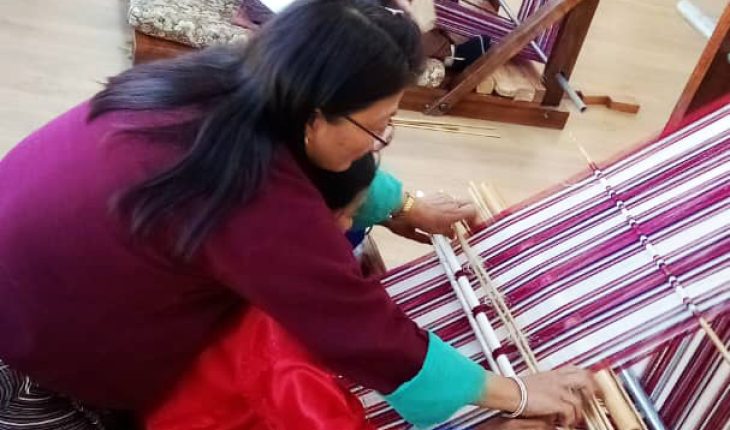
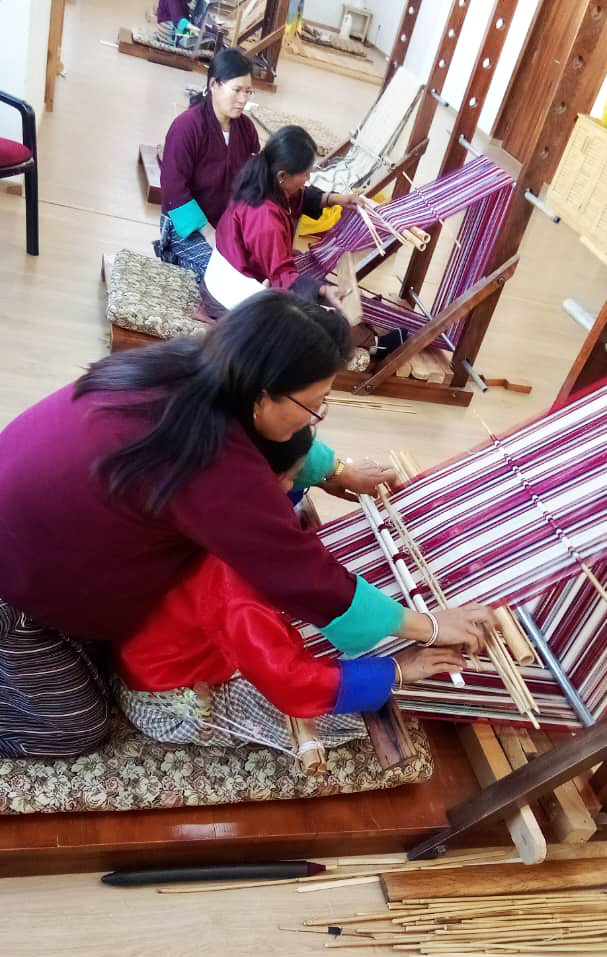
In homes across Bhutan, the steady rhythm of backstrap looms continues to echo a centuries-old tradition. For many Bhutanese women, weaving is more than cultural expression—it is a source of income, identity, and resilience.
From Mongar, Trashiyangtse and Trashigang in the east to Wangdue in the west, weavers say the craft remains embedded in daily life, even as it faces growing pressure from modernization and market competition.
For Leki Wangmo, 33, from Jurmey in Mongar, weaving began as a schoolgirl’s curiosity.
“I started weaving at 17 when I was in Class 10,” she said. Taught by her mother and relatives, she gradually mastered the craft and now produces a range of textiles, including plain kira (karchang), hor, and intricately patterned meto kira, along with belts and rachu.
Today, weaving is her main source of income. “I do not have any other job, so it supports my daily expenses, my child, and my family,” she said.
She earns based on production and sales, reflecting how the craft has become increasingly commercialized in recent years.
Beyond income, Leki Wangmo views weaving as a responsibility. Without a daughter to inherit her skills, she teaches her sisters.
“It is important that the skill is passed down and preserved,” she said.
Her concern reflects a broader trend, as many weavers report declining interest among younger generations.
Om, 50, from Baylangdra in Wangdue, learned weaving after moving east with her husband. She continues to weave and occasionally sells her work.
“I have three daughters, but they are not interested in learning,” she said, noting that younger people are increasingly focused on education and other career paths.
This shift highlights a growing gap in the transmission of traditional knowledge, raising concerns about the continuity of the craft.
At the same time, weaving itself has evolved. Tshokey, 41, from Jamkhar in Trashiyangtse, said designs have become more diverse and intricate over time.
“In the past, there were fewer patterns,” she said. “Now there are many, and income depends on the complexity of the designs.”
Greater creativity has expanded opportunities for weavers, but it has also intensified competition. Machine-made textiles, often imported at lower prices, are widely available in local markets and appeal to cost-conscious consumers.
“We face competition from cheaper, machine-made copies, especially from India,” Tshokey said, adding that handmade products struggle to compete on price despite their quality and cultural value.
For many weavers, this creates a difficult balance between preserving tradition and adapting to changing market demands.
Pema Yangdon, 38, from Nganglam in Pema Gatshel, turned weaving into a livelihood through persistence. She began with small items such as bags before gradually teaching herself more complex patterns.
“Now I can weave any kind of pattern without difficulty,” she said.
She has also witnessed improvements in access to materials and markets. “In the past, yarn was limited and selling products was difficult. Now things have improved,” she said. These changes have allowed her to rely on weaving as a steady source of income.
Despite these gains, uncertainty remains about the future. Like many others, Pema Yangdon hopes to pass the skill to her daughter but recognizes competing priorities.
“Children today have different interests,” she said.
For Leki Choden, 48, from Kangpar in Trashigang, weaving reflects years of perseverance shaped by limited resources. She began at the age of 12, practicing with leftover threads from her siblings.
“I could only weave during rainy days because I had to work in the fields,” she said. “Sometimes I wove at night using candlelight.”
At the time, materials were locally sourced from nettle, wool, and cotton. Although access to yarn has improved, the physical demands of weaving have become more challenging with age. Even so, she continues to practice the craft.
“I do not need to buy clothes because I can make them for my family,” she said.
She also encourages her children to learn, emphasizing its long-term value. “Even if it is not needed now, it may be useful in the future.”
Across Bhutan, weaving continues to serve both cultural and economic roles. Garments such as the kira, gho and rachu are not only worn but carry deep cultural meaning, reflecting identity, craftsmanship, and continuity.
However, sustaining the practice presents ongoing challenges. Declining youth interest, competition from cheaper imports, and the labour-intensive nature of weaving all threaten its long-term viability.
At the same time, improved market access and growing appreciation for handmade textiles offer cautious optimism. Some weavers are adapting by diversifying their designs and responding to changing consumer preferences.
Observers say targeted support could strengthen the sector. Expanding access to markets, providing training in design and entrepreneurship, and recognizing weaving as a viable profession may help attract younger practitioners.
For many women, weaving already represents more than a supplementary activity. It is a primary source of income and a means of financial independence. Strengthening this perception could play a crucial role in sustaining the craft. It’s future will depend not only on the dedication of current practitioners but also on whether the next generation chooses to carry it forward.
For now, the quiet hum of looms continues across the country—threading together livelihood, identity, and heritage in ways that remain both enduring and essential.