TIL BDR GHALLEY | Thimphu
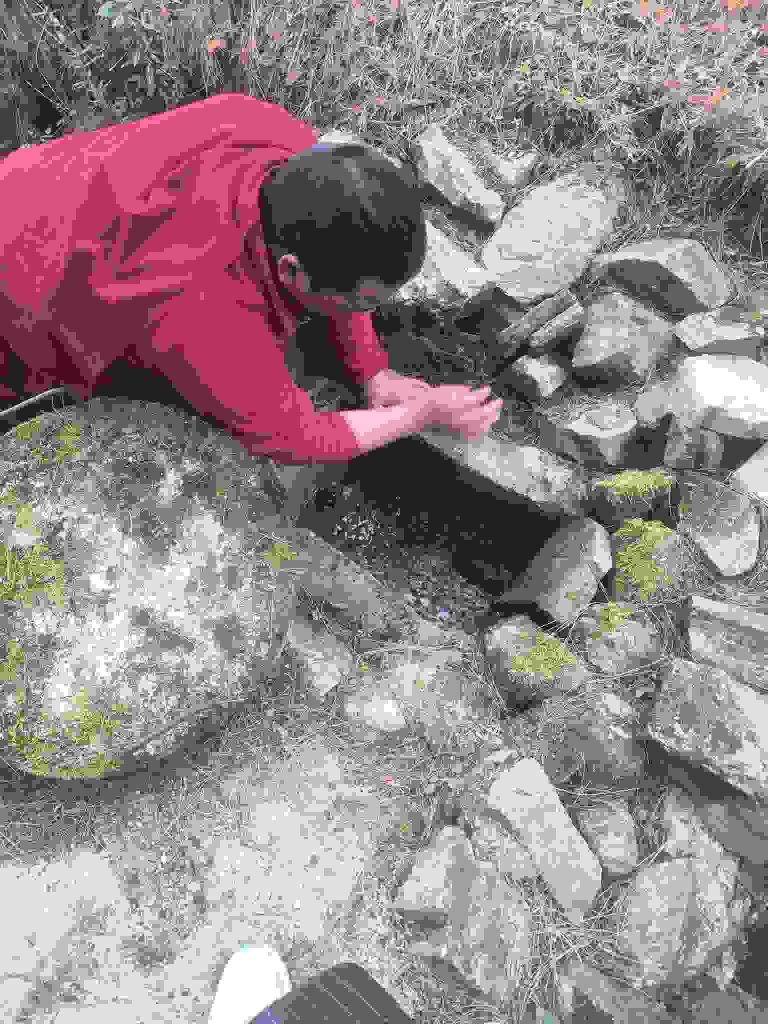
Hundreds of water sources in Paro and Thimphu are showing signs of decline with 18 sources already dried up and another 227 in the process of drying, according to the National Water Resources Inventory Report 2026.
The report, prepared by the Department of Water (DoW) under the Ministry of Energy and Natural Resources (MoENR), assessed 967 surface-water sources in the two dzongkhags, including 472 in Paro and 495 in Thimphu. It also recorded 32 borewells.
In Paro, 16 water sources had completely dried up and another 117 were drying, while Thimphu had two dried-up sources and 110 sources in the process of drying.
The findings come despite Bhutan having abundant freshwater resources, highlighting the difference between national water availability and reliable access at the local level.
Bhutan has an estimated 70,576 million cubic metres of renewable freshwater annually, equivalent to about 94,500 cubic metres per person each year. But national water abundance does not necessarily mean that individual communities have a reliable supply.
The inventory identifies climate change, forest degradation and deforestation, natural calamities and human activities such as road construction and development work among factors associated with declining water sources. It also notes that the causes of many drying sources could not be established.
In Paro, 72 of the 117 drying sources had no clearly identified cause. Climate change was identified as a factor in 23 cases, while forest degradation and deforestation, earthquakes and other anthropogenic activities accounted for the remaining identified cases.
The inventory recorded 472 water sources across Paro’s 10 gewogs. Springs made up the largest share, followed by streams, while the remaining sources included ponds, marshes or swamps and lakes.
Of the 472 sources, 452 were classified as perennial. The inventory found that 117 sources were drying and 16 had already dried up, while 204 showed no change in discharge and 73 showed increased discharge. The status of 62 sources could not be determined.
While springs accounted for the largest share of sources that were drying, ponds accounted for most of the sources that had already dried up.
Of the 16 dried-up sources, 10 were ponds, three were springs, two were streams and one was a marsh or swamp.
In Dogar, 16 of 74 sources were drying. Forest degradation and deforestation were identified as contributing factors in five cases, climate change in three and a combination of climate change and earthquakes in another three.
Thimphu recorded 495 water sources across eight gewogs, compared with 145 sources identified in the 2021 inventory.
The increase does not necessarily indicate that the number of water sources has suddenly more than tripled. The report attributes the difference largely to the identification and mapping of additional sources during the latest assessment.
Of the 495 sources, 110 were drying and two had dried up. Another 264 showed no change in discharge, five recorded increased discharge and the status of 114 could not be determined.
Mewang Gewog recorded the highest number of drying sources, with 39.
In Mewang, climate change was identified as a factor in 18 cases, while a combination of climate change and other anthropogenic activities was associated with 12 cases. Forest degradation and deforestation accounted for another nine cases.
The findings suggest that the pressures on water sources vary across locations and cannot be attributed to climate change alone.
While water availability is emerging as a concern, the inventory found that the basic water-quality parameters tested were largely within acceptable standards for drinking.
In Thimphu, water-quality data were collected from 493 sources. Of these, 402 sources, or 81.54 percent, had pH levels between 6.5 and 8.5, while six were below 6.5 and 85 were above 8.5.
Electrical conductivity and total dissolved solids were within the specified limits for all assessed sources.
The report, however, notes that deviations in pH and other parameters warrant continued monitoring.
The findings highlight an important distinction between water availability and water security. A community may have access to a water source, but that source must also provide a reliable and safe supply.
The inventory also assessed the condition of watersheds supporting the water sources.
Although most watersheds were classified as pristine or normal, a significant number were categorised as degraded.
In Thimphu, 114 water sources were associated with degraded watersheds, compared with 59 in Paro.
Blue pine-dominated areas were identified as a particular concern. In Thimphu, 47 of the 129 water sources located in Blue Pine forests had sub-watersheds classified as degraded.
The condition of surrounding watersheds matters because changes in vegetation, soil and land use can affect water recharge, runoff and the long-term sustainability of springs and streams.
For communities dependent on these sources, a decline can have consequences beyond drinking water.
A drying spring can force households to search for alternative sources, while reduced stream flows can affect irrigation, livestock and agricultural production.
Water scarcity also has a social dimension. Women and girls often carry much of the responsibility for household water collection and management, meaning declining local sources can increase the time and effort required to secure household supplies.
The inventory comes as Bhutan faces increasing pressure on its water systems from climate change and development.
Changes in rainfall patterns, rising temperatures and changing seasonal conditions can affect groundwater recharge and the flow of springs and streams.
At the same time, roads, construction, expanding settlements, tourism infrastructure and other development activities can alter catchments and natural drainage systems.
The report identifies these pressures but also cautions against assuming a single cause for every drying source.
That distinction is important because 72 of Paro’s 117 drying sources had no clearly identified cause.
Advisor to the National Environment Commission, MoENR, Dasho Peljor J Dorji, said recent assessments showed that some water sources had already dried up while many others were beginning to decline.
“Recent assessments show that some water sources have already dried up, while many others are beginning to decline. These trends underscore the need for proactive and adaptive water resource management,” he said during the launch of the water-related reports on World Water Day.
The DoW, recommends greater investment in water-source conservation and protection, scientific assessment of drying sources, assessment of untapped sources and verification of degraded watersheds.
It also recommends upgrading basic water infrastructure, including replacing drums, buckets and wooden troughs with more durable systems such as reinforced concrete intakes and protective structures.
The report further calls for interventions combining source protection, nature-based solutions, infrastructure development and technical assessments.
The inventory was conducted during the lean season from mid-March to mid-April 2025 by teams from the DoW and the Department of Forests and Park Services. Previously recorded sources were revisited, while additional sources were identified and mapped.
The report cautions that 2021 and 2025 discharge figures cannot always be directly compared, because different measurement methods were used and reliable historical discharge records were not available for all sources. It recommends sustained monitoring over several years to establish clearer trends.
The latest inventory is part of a broader effort to map Bhutan’s water resources. The Department of Water plans to progressively extend the inventory to all 20 dzongkhags by the end of the 13th Five-Year Plan.
The findings provide a basis for evidence-based water governance, while warning that continued degradation of water sources could affect local livelihoods, economic growth and environmental sustainability.
ForParo and Thimphu, the immediate challenge is therefore not simply how much water is available, but whether existing sources can remain reliable as climate, land use and demand change.