TASHI DEKI | Thimphu
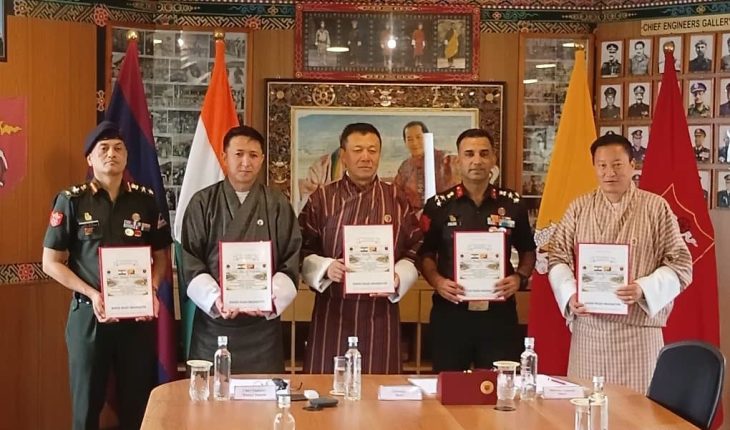
Project DANTAK and The Green Road have signed a Memorandum of Understanding (MoU) to use processed waste plastic in road construction, bringing together road infrastructure development and efforts to address Bhutan’s growing plastic waste challenge on 18 August.
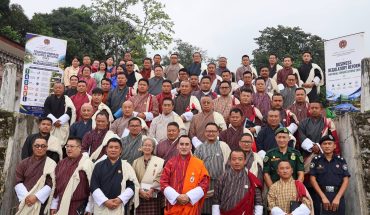
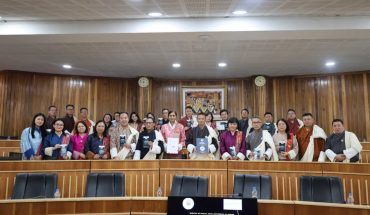
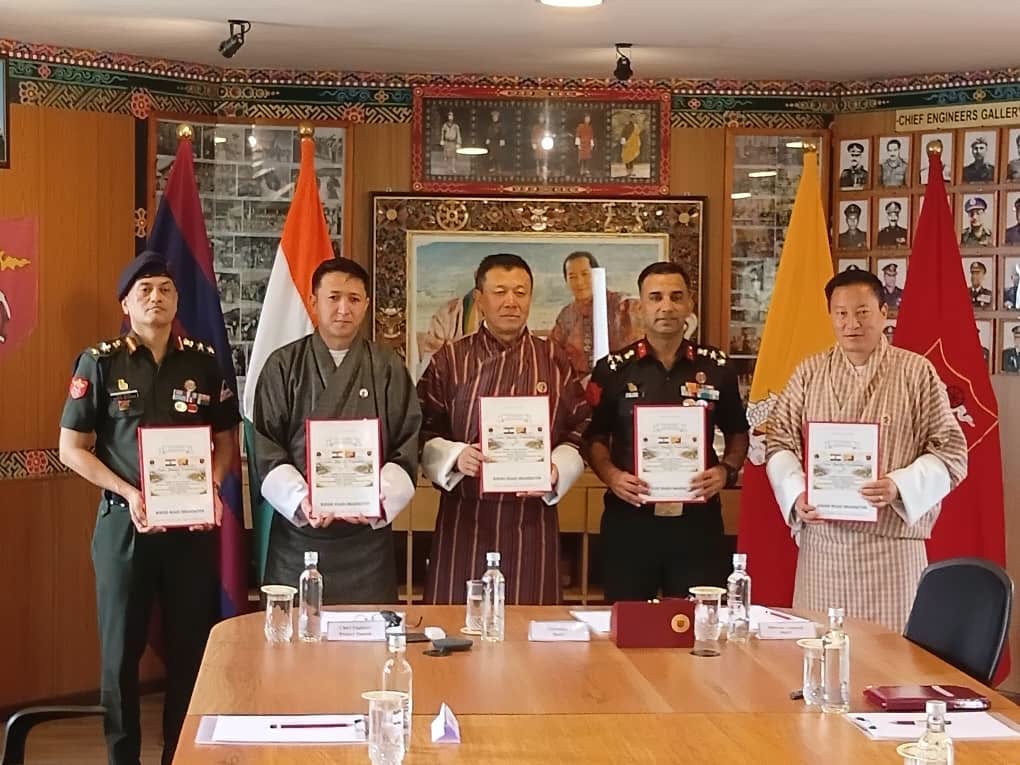
The MoU was signed between Project DANTAK and The Green Road in the presence of Karma Wangchuk, Secretary of the Ministry of Infrastructure and Transport. The Director General of the Department of Surface Transport was also present at the signing ceremony. The agreement focuses on incorporating shredded waste plastic into the bituminous material used for road resurfacing.
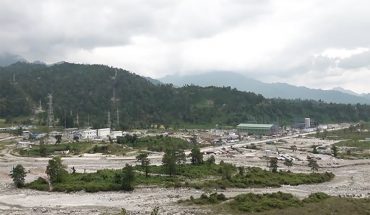
The first work under the agreement will cover approximately 6.5 kilometres of the Phuentsholing-Thimphu Highway, from Km 141.280 to Km 147.779, along the Chuzom-Babesa stretch. The project is scheduled to be completed within 90 days from the signing of the MoU and has an estimated cost of Nu 51.97 million. It will also have a five-year defect liability period.
The project will make use of about 20 metric tonnes of waste plastic collected from different parts of Bhutan. The Green Road will process the discarded plastic into suitable shredded material, which will then be incorporated into the bituminous mix through a dry process.
The plastic will make up around eight percent of the bitumen by weight. The material will be used according to the required technical specifications and an approved job mix, with the aim of producing a road surface that can withstand the conditions it will be exposed to.
Chief Engineer of Project DANTAK, Brigadier J.S. Dhadwal, said the agreement is rooted in DANTAK’s long involvement in Bhutan’s road development and its continuing effort to improve the quality of roads constructed in the country.
“DANTAK has been making roads since 1961, and we are trying to make the best roads of the best quality. Our aim is to contribute to the infrastructure development of Bhutan and also contribute to the very good and strong relationship between India and Bhutan,” Brigadier J.S Dhadwal said.
He said the use of plastic in road construction could offer benefits both in terms of road quality and waste management.
“This is basically about good road construction and better roads—roads that are stronger, more stable and probably more water-resistant because of the addition of plastic. At the same time, it provides a more cost-efficient way of disposing of plastic waste,” he said.
Brigadier J.S Dhadwal said plastic has become a major environmental concern because it remains in the environment for a very long time.
“You are all aware that plastic is a major problem all over the world because it can take thousands of years to deteriorate. So, one of the optimum uses of plastic is to incorporate it into road construction. We are very happy that The Green Road has explored this area and has the technology to provide the right kind of material required,” he said.
The collaboration marks the first partnership between Project DANTAK and The Green Road for plastic-waste-based road construction in Bhutan. It also represents a new area of cooperation between DANTAK and a Bhutanese private company, with the potential to expand the use of the technology beyond the initial road section.
The Green Road has been working with plastic waste in road construction since 2015. The company has so far blacktopped about 169 kilometres of roads using plastic tar and reused around 1,000 tonnes of non-recyclable single-use plastic waste.
The company is currently described as the first and only firm in Bhutan implementing technology that incorporates shredded waste plastic into bituminous road construction. Under the new partnership, its experience in processing plastic waste will be combined with DANTAK’s road construction expertise.
The 6.5-kilometre stretch will serve as a demonstration of the technology on a major road in Bhutan. The initiative could provide an opportunity to assess how the material performs under local road and weather conditions and whether the approach can be applied more widely.
Project DANTAK has indicated that it plans to explore the use of the technology on other roads in Bhutan where it is technically suitable. This could potentially create a wider role for waste plastic in future road construction and resurfacing projects.
For The Green Road, the agreement also represents an opportunity to expand the application of its plastic-road technology through a partnership with DANTAK. The company has said that more than 20 tonnes of single-use, non-recyclable plastic waste will be diverted for use in the first project.
The initiative comes at the intersection of two challenges: maintaining and improving Bhutan’s road infrastructure while finding practical ways to manage plastic waste. Instead of allowing some non-recyclable plastic to end up in disposal sites or the environment, the project will convert it into a material that can be used in road construction.
The approach could also support Bhutan’s broader environmental objectives by encouraging the productive reuse of waste materials. While the project is primarily a road resurfacing initiative, its application of recycled plastic gives it an additional environmental dimension.
The MoU also builds on the longstanding role of Project DANTAK in Bhutan. DANTAK has been involved in road construction in the country since 1961, and Brigadier J.S Dhadwal said the organisation’s continued focus is on delivering quality infrastructure while contributing to the close relationship between Bhutan and India.
The partnership between DANTAK and The Green Road therefore brings together decades of road-building experience and more than a decade of local experience in plastic-based road construction. The success of the initial 6.5-kilometre project could determine the extent to which the technology is adopted for other road projects in Bhutan.
With the first project expected to be completed within 90 days, attention will now turn to the implementation and performance of the plastic-based road surface. If the technology delivers the expected results, the collaboration could open the way for further green road projects and provide another practical use for Bhutan’s non-recyclable plastic waste.