DAWA ZANGMO | Thimphu
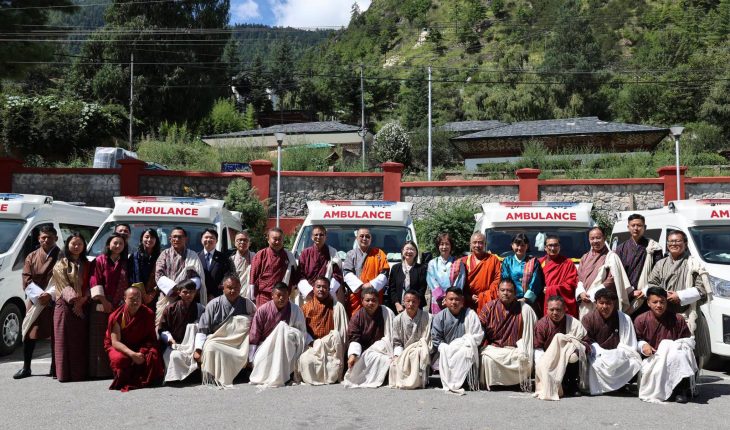
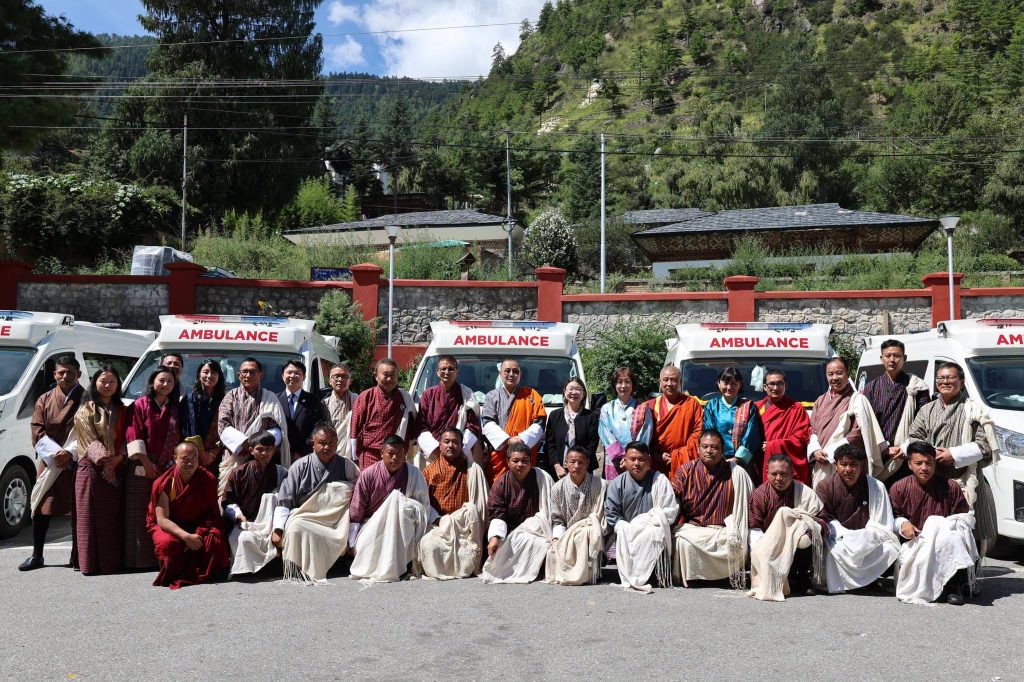
Eleven new Mobile Medical Units (MMUs) were inaugurated as part of efforts to improve access to healthcare services for communities living in remote and hard-to-reach parts of the country.
Health Minister Tandin Wangchuk and Asian Development Bank (ADB) Deputy Director General Ayako Inagaki inaugurated the new ambulances which are expected to bring essential medical services closer to communities that face difficulties accessing conventional health facilities.
The 11 MMUs were procured at a cost of Nu 248 million with financial support from the ADB under the Asia Pacific Vaccine Access Facility (APVAX) project. The deployment is part of a larger plan to establish 29 mobile medical units across the country.
The initiative is aimed at strengthening outreach healthcare services and improving equitable access to quality medical care for people, particularly those residing in areas located far from hospitals and other health facilities.
By taking healthcare services directly to communities, the mobile units are expected to support early detection and treatment of illnesses while also providing preventive and health promotion services. The deployment is intended to reduce the challenges faced by people who have to travel long distances to access healthcare.
Each MMU will have a team comprising a doctor, a female health worker, a laboratory technician and a pharmacist. The teams will provide a range of healthcare services during their outreach programmes.
These services will include screening and management support for non-communicable diseases, outpatient consultations, maternal and child healthcare, and sexual and reproductive health services. The units will also conduct health advocacy and promotion activities within communities.
The mobile units have also been equipped with essential lifesaving medical equipment. This will allow the teams to provide necessary support in emergencies and facilitate timely referral and transportation of patients requiring higher levels of medical care.
The latest 11 MMUs will be deployed to health facilities in different parts of the country. These include Wangdichoeling Hospital in Bumthang, Phuentsholing Hospital in Chukha, Dagapela Hospital in Dagana, Eastern Regional Referral Hospital in Mongar, Nganglam Hospital in Pemagatshel, and Jomotshangkha Hospital in Samdrup Jongkhar, each of which will receive a unit.
The remaining units will be deployed to Tashichoeling Hospital in Samtse, Gidakom Hospital in Thimphu, Riserboo Hospital in Trashigang, Trashiyangtse Hospital in Trashiyangtse and Damphu Hospital in Tsirang.
The latest deployment follows the launch of 10 MMUs on March 17 this year. Those units were deployed to Trashigang Hospital, Samtse Hospital, Yebilaptsa Hospital, Wangdue Phodrang Hospital, Haa Hospital, Samdrup Jongkhar Hospital, Trongsa Hospital, Lhuentse Hospital, Pemagatshel Hospital and the Eastern Regional Referral Hospital in Mongar.
With the addition of the latest batch, the MMU programme continues to expand its coverage to health facilities serving communities across different dzongkhags.
Deputy Director General Ayako Inagaki said the initiative would help extend essential healthcare services to communities across the country.
She said the deployment of the mobile units was an important move towards ensuring that people in all parts of Bhutan could access essential medical care, in line with the country’s objective of providing healthcare services that are equitable and inclusive.
Health minister Tandin Wangchuk said the MMU programme was designed as a planned intervention to support the government’s objective of strengthening healthcare services at the gewog level.
According to the minister, the initiative is linked to the government’s aspiration of having one doctor at every gewog health centre, based on the resident population and its healthcare needs.
He said the deployment of doctors would also have to be accompanied by sufficient supporting health personnel to ensure that the health centres are adequately staffed.
The MMUs are therefore being deployed as part of broader efforts to take healthcare services closer to communities while strengthening the capacity to provide medical consultations, screening, preventive services and referrals.
The 29 MMUs planned under the ADB-supported project are intended to enhance the reach of healthcare services, particularly for populations living in areas where access to health facilities remains challenging.
The mobile units will operate through designated health facilities and provide outreach services to communities within their respective areas of coverage.
The deployment also brings together clinical, diagnostic and pharmaceutical services within the mobile teams, allowing communities to access several basic healthcare services through a single outreach platform.
The programme is expected to support the delivery of services such as NCD screening, outpatient care, maternal and child health services, sexual and reproductive healthcare, health education and promotion.
In addition to routine outreach services, the lifesaving equipment carried by the units will support health workers in responding to critical cases and arranging referrals and transportation when patients require further treatment.
The launch of the latest 11 units marks another phase in the government’s rollout of the MMU programme, following the first batch deployed in March.
The initiative is being implemented with financial assistance from the ADB through the APVAX project, with a total of 29 mobile medical units planned for deployment.
Ministry of Health has stated that the MMU initiative forms part of its efforts to strengthen healthcare delivery and move essential services closer to people, particularly communities that are located far from established health facilities.