TASHI DEKI | Thimphu
Bhutan is expected to continue importing electricity during the winter months until around 2034 as seasonal declines in hydropower generation coincide with rising domestic electricity demand, according to the official from the Ministry of Energy and Natural Resources (MoENR).
Bhutan currently generates about 3,576 megawatts (MW) of renewable energy capacity, mainly from hydropower, while solar contributes about 39 MW. However, the official said the country’s key challenge is not its installed generation capacity but the seasonal variability of hydropower generation.
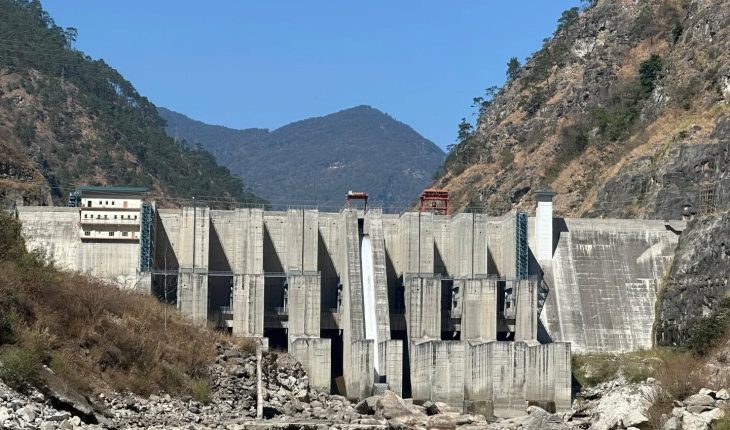
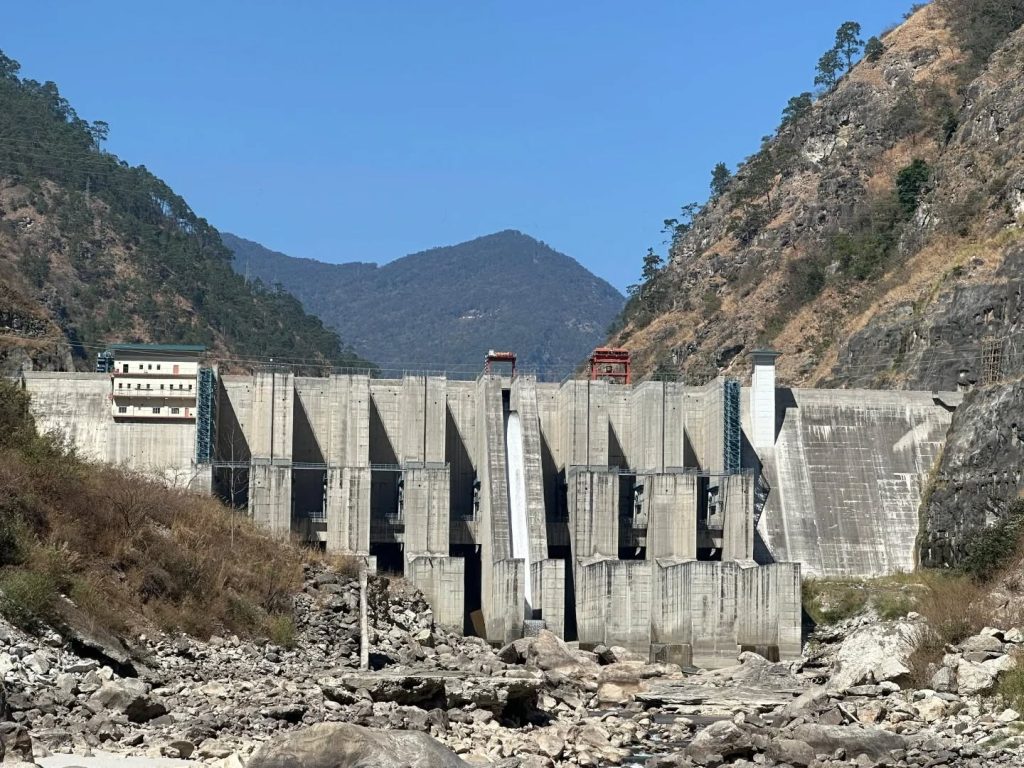
During the summer months, abundant river flows allow hydropower plants to operate at high output, including up to 10 percent overloading where technically permissible. During the lean winter months, however, generation can fall to as low as one-sixth of installed capacity during the leanest days historically recorded in mid-February.
This decline in generation coincides with the period when electricity demand is at its highest. The seasonal mismatch, combined with growing domestic demand, has required Bhutan to import electricity from India since January 2022.
During the most recent winter, from November 2025 to May 2026, peak electricity demand reached 1,477 MW, while maximum imports reached 1,145 MW.
“Based on our current supply-demand outlook, seasonal electricity imports are expected to continue until around 2034,” the official said .
The ministry expects the winter supply-demand gap to progressively narrow after 2034 with the commissioning of new hydropower capacity, including storage, reservoir, pumped reservoir and run-of-river projects with pondage. Solar, wind and other flexible resources such as battery energy storage systems (BESS) are also expected to contribute to the transition.
The outlook is aligned with the National Energy Policy 2025, which aims to develop approximately 20,000 MW of hydropower and 5,000 MW of solar capacity by 2040.
MoENR identified the dominance of run-of-river hydropower systems as one of the main structural constraints behind the seasonal electricity deficit. Existing plants rely on natural river flows without major storage reservoirs.
Domestic electricity demand also peaks during winter because of heating requirements, coinciding with the period of lowest river discharge. At present, non-hydro renewable sources such as solar and wind account for less than 1 percent of the national energy mix, leaving limited generation capacity to act as a buffer during low-hydrology seasons.
To address the seasonal gap, the government plans to scale up solar energy, targeting 5,000 MW by 2040. MoENR said solar can complement hydropower by generating peak power during dry and sunny winter days when river flows are low.
The government is also prioritising storage dams over pure run-of-river plants. Projects with multi-season storage capabilities are expected to store monsoon water for discharge during winter.
Pumped storage hydropower is another measure being developed. MoENR cited the Gongri-Jeri Pumped Storage project, explaining that pumped storage systems can function as “water batteries” by using lower-cost monsoon energy to pump water to higher reservoirs and generate electricity during winter demand peaks.
Cross-border power trading will also continue to support the electricity system by allowing Bhutan to import power during winter and export excess electricity during the summer. Battery energy storage systems, small-scale wind projects and green hydrogen technology are also being considered to maintain grid stability and firm power availability.
The 25,000 MW renewable energy target under the National Energy Policy 2025 is intended to support Bhutan’s domestic electricity requirements throughout the year rather than primarily serving the export market.
MoENR said electricity demand is expected to increase as the economy expands, particularly through industrialisation, new economic centres, data centres and the growing use of electricity. The planned generation capacity is therefore intended to meet projected domestic requirements throughout the year, including during the winter lean season.
“Whatever additional capacity is planned as per the National Energy Policy 2025 (NEP 2025) is for meeting the projected domestic demand for 365 days of the year beyond 2034 and ensuring long-term national energy security,” the official said.
Exports, however, will continue to provide an important source of national revenue from surplus generation during the summer monsoon.
Climate change and changing weather patterns are also being incorporated into long-term energy planning. MoENR said hydrological, climate and weather-related risks are being addressed through hydrological data modelling, catastrophic drawdown mechanisms during detailed project report studies and power-generation simulations.
The government is also considering reservoir and pumped storage projects, other storage technologies and hybrid solutions to mitigate hydrological risks and diversify the energy supply.
Under the Renewable Energy Development Roadmap 2024, the government has analysed hydropower projects to be commissioned and solar capacity to be added over the next 15 years up to 2040.
Investments in more than 20 new hydropower projects with a combined capacity of more than 15,000 MW, along with 5,000 MW of solar capacity, are estimated to cost about Nu. 2.192 trillion. The annual investment requirement is estimated at Nu. 270 billion.
Of the total investment, about 18 percent is projected for solar development, which is expected to complement hydropower generation and diversify Bhutan’s energy generation base.
The scale of winter electricity imports was evident during the 2025–26 winter season, when Bhutan imported 2,027 million units (MU) of electricity at a total cost of INR 7.087 billion.
Despite the seasonal imports, the electricity sector remains a major contributor to the economy. Between 2020 and 2025, the sector contributed approximately Nu. 195 billion to gross domestic product (GDP), averaging around 13.65 percent annually. Its contribution stood at Nu. 46.30 billion in 2025.
Hydropower exports to India continue to contribute around one-third of national revenues, while domestic electricity sales generate additional revenue.
MoENR said access to comparatively low-cost electricity also provides a significant competitive advantage in attracting energy-intensive industries, supporting industrialisation, foreign direct investment and long-term economic growth.
The ministry described current winter imports as a temporary balancing cost during a period of rapid economic and electricity-demand growth. Importing electricity allows Bhutan to accommodate growing domestic demand while new generation capacity is being developed, rather than restricting industrial growth.
In 2025, Bhutan exported approximately 7,927 gigawatt-hours (GWh) of electricity valued at around Nu. 28.5 billion, while importing approximately 1,090 GWh at a cost of around Nu. 3.7 billion.
This resulted in a net electricity export of approximately 6,837 GWh and a positive net electricity trade value of approximately Nu. 25 billion.
However, the annual surplus masks the seasonal imbalance between wet-season surplus generation and dry-season shortages.
“Therefore, our energy-security objective is evolving from annual net energy surplus towards year-round energy self-sufficiency,” theofficial said.
The ministry said achieving this objective will require firm hydropower, solar generation, energy storage, demand-side management and enhanced system flexibility.
As new hydropower and complementary renewable energy projects are commissioned, winter electricity import requirements are expected to decline progressively. The long-term objective is to ensure year-round domestic electricity sufficiency while continuing to export surplus generation when available.