Bhutan’s resource mobilization plan to demonstrate how climate-vulnerable countries can turn environmental risks into economic opportunities
NGAWANG JAMPHEL | Thimphu
The Ministry of Finance (MoF) has unveiled an ambitious resource mobilization strategy aimed at transforming climate risks into economic opportunities, with projections suggesting the country could achieve faster growth and reach high-income status earlier than expected.
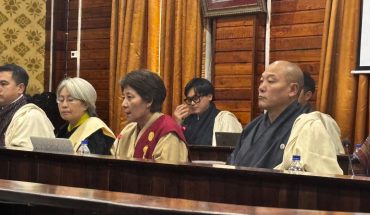
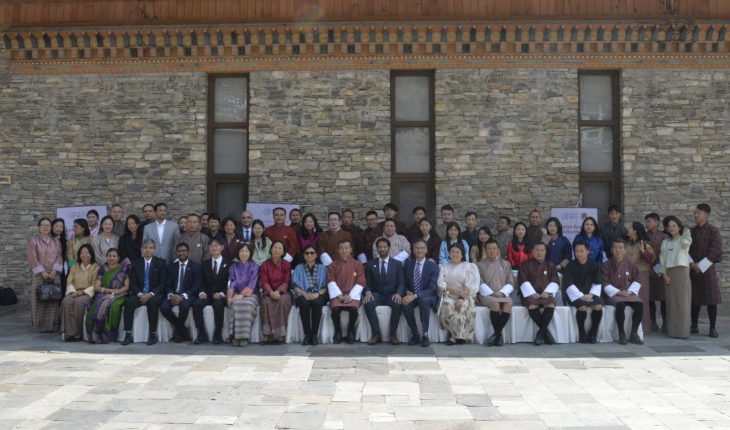
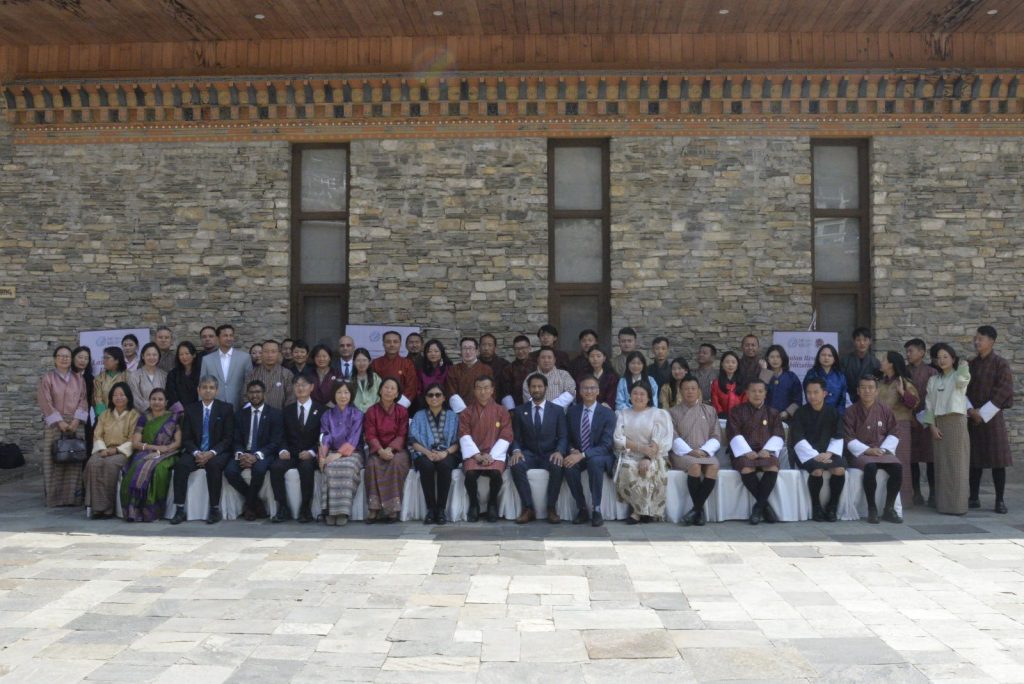
The Bhutan Resource Mobilization Plan (BRMP) was presented with support from the Climate Vulnerable Forum (CVF) and the V20 Group of Finance Ministers Secretariat, which represents 74 climate-vulnerable economies.
Speaking at the launch, Sara Jane Ahmed, Managing Director and finance advisor, CVF-V20 secretariat, said the plan demonstrates how climate-vulnerable countries can turn environmental risks into economic opportunities.
“Across our membership we are advancing nationally owned investment strategies that transform climate risks into economic opportunities,” she said, adding that Bhutan’s approach places climate resilience, economic prosperity and national well-being at the centre of development planning.
She shared that Bhutan was among the founding members of the Climate Vulnerable Forum when it was established in 2009, highlighting the country’s long-
standing commitment to environmental protection.
According to the plan, Bhutan aims to increase hydropower capacity tenfold and develop 500 megawatts of solar power by 2035, strengthening its role as a regional exporter of clean energy.
The strategy also targets ensuring 100% of the country’s exports comply with emerging carbon border adjustment mechanisms by 2045, positioning the country ahead of many developing economies in adapting to future climate-related trade regulations.
Presenting the modelling behind the strategy, Andrea Bassi said that the analysis was conducted using the Green Economy Model, which evaluates interactions between economic growth, natural resources, infrastructure and social development.
The model simulates several development scenarios from 2005 to 2050, examining how different investment pathways could influence Bhutan’s economic and environmental outcomes.
“Our analysis shows that the strategy represents a competitive economic development pathway,” Bassi said, adding that investments in renewable energy, infrastructure and nature-based solutions generate strong economic returns.
The modelling indicates that combining Bhutan’s 13th Five-Year Plan with additional climate-focused investments could raise the country’s average annual growth to around 7.4%, significantly higher than baseline projections.
The study also estimates that every dollar invested in the strategy could generate about seven dollars in economic benefits, making the investment pathway financially viable.
The model suggests that climate-aligned investments could create new employment opportunities in renewable energy, sustainable agriculture, land restoration and energy efficiency.
Bassi shared that the strategy could also help stabilize forest cover, reduce pollution from fossil fuels and strengthen Bhutan’s long-term climate resilience.
Finance minister, Lekey Dorji said the BRMP will serve as a strategic framework to align financing with Bhutan’s national development priorities.
He said Bhutan’s development agenda is guided by four major frameworks: the 13th Five-Year Plan, the 21st Century Economic Roadmap, the Renewable Energy Roadmap, and Bhutan’s Nationally Determined Contributions under the global climate framework.
“These strategies set an ambitious vision for Bhutan’s transformation into a high-income, sustainable economy,” the minister said.
However, he noted that achieving these goals will require adequate, predictable and sustainable financing, particularly as Bhutan prepares to graduate from the Least Developed Country (LDC) category.
Moreover, he said Bhutan is expanding its financing strategy beyond traditional development assistance to include innovative mechanisms such as green bonds, blended finance, debt-for-nature swaps and private-sector partnerships.
The strategy also seeks to strengthen project preparation and financial structuring to attract both concessional and commercial capital.
Development partners including the World Bank, International Finance Corporation, and the Asian Development Bank are expected to play an important role in supporting the investment pipeline.
The minister shared that the launch of the BRMP marks the beginning of a coordinated national effort involving government agencies, development partners, financial institutions and the private sector.
“As Bhutan prepares for LDC graduation and a more self-reliant economic future, this plan will help translate national ambition into measurable outcomes,” he said.
Meanwhile, the CVF-V20 Secretariat said it will continue supporting Bhutan through investor consultations, financing dialogues and technical assistance as the plan moves from strategy to implementation.
Bhutan needs USD 56bn to fully realize the climate prosperity plan by 2050.