Finance Minister claims that the ESP loan has channeled over Nu. 685 million to farmers as government pushes for agricultural transformation
KINLEY KHANDU CHODEN | Thimphu
The government’s efforts to revitalize agriculture through concessional financing have gained significant traction, with more than Nu. 685 million already disbursed to farmers and livestock producers under the government’s Economic Stimulus Programme (ESP), according to the finance minister.
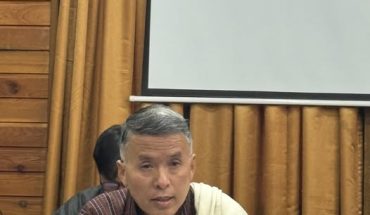
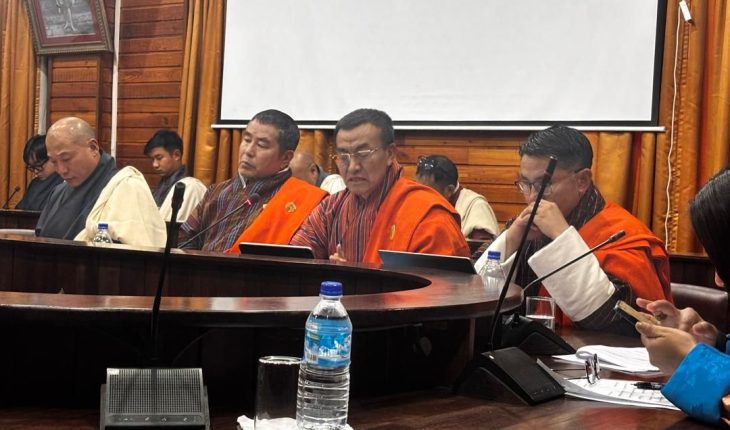
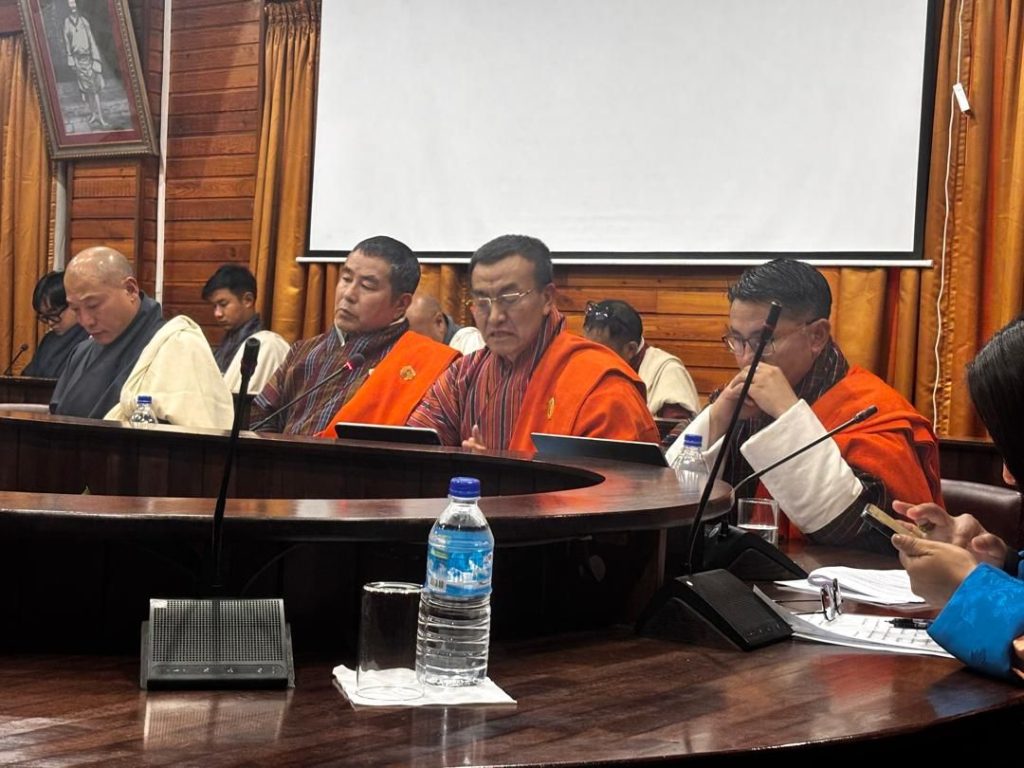
During the meet the press session held on 6 March, Lyonpo Lekey Dorji responding to queries on the programme’s progress, said that the Bhutan Development Bank Limited (BDBL) has processed thousands of loan applications submitted under the primary agriculture and livestock category.
He said the trend reflects strong demand for financial support among rural entrepreneurs seeking to expand and modernise their operations.
“Of the total 3,252 loan applications received for the primary agriculture and livestock category, the BDBL completed the assessment of all applications by the end of August 2025,” the minister said.
Out of these applications, 1,866 loans were approved, amounting to Nu. 709.04 million, marking a substantial flow of concessional financing into the country’s farming and livestock sectors.
The minister explained that the initial allocation for loans under the primary agriculture and livestock category was Nu. 500 million, but the volume of applications exceeded expectations.
“Due to excess demand, the ESP Steering Committee enhanced the allocation by an additional Nu. 242.88 million,” the minister said, highlighting the government’s willingness to expand support when demand from farmers is strong.
Of the total approved loan amount of Nu. 709.04 million, the minister reported Nu. 685.31 million has already been disbursed, representing 96.65 percent of the total approved loans.
“The remaining 3.34 percent will be disbursed based on the progress of the respective projects,” the minister said, noting that some projects are still at early stages of implementation and require verification before the remaining funds are released.
The loans have been distributed across a range of agricultural activities, though livestock and fishery farming account for the majority share.
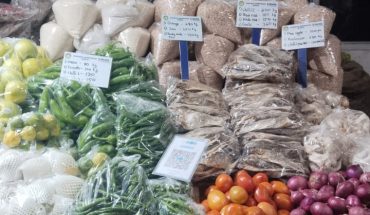
According to the ministry’s data, 71.15 percent of approved loans went to livestock and fishery farming, while 17.39 percent supported crop and vegetable cultivation, and 11.46 percent financed agricultural machinery and support infrastructure.
Lyonpo said that this distribution reflects current investment patterns in rural areas, where livestock production has become a major source of income for farmers due to growing domestic demand for dairy, poultry, and meat products.
Additionally, financing for agricultural machinery and infrastructure is expected to support farm mechanisation, which policymakers see as crucial for addressing labour shortages and improving productivity in the sector.
While the loan disbursement figures indicate strong uptake, the finance minister acknowledged that the government is not yet able to provide concrete evidence on the programme’s broader economic impact.
“At the moment, we are unable to provide this information as no impact assessment has been carried out,” the minister said in response to questions about improvements in productivity, farmer income, and rural employment.
He added that the ESP Secretariat will be conducting the impact assessment in the next financial year which will also cover the assessment of the impact of the loans on farmers’ livelihoods or income, production, job creation, and contribution to the economy.
The assessment is expected to provide clearer evidence on whether the concessional financing has helped farmers expand their operations, adopt improved technologies, or access new markets.
Observers say such evaluation will be important to determine whether the programme is achieving its intended goals of stimulating rural economic growth and strengthening national food security.
Despite the absence of a full impact assessment, the government says monitoring mechanisms are already in place to track the implementation of ESP initiatives.
“The ESP Secretariat has been monitoring the implementation of ESP initiatives through review of the progress reports collected from the agencies on a quarterly basis,” the minister said.
A detailed progress update on the programme is expected to be released later this month.
“As most of the ESP initiatives have already been rolled out, the ESP Secretariat and the Technical Committee will now be closely monitoring the implementation of the initiatives through field visits, coordination meetings and progress reviews,” the minister said.
Officials say these field visits and reviews will allow authorities to assess how projects are progressing on the ground and identify any operational challenges faced by farmers and implementing agencies.
However, the minister emphasized that it is still too early to conduct a comprehensive evaluation, since many initiatives remain in the implementation phase.
“In terms of evaluation, it is too early to conduct the impact evaluation as most of the initiatives are in the implementation stage,” the minister said.
One component of the programme that is already undergoing evaluation is the price guarantee scheme, which aims to stabilise farm incomes by ensuring minimum prices for certain crops.
“In fact, the impact assessment of the price guarantee scheme has already been initiated and the survey and interviews are currently underway,” the minister said.
The government views the Economic Stimulus Programme as a key instrument in advancing Bhutan’s long-term economic transformation strategy, commonly referred to as the 10X Vision or the 21st Century Economic Roadmap.
“Agriculture is identified as one of the core priority sectors of Bhutan’s 21st Century Economic Roadmap or 10X Vision,” the minister said.
According to the minister, ESP initiatives including concessional loans for agriculture and livestock, support for agro-based industries, and the price guarantee scheme — are designed to boost domestic production and reduce reliance on food imports.
“These initiatives will directly or indirectly contribute towards enhancing production of agriculture and livestock products within the country,” the minister said.
The impact of these measures is already visible in the procurement of crops under the price guarantee scheme.
“For instance, with the introduction of the price guarantee scheme, the Food Management and Commercialization Limited aggregated a total of 2,223.08 metric tonnes of crops including rice, wheat, maize and quinoa — from farmers in 2025,” the minister said.
The increase marks a dramatic shift compared to earlier years.
“Before the scheme, FMCL collected only 38.43 metric tonnes of rice (khamtey),” the minister said.
According to the minister, the programme aims to increase the production of cereals including rice, wheat, maize, and quinoa — from 1,214.15 metric tonnes in 2025 to 73,213 metric tonnes by the end of the 13th Five-Year Plan in 2029.
“This would ensure sustainable production and strengthen national food security, which is also one of the key objectives of the 10X Vision for the agriculture sector,” the minister said.
With thousands of applications already processed and hundreds of millions of ngultrum reaching farmers across the country, the programme represents one of the most significant financial interventions in Bhutan’s agricultural sector in recent years.