KARMA CHOGYEL YOEZER | Thimphu
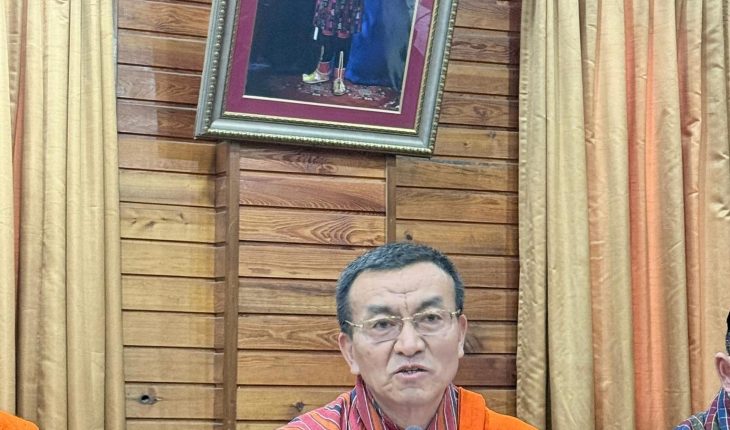
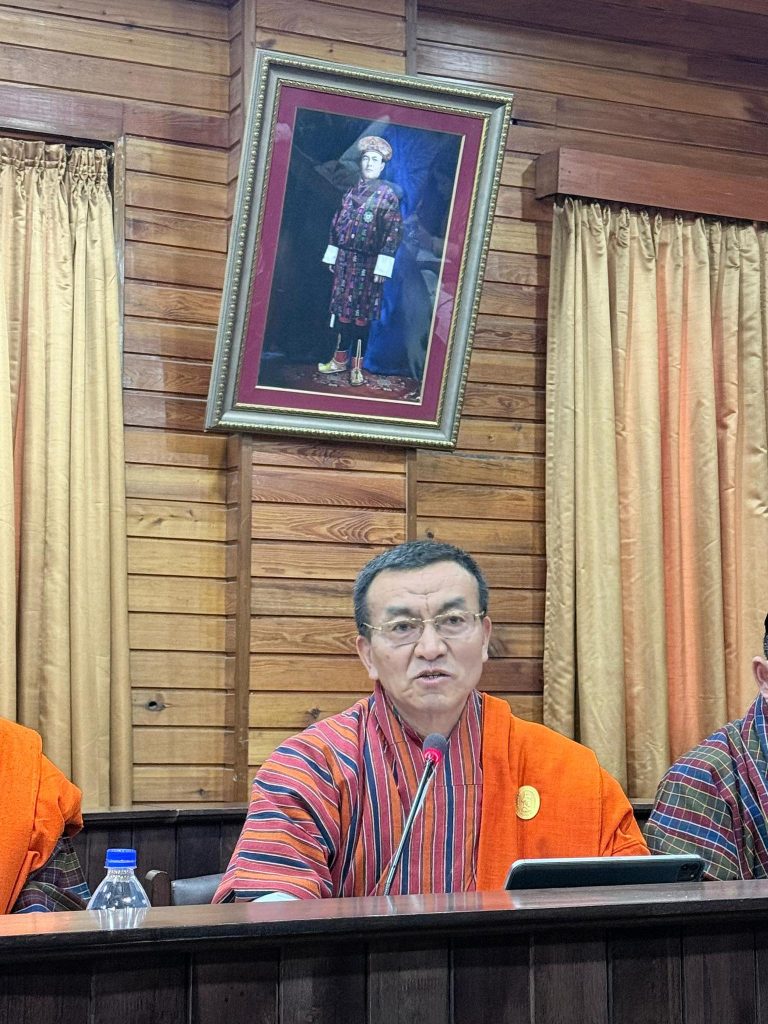
Finance Minister Lekey Dorji during the 26th meet the press session said that the government understands the concerns of ordinary Bhutanese about the rising cost of living and the challenges faced by businesses.
Many families and entrepreneurs, he noted, are feeling pressure as the economy continues to recover, especially in the private sector.
According to the minister, many local businesses are also facing fewer customers because a number of Bhutanese are going abroad in search of work and opportunities. This has reduced the size of the domestic market and made it harder for some businesses to grow.
Speaking about the Goods and Services Tax (GST), he clarified that GST is not a completely new tax that has been added to the system. Instead, it replaces the earlier sales tax and service tax that were already in place in Bhutan.
He explained that under the previous system, taxes could sometimes be charged at different stages of production and sale without proper adjustment. This meant that businesses and consumers could end up paying tax on top of another tax, which is known as a “tax on tax” situation.
GST aims to solve this problem. Under the new system, businesses can claim credit for the tax they pay when buying goods or services needed for their work.
Because of this, tax is applied only to the value added at each stage of production or service delivery. This, he said, will make the tax system more transparent, fair, and efficient.
The minister also pointed out that Bhutan has introduced GST at a rate of 5 percent, which is considered very low compared to many other countries. In many parts of the world, similar taxes are much higher.
He said the government decided to keep the rate low so that the transition to the new system does not place too much burden on citizens and businesses.
He also explained that GST is a consumption-based tax. This means people contribute based on how much they spend. Those who buy more goods and services will pay more tax, while those who spend less will pay less. This helps make the tax system fairer across society.
Tax reforms like GST, he said, must also be seen in the context of Bhutan’s future.
“The global economy is changing, and many countries are trying to become more economically resilient and self-reliant. Bhutan must also gradually strengthen its ability to finance its own development,” he said.
For many years, Bhutan has benefited from generous support from international development partners. However, such support may not always remain the same in the future. At the same time, the expectations of citizens are increasing.
Lyonpo said people want better roads, better hospitals, improved schools, and reliable public services. “Communities also expect these services to reach even remote areas. Providing these services requires strong and stable national revenue,” he said.
Taxation, he added, plays an important role in helping the country meet these needs and a fair and efficient tax system allows the government to invest in infrastructure, social services, and economic development.
He also acknowledged that major reforms often lead to strong public discussion. This, he said, is natural in a democracy and shows that Bhutanese care deeply about the country’s future.
Public opinion, he added, is often broader than what appears on social media. While some voices online may be strongly critical, many Bhutanese also understand the importance of strengthening national systems for long-term sustainability.
At the same time, the government recognizes that improving the lives of ordinary Bhutanese requires more than tax reform.
Lyonpo said, “Efforts will continue to support the private sector, encourage entrepreneurship, and create more opportunities for young people.”
He added that policies that promote tourism, strengthen agriculture, and help small businesses grow will remain important in the coming years. “These efforts are necessary to create jobs and improve economic activity within the country.”
Lyonpo assured that GST should not be viewed only as a tax policy but as part of a larger effort to build a stronger and more self-reliant Bhutan.
“When citizens contribute fairly through a transparent system, the country gains the ability to provide better services and create more opportunities for its people,” he said.
He emphasized that the success of GST will depend on the cooperation of everyone, including businesses, consumers, and citizens across the country.
Lyonpo said GST is a major national reform and it cannot succeed through the efforts of the Ministry of Finance alone.
“It requires the understanding and participation of all Bhutanese as responsible taxpayers and partners in nation building,” he said.