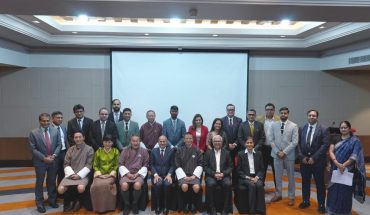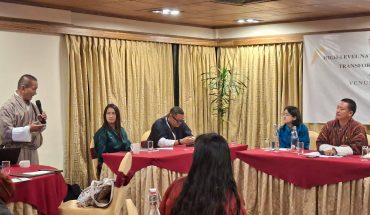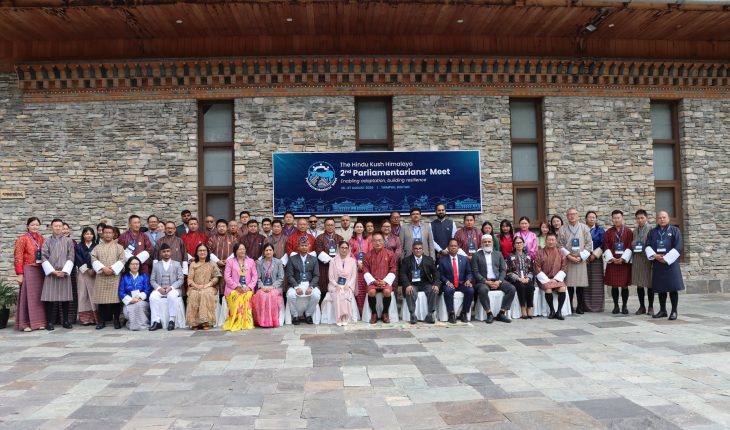
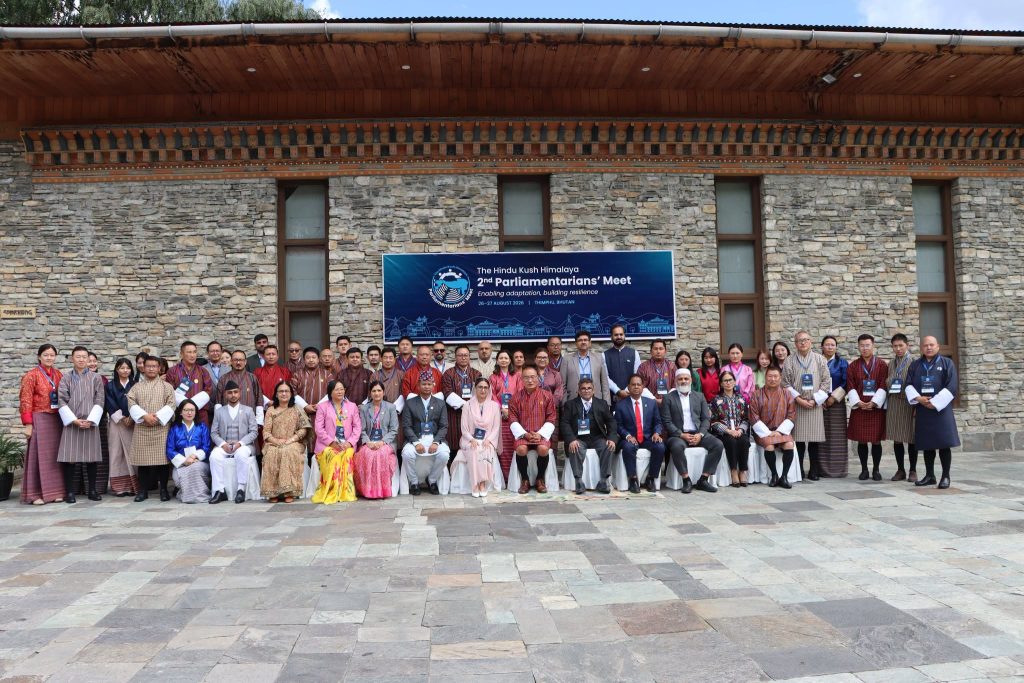
Parliamentarians from Bangladesh, Bhutan, Nepal and Pakistan seek stronger regional cooperation, policy action and investment to address growing climate risks across the Hindu Kush Himalaya.
TIL BDR GHALLEY | Thimphu
With melting glaciers, rising disaster risks and growing threats to water, food and energy security, parliamentarians from four Hindu Kush Himalaya (HKH) countries have called for stronger regional cooperation and urgent policy action to build climate resilience.
The HKH is a globally significant mountain region with fragile ecosystems increasingly threatened by climate change. The rapidly melting cryosphere is affecting water availability, increasing disaster risks, damaging infrastructure, degrading ecosystems and threatening food, energy and water security and the wellbeing of more than two billion people across the region.
“These risks are interconnected. Rapid glacier and snowmelt is altering water availability while increasing floods, landslides and other hazards; those changes then cascade into hydropower and energy security, agriculture and food security, and infrastructure,” said Tashi Tenzin, MP from Radhi Sakteng.
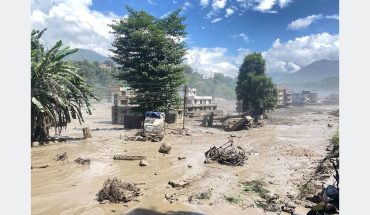
The need for urgent policy support and stronger regional collaboration has become more pressing following the recent devastation caused by floods along the China-Nepal border in Rasuwa district of Nepal.
PM Tshering Tobgay offered his condolences to the people of Nepal, particularly the families who lost loved ones, and said the climate crisis required both scientific knowledge and political action.
“On behalf of the Royal Government of the people of Bhutan, I offer my deepest condolences to the people of Nepal and especially to the families who lost loved ones. This gathering shows that the future of the Hindu Kush Himalaya deserves scientific attention, but science alone is not enough. It also demands political attention because science can tell us what is happening, but ultimately political leadership decide what we do about it,” PM Tshering Tobgay said.
“Science alone cannot protect our people. Science needs to become policy, policy must become budget, budget must become action and action must reach our communities. That is where parliamentarians matter,” he said.
Parliamentarians acknowledged that climate risks and their impacts are interconnected and transcend national boundaries. They said addressing those risks requires stronger regional cooperation, mutual trust and collective and coordinated action to safeguard the lives, livelihoods and wellbeing of people across the HKH.
The two-day meeting identified six key levers for parliamentarians to translate evidence into action: legislate, allocate, oversee, represent, anticipate, and convene and cooperate.
The framework calls on parliamentarians to embed resilience across laws and sectoral policies, allocate predictable resources towards adaptation priorities, and oversee implementation by tracking results and identifying who benefits.
They are also expected to bring lived realities and diverse knowledge into policymaking, prepare for future risks rather than relying on yesterday’s climate conditions, and build cross party and transboundary action through greater cooperation.
MP Tashi Tenzin said the countries could benefit from sharing best practices and cross learning, while working on joint proposals and resource mobilisation to address common climate challenges.
A key area of the proposed cooperation is to strengthen HKH level parliamentary engagement through regular dialogue, peer learning and collaborative platforms.
The parliamentarians also called for the exchange of experiences on issues of common regional concern and stronger recognition of mountain ecosystems and support for mountain communities within global climate processes through enhanced representation of parliamentarians and other key stakeholders.
The meeting also emphasised the importance of evidence informed and inclusive parliamentary practices, including greater use of scientific knowledge, regional assessments, and indigenous and local knowledge.
The parliamentarians proposed exploring the possibility of establishing a Hindu Kush Himalaya Parliamentarians’ Forum on climate change and sustainable mountain development to strengthen parliamentary dialogue and cooperation and share updates on progress.
These commitments were reflected in a declaration agreed by parliamentarians from the participating HKH countries.
The declaration calls for stronger HKH level parliamentary cooperation through regular dialogues and peer learning, collaborative platforms and the exchange of experiences on issues of common regional concern.
It also advocates stronger recognition of mountain ecosystems and greater support for mountain communities within global climate processes through enhanced representation of parliamentarians and other key stakeholders.
The declaration further calls for evidence informed and inclusive parliamentary practices by encouraging the use of scientific knowledge, regional assessments, and indigenous and local knowledge.
The parliamentarians also agreed to explore the establishment of a Hindu Kush Himalaya Parliamentarians’ Forum on sustainable mountain development to strengthen parliamentary dialogue and cooperation and share updates on progress.
The next meeting in Dhaka is expected to build on the outcomes of the second meet and focus on operationalising the consensus reached in Thimphu.
The proposed areas of action include strengthening HKH level parliamentary cooperation through regular dialogue and peer learning, promoting evidence informed and inclusive parliamentary practices, and establishing the Hindu Kush Himalaya Parliamentarians’ Forum on sustainable mountain development.
The countries also proposed designating the International Centre for Integrated Mountain Development (ICIMOD) as the interim secretariat of the forum.
Under the proposal, ICIMOD would draft and present the operational modalities and guiding principles of the forum for consideration at the next meeting.
Bangladesh has expressed interest in hosting the HKH Parliamentarians’ Meet in Dhaka in 2027. The participating delegations welcomed the proposal as an opportunity to continue collaboration and strengthen commitments to address shared challenges through shared solutions.
Addressing the second Hindu Kush Himalaya Parliamentarians’ Meet, Prime Minister Tobgay said the waters of the mountains had sustained communities, shaped economies and livelihoods and provided precious natural resources.
However, he said the recent disaster in Nepal had once again reminded the region of its shared vulnerability.
The Prime Minister recalled his 2019 call to world leaders to protect the Third Pole, which sustains nearly two billion people through its vital water resources.
He said the situation had continued to deteriorate, with glaciers melting at an alarming rate and threatening water, food and energy security as well as livelihoods across the region.
As the region confronts the need for mitigation and adaptation, the Prime Minister emphasized that adaptation was no longer optional but a necessity for survival.
While science remained critical, he said its effectiveness depended on translating knowledge into policies, budgets and concrete action.
The PM also noted that the eight countries participating in the meeting may have different circumstances, priorities and policies but share common vulnerabilities.
He called for the meeting to mark not the end of discussions but the beginning of meaningful action.
He concluded by assuring Nepal that it was not alone, saying Bhutan stood with Nepal and so did the wider Hindu Kush Himalaya family.
The HKH Parliamentarians’ Meet provided a platform for parliamentarians to exchange experiences, discuss emerging climate risks and examine how policies, legislation and public investment can better support adaptation and resilience.
The meeting also sought to strengthen dialogue among countries and encourage greater regional cooperation on climate challenges that transcend national boundaries.
The commitments made at the meeting place greater emphasis on moving from scientific evidence and parliamentary dialogue towards concrete policies, financing and coordinated action to strengthen resilience across the Hindu Kush Himalaya.