RENUKA RAI | Thimphu
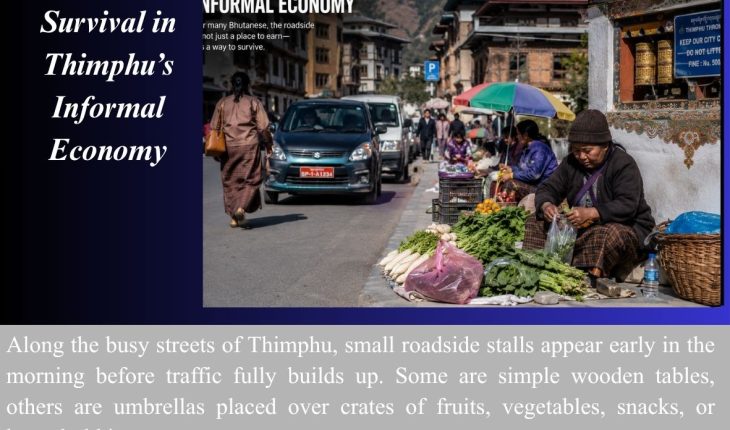
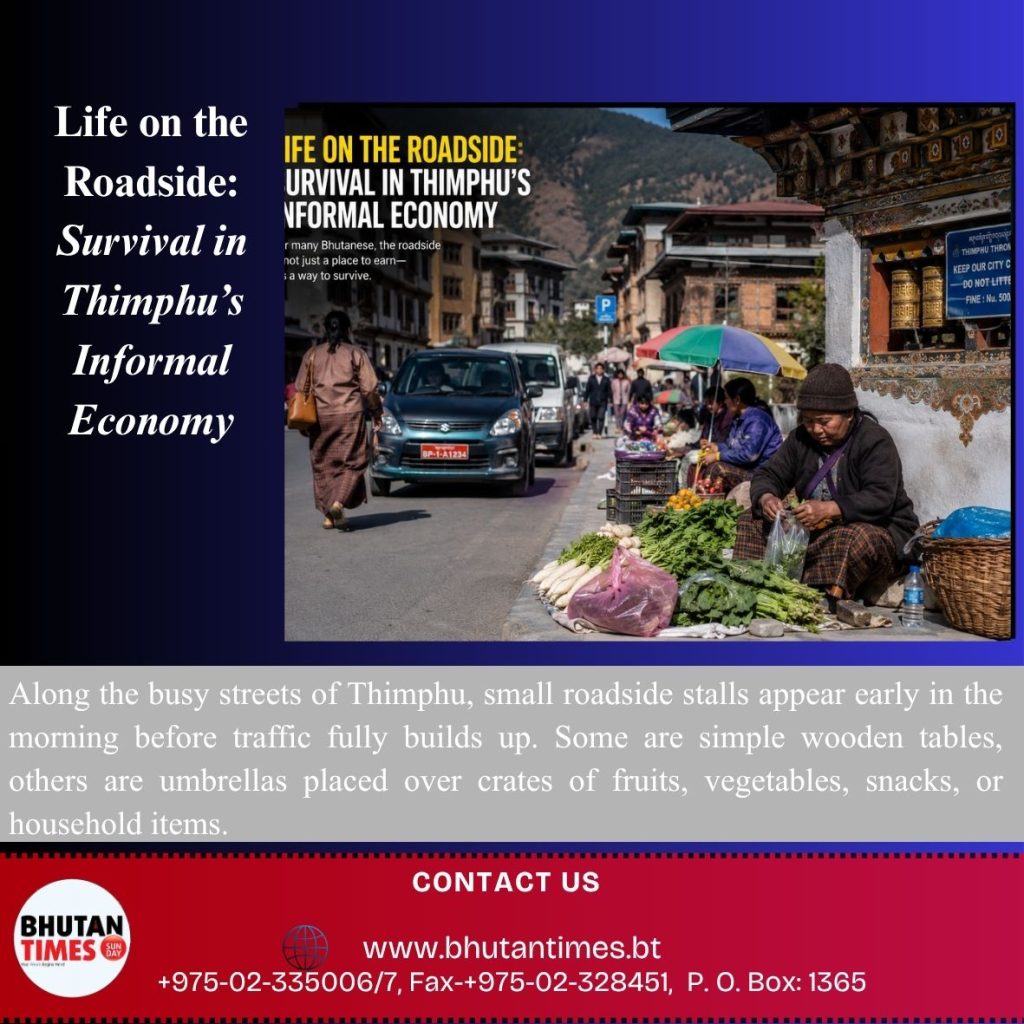
Along the busy streets of Thimphu, small roadside stalls appear early in the morning before traffic fully builds up. Some are simple wooden tables, others are umbrellas placed over crates of fruits, vegetables, snacks, or household items. By evening, many of these vendors are already packing up, counting small earnings that determine how the next day will begin.
For many, roadside vending is not just a job it is survival. “I start very early in the morning, around sunrise,” said Kinley Wangmo, who sells fruits near a busy junction. “If I come late, I lose customers. Some days are good, but some days I only earn enough for food and transport. There is nothing fixed here.”
She said the work is uncertain but necessary. “What I sell is what I earn. If I don’t sell, I don’t have income for that day.”
Across the city, roadside vendors have quietly become part of the urban landscape. They operate in open spaces, along footpaths, near taxi stands, and roadside corners adapting daily to foot traffic, weather, and enforcement rules.
Many vendors entered this line of work after struggling to find stable employment.
Dhan Maya Rai from Samtse, who sells vegetables in the evening, said she turned to vending after trying several jobs without long-term security. “I worked in different places before, but nothing was permanent,” she said. “It is tiring, but at least I can manage my daily expenses.”
She said income varies heavily depending on the day. “If there are customers, I earn something decent. If not, I sometimes go home with very little. But rent, food, and transport still need to be paid.”
For her, the biggest challenge is uncertainty rather than effort. “We work the whole day, but we never know what we will earn.”
Another vendor, Dorji Lhamo, who sells tea and snacks near a taxi stand, said mornings are the most important hours for her business. “My main customers are drivers and office goers in a hurry,” she said. “If I miss the morning rush, the whole day becomes slow.”
She said competition has increased over time as more people turn to vending for income. “Earlier, there were fewer stalls. Now many people are doing the same thing, so we all depend on similar customers.”
Despite competition, she said vendors often support each other informally. “We help each other with space or inform if someone is told to move. We understand each other’s situation.”
Public opinion about roadside vending is mixed but generally sympathetic. Many residents say these vendors provide convenient and affordable access to goods.
“It is very useful,” said a college student from Royal Thimphu College (RTC) in Thimphu. “Sometimes you can just buy fruits or snacks on the way without going to a shop. It is cheaper and quicker.”
Others point to challenges such as congestion and waste in some areas. “In certain places, it becomes crowded,” said Norbu Wangdi a taxi driver. “You have to be careful while driving, especially near junctions. Sometimes there is also litter left behind.”
Still, he added that most vendors are simply trying to earn a living. “It is not easy for them either. They are just trying to survive.”
For vendors, one of the most difficult aspects of the job is lack of stability both in space and income. Many do not have fixed locations and must adjust based on availability or instructions from authorities.
“We don’t always know where we can stay,” said Kinley Wangmo. “Sometimes we are asked to move, so we have to shift quickly and start again somewhere else. It is stressful.”
Weather also plays a major role in their earnings. On rainy days, sales drop sharply.
“If it rains, customers don’t come,” she said. “Fruits get damaged, and we earn almost nothing that day. Those days are very difficult.”
Despite these difficulties, most vendors say they continue because there are few alternative income options available. Rising living costs in the city have also pushed more people into informal work. Vendors say they feel the pressure of daily expenses increasing faster than their income.
“I have to think carefully before buying stock,” said another vendor Dil Man Gurung from Dagana. “If I buy too much and don’t sell, I lose money. If I buy too little, I also lose customers.”
He said savings are almost impossible. “Most days, I just manage to survive for that day. There is nothing extra left.”
Even with the challenges, roadside vending has become an important part of the city’s informal economy. It provides flexible income for those who cannot access stable jobs, and affordable goods for residents.
“I don’t say this is an easy life,” said Dorji Lhamo. “But it helps me take care of my family. That is the most important thing.”
She added that better organization could improve conditions for everyone. “If there were proper spaces for vending, it would be safer and more stable for us. We could work without fear of being moved all the time.”
As evening falls in Thimphu, vendors begin packing up their remaining goods. Some carry unsold items back home, hoping to try again the next day. Others prepare mentally for another uncertain round of early mornings, shifting locations, and unpredictable sales.
The streets slowly clear, but the cycle continues every day early setup, long hours, and uncertain returns.