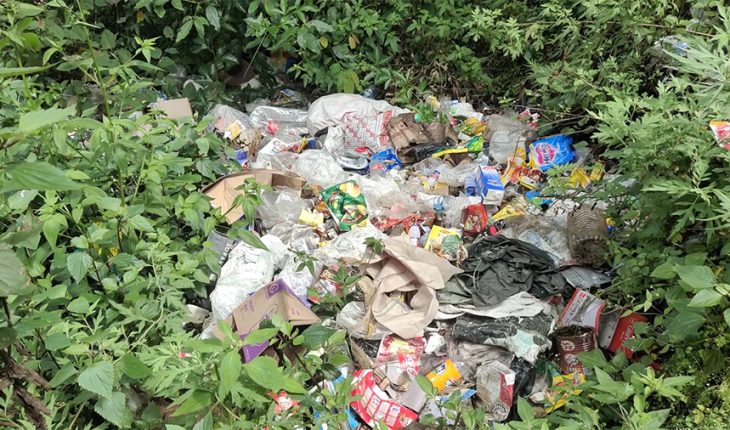
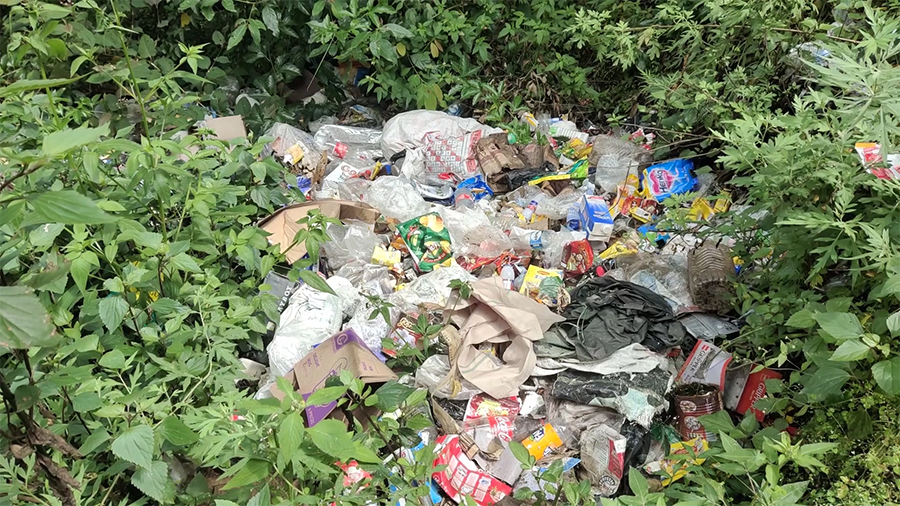
Residents in Thimphu overwhelmed with garbage as it overflows bins, choke drains and flood streets
RENUKA RAI | Thimphu
In the early hours of morning, before traffic builds across Thimphu, garbage trucks move slowly through neighborhoods collecting piles of waste left outside homes, shops, and apartment buildings. The routine looks orderly from a distance. But by midday, many of those same collection points are already filling up again plastic bags stacked unevenly, food waste exposed, and the smell of decay lingering in the air.
What was once an occasional inconvenience is now becoming a daily reality for many residents in the capital.
Across different parts of the city, people describe a similar pattern waste is collected, but quickly returns. For some, it has started affecting daily life in ways that go beyond cleanliness.
“I see the bins full almost every day now,” said Sonam Choden, who runs a small shop in the Changzamtog. “Sometimes the waste stays there for two or three days if the collection is delayed. Customers notice it immediately. It doesn’t feel right for a capital city.”
The concern is not limited to commercial areas. In residential neighborhoods, overflowing bins and scattered waste have become more visible, especially in places where collection timing does not match residents’ routines.
For working residents, managing waste disposal has become increasingly difficult. Tshering Choden, an office employee, said the timing of collection often clashes with her schedule.
“I used to manage it properly before,” she said. “But now I leave for office early in the morning, and the garbage truck comes only after that. So, I can’t manage the time. Sometimes we leave the waste outside early, but even then, it gets scattered by dogs or birds before the truck arrives.”
She said the issue is not about negligence but routine pressure. Many working families, she explained, are unable to adjust their schedules around waste collection hours.
“Not everyone is at home during collection time,” she added. “If we miss it, we have to wait for the next round, and by then the waste has already piled up.”
Residents across the city say the volume and nature of waste itself has changed noticeably over the years. What was once mostly biodegradable waste has now shifted heavily toward plastics and packaged materials.
“Earlier, it was mostly food waste and things that would decompose quickly,” said Pema Dorji, a taxi driver. “Now everything comes in plastic bottles, wrappers, takeaway boxes. Even a small family produces a lot more waste than before.”
He said this change is closely linked to modern lifestyles, especially increased use of packaged food and convenience items.
“You see it everywhere now,” he said. “Almost everything we buy is wrapped in plastic. That’s why the waste keeps increasing.”
Despite awareness about proper waste disposal, many residents admit that segregation is not consistently practiced. Although people know they are supposed to separate wet and dry waste, daily routines often make it difficult to maintain.
“I know we should separate waste,” said Dechen Wangmo, a resident living in a rented apartment. “But sometimes when you are busy, everything just goes into one bag. It is not intentional, but it happens.”
Others say that even when segregation is done at home, the system does not always support it afterward, which discourages consistent effort.
“Sometimes you feel like there is no point separating waste properly,” said a college student. “Because later it all gets mixed anyway. That makes people less careful over time.”
This gap between awareness and practice is visible across many parts of the city, where mixed waste is still commonly seen at collection points.
As waste accumulates, its impact is felt directly in daily life. In commercial areas, shopkeepers say overflowing bins affect both hygiene and business.
“When waste is left outside, it brings dogs and sometimes even insects,” said Sonam Choden. “It creates a bad smell, and customers don’t like to stay around such places.”
In residential areas, the problem is more about comfort and living conditions.
“During warmer days, the smell becomes very strong,” said a resident from a housing colony. “Sometimes we have to close our windows. It is not something you expect in your own neighborhood.”
For many, the issue is not just physical discomfort but also emotional frustration. Residents say there is growing concern about how the city is changing.
“Thimphu used to feel very clean and calm,” said a young office worker. “Now in some areas, especially near markets, it doesn’t feel the same anymore. It’s disappointing.”
At the same time, residents also acknowledge that the responsibility does not lie with one group alone. While some point to collection timing and system gaps, others say public behavior plays a major role in the problem.
“We cannot only blame the system,” said Pema Dorji. “People also throw waste carelessly. Even when bins are available, some still leave garbage outside or on the roadside.”
Tshering Choden echoed a similar view, saying that while her schedule makes disposal difficult, habits also matter.
“Sometimes even when people know better, they don’t follow properly,” she said. “If everyone took a little more responsibility, it would help.”
In some neighborhoods, residents say they have tried to take small steps to manage waste better, but results are inconsistent without collective effort. “We try to keep our area clean,” said Karma Dorji, a corporate employee. “But if others don’t do the same, it becomes difficult to maintain.”
Young people, in particular, are increasingly vocal about the issue. Some say they are aware of environmental concerns but feel everyday habits have not caught up with that awareness. “We learn about environment in school, and we know waste is a problem,” said Divya Rai college student. “But when you go outside and see how people actually behave, there is still a gap.”
Small community clean-up efforts have started in some areas, often led by students and volunteers. However, participants say such efforts only provide temporary relief.
“We cleaned one area recently, and it looked good for a few days,” the student said. “But then waste came back again. It shows this is not a one-time solution.”
Despite the challenges, residents say they still believe change is possible if both systems and habits improve together. Many feel that even small changes in daily behavior could have a visible impact.
“If every household managed waste properly and disposed it at the right time, things would improve,” said Dechen Wangmo. “It doesn’t have to be complicated. Just consistency matters.”
Others emphasize timing and coordination as key issues that need attention alongside public cooperation.
“It is not only about cleaning,” said Tshering Choden. “It is also about making sure collection times match people’s lives. Otherwise, waste will always keep piling up.”
As the day ends in Thimphu, garbage trucks complete their rounds and move out of neighborhoods. But by the next morning, the cycle begins again. Waste is placed outside, bins fill up, and the city continues its quiet struggle with what it produces every day.
And as residents move through their routines, the question remains whether habits, systems, and awareness can evolve quickly enough to match the pace of the city’s growth.