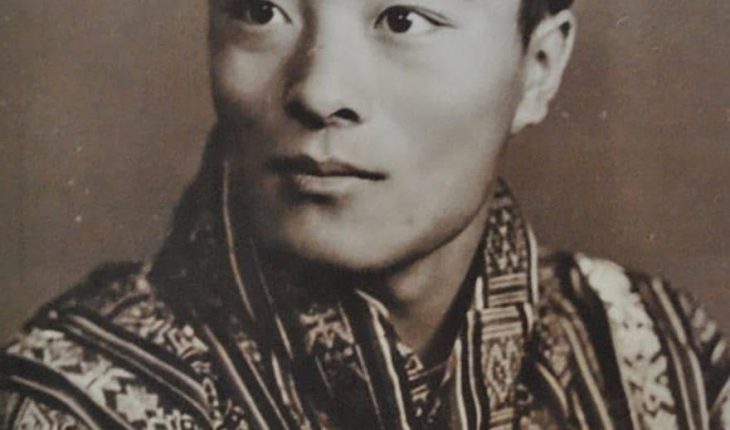
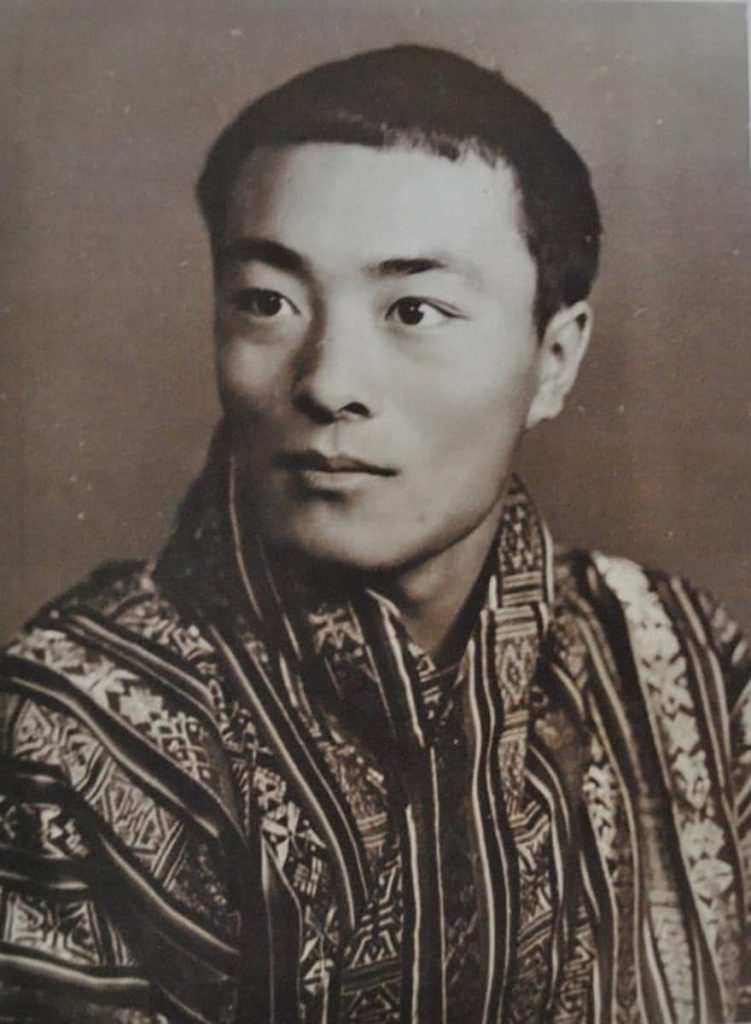
May 2 is a significant landmark in the annals of modern Bhutan. The father of modern Bhutan, His Majesty the late King, Druk Gyalpo Jigme Dorji Wangchuck, was born to Bhutan and the Bhutanese on this day seventy-six years ago. The great soul, symbol of charity for all and malice towards none, weaver of a dream-future enshrined in a prayer for the reign of our beloved King, His Majesty Druk Gyalpo Jigme Singye Wangchuck, led the land of the peaceful dragon from the isolation of medievalism to the forefront of the modern world.
2002’s May 2nd came as a clinching reinforcement of the significance of the great event. The day witnessed the beginning of the celebration of the individuals who honour and give substance to the mission acknowledged as education.
The observance of Teachers’ Day is an affirmation of the contribution of educators in promoting the all-important service of education in the unlocking of minds and strengthening of the interests of the country. How it might have pleased the father of modern Bhutan to see his dreams come true.
As a matter of fact, the official declaration of Teachers’ Day to coincide with the celebration of the birth anniversary of His Majesty the late King was an acknowledgement of a decision children all around the country had already made in their own informal, spontaneous little ways.
Perhaps, one of the greatest merits of the children’s decision was the power of simple, positive, sincere acts in humble stations to influence action at higher levels. Natural, personal sentiments of gratitude and appreciation, building and accumulating positive, creative energies, found their way in attitudes and gestures at once ennobling, at once life-giving. Indeed, all good actions are a blessing to the doers as well as the receivers.
Individuals, societies, nations gain in merit, grow in stature and live in peace on the strength of the positive energies valued and released by individuals to the society.
Young people have shown the way. There is hope. How can we enlarge and extend these life-affirming capacities beyond the territorial euphoria of Teachers’ Day!
Indeed, for teachers to have one day, out of three hundred sixty five, dedicated to them should be deeply gratifying. When a little child struggles with his unsteady hands to paint a card, or make a poster, or just compose a simple message, there is much more that is unsaid but meant, much more that is unexpressed but implied in spontaneous sentiments.
The little drawings and often illegible letters are a sacred testament to messages too pure, too innocent for easy transcription. Even this old child choked on a lump in his throat, on Teachers’ Day, when he tried to reach out to his lopons, some retired, others retiring, to pay his tributes to his mentors.
Teachers, indeed. The central players on the educational stage! The revealers of the treasures of knowledge! The embodiments of values par excellence!
Custodians of society’s goodness and taste! Conscience-keepers of the nation! Upholders of the integrity and honour of individuals and institutions! Teachers! They are all these and more. And more…
Revered and rebuked, feared and frightened, exalted and humiliated, fulfilled and frustrated. Teachers! Over-worked and under-worked, acknowledged and ignored, invigorated and enervated! These! These are also teachers. Animators of our nation’s schools! The light of our children’s lives!
Enlivening, exciting, gratifying, exhausting, tedious, restrictive, often leading to burn-outs. These are part of the narrative of a teacher’ life. But teaching has to go on. The child cannot wait. His name is Today as in the language of Chilean Nobel laureate Gabriele Mistral. It is a difficult job. Teacher’s! If it is to be done well!
One day out of three hundred sixty five. It is in the essential fitness of things. We can never compensate enough for what a teacher can do for us. The gift of knowledge, a flash of illumination, a moment of discovery, that old caring voice heard in the passageway, down the corridors, across the play-fields, an insight into self-respect and love of learning, the fire ignited in the soul – these are beyond the grasp of conventional reckoning. True recompense lies in the soul of the giver. And such a giver is the society’s seer, the teacher. Thank you, teachers!
Teachers’ Day is also an occasion to salute the brave men and women who decided to do the near-impossible – participate in the mental universe of children, in all their variety and complexity, with all their ambitions and drives, curiosities and motivations, with their strengths and vulnerabilities, their fears and anxieties. Trying to be! Experiment! Discover! Expand the circuit of their universe!
It must take tremendous courage and strength of will to decide that one will deal with mind rather than matter, that one has the moral conviction and wherewithal to quench the thirst that from the soul doth rise.
Teachers’ Day is an occasion for celebration and appreciation. It is also a day of reckoning. With honour comes responsibility. Does the observance of Teachers’ Day charge me, as a teacher, with added responsibility? What do my students expect of me? How do I relate myself to my profession, my society, my country? What difference do I make to the way things are? What does my inner voice tell me?
Fine teachers make fine schools. Fine schools make fine nations. The implications of a teacher’s job are clear. A good teacher embodies and transcends the soul of the curriculum, exceeds the enthusiasm to sharpen brains and skills and goes on to help build faith and character. The teacher is aware of the diverse claims – intellectual, academic, occupational, civic, spiritual – that the curriculum and his or her teaching would have to acknowledge and promote.
Indeed, the nature of knowing itself is such that it exceeds the mere rational approach to progress to the intuitive and the imaginative. And teaching has to make allowances for these to help build healthy and well-balanced individuals whose lives will inform the quality of the society. Mis-educated and
misdirected individuals can be a liability not only to themselves but to the society as well.
Liabilities indeed… How often great promises and possibilities turn into sad testaments of failure and frustration through opportunities squandered and lives gone astray… How often a thousand flowers blossom and waste their sweetness in the desert air… The quiet child hiding away in a dusty corner could be Bhutan’s Newton or Shakespeare! The scruffy little fellow needling his bench-mate could well be wanting to know more, hear more, see more, explore and move on.
Let every flower blossom in the garden of our educational soil. Children hold out the promise of the future. They will be the guardians of our hope and the bulwark of our values and institutions.
Each day, thousands of our fine young men and women, boys and girls come to our schools and institutions hoping to make something of their lives, dreaming of a future, carrying a bundle of hopes. As every child would! They deserve the best we can do to give meaning to their lives. We need only to follow the echoes from Jomtein to Dakar to New York and the vision of His Majesty, our beloved king.
When we look around, we see a world bleeding from the wounds of strife and hurts, people torn apart and homes divided. Beneficiaries of the security of a welfare state, we often tend to take our peace and prosperity for granted. But the gifts of peace and security are to be built on every day, consciously, by everybody. Our values and institutions are to be strengthened and promoted by everybody, every day, consciously, diligently.
For our future to be secure and stable, we need to nurture in our young men and women and children the sense of the right values and strength of character which will make them part of the pride of our system rather than part of its weakness. No amount of resources and realization will remedy the situation once societies tear up and people fall apart.
That is why the task of guiding the young people along the right path is an investment in social capital and goodwill which give societies and nations their substance and authenticity, their special vitality and resilience.
All these and more can be happening in our classrooms, in our prayer sessions, on the play-fields, assemblies, meetings, planning and reflections, now. We could well be deciding the quality and content of the character of our nation in our humble classrooms. The task of nation-building does not finish in one generation.
It is a hugely impoverished goal if we educate people merely to find a job, however important it may be. When we educate people, it is believed that they will have imbibed the sweetness and light from the mines of the world’s masterpieces and civilizations, apart from the richness of one’s own culture.
The cultivation of social graces sweetens our relations with our fellow-beings and creates goodwill in the society not so much as a function of little courtesies, but as an essential foundation on which our softer selves are built. We may not know a person or his or her status, for instance, but we will be
unpardonably deficient as social beings if we were not to be sensitive to the person’s age or circumstances. Education could not fail to deliver on this vital responsibility.
Beyond Teachers’ Day, it is fair to expect that we are able to turn out teachers who will match the role of educators… It is fair for our students to expect their teachers and educators to live out in their lives and convictions what they tell the children to do just as, indeed, it is fair for them to be able to see civil servants around them to value and promote civility and service.
It is fair to expect some of our young men and women one day to represent the essence and vitality of the Bhutanese mind and civilization in some of the finest universities of the world and contribute to the accumulated wisdom and excellence of the human race. Are we able to challenge our children to discover the marvels of their mind and explore the frontiers of their imagination?
It is the creative genius and character of a people that make nations great. Great civilizations are the autobiographies of great minds. Perhaps, our temples of learning could be the cradles for the flowering of the Bhutanese mind.
In an ideal situation, education should lead the market, industry, finance, economy and corporations and chasten them with the humanizing power of sweetness and light. Sadly however, in most parts of the world today, it is the market forces which call the tune.
The reductive language of market economy has already decided that colleges should produce salable graduates! The pursuit of the goal of gross national happiness is getting sorely tested against the progressive utilitarianism of the flesh. Can our schools inspire alternatives?
May be, one day, it will be thanks to the light of education that this small country of ours will be able to rediscover and reassert the power of the inner mandala to guide the outer mandala as the seers of the East had shown even before the atom was split.
The declaration and celebration of Teachers’ Day was no ordinary event.
Thank you, lopons.
Thakur S Powdyel, former Minister of Education.
* * *