NGAWANG JAMPHEL | Thimphu
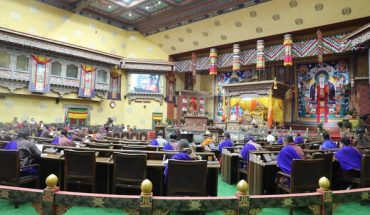
As the 37th Parliamentary Session of the National Council of Bhutan begins, discussions on the proposed Livestock Bill of Bhutan 2025, which was deliberated during the 36th parliamentary session, are expected to shape the future of the country’s livestock sector, food safety system, animal welfare standards, and biosecurity measures during the month-long session running from May 14 to June 16.
If passed, the proposed legislation will replace the Livestock Act of 2001, a law that has governed the sector for nearly 25 years.
Lawmakers and officials say the existing framework no longer meets Bhutan’s modern needs, particularly at a time when the country is struggling with rising meat imports, growing public health concerns, and changing agricultural practices.
The bill comes at a critical moment for Bhutan’s economy and food security. According to government data, meat imports have risen sharply from Nu 567.8 million in 2005 to Nu 5.8 billion in 2024.
At the same time, meat exports have fallen from Nu 225.8 million to only Nu 45.3 million.
Officials say the figures reveal Bhutan’s increasing dependence on imported meat products. Today, more than half of the meat consumed in the country is imported. Statistics show that 56.2 percent of meat available in Bhutan comes from outside the country.
Economic Affairs Committee (EAC) Chairperson Sonam Tenzin said the proposed bill is necessary to improve local livestock production, strengthen public safety, and support Bhutan’s long-term self-reliance goals.
“If the bill does not pass the discussion and becomes a dead-Bill, the Livestock Act of 2001 will still be applicable,” he said. “This means lesser services for the farmers and consumers.”
The bill previously failed to pass during discussions in the National Assembly, where 19 members voted against it and one member abstained. The rejection sparked public debate and concern among sector officials, who warned that delaying reforms would continue to weaken Bhutan’s livestock sector.
The increasing dependence on imported meat has become a major concern for policymakers. Officials argue that imported products often enter the country with limited monitoring and may not always meet proper health and safety standards.
The National Health Survey 2023 shows that 88.7 percent of Bhutanese consume meat, while only 11.3 percent identify as vegetarian. Of that vegetarian population, 6.1 percent consume eggs while 5.2 percent follow strict vegetarian diets.
With meat consumption remaining high, lawmakers believe Bhutan must improve its domestic livestock production system and strengthen local food safety standards.
The proposed bill aims to encourage regulated livestock farming, modern meat-processing facilities, and improved disease control systems. Officials say this could reduce Bhutan’s dependence on foreign markets and improve national food security.
One of the most controversial parts of the Bill involves the regulation of slaughterhouses and meat-processing facilities.
Public discussions surrounding the Bill have triggered social media speculation and accusations that certain individuals or politicians may benefit financially from commercial slaughterhouses. However, lawmakers have rejected these claims.
Sonam Tenzin clarified that the government has no intention of operating slaughterhouses for profit. Instead, the government’s role would focus on regulation and support.
“The government shall facilitate the interested individuals who are coming forward to establish such facilities,” he said, “and facilitate the process of having a well-designed and bio-secure farm and livestock facilities.”
Officials also stressed that slaughterhouses are not a new concept in Bhutan. Similar provisions already existed under previous livestock laws passed in 1981 and 2001.
The Bill proposes strict standards for any future abattoir or meat-processing plant. Any business or individual planning to establish such facilities would have to register with the Regulatory Authority and meet biosecurity requirements.
Under the proposed law, animals intended for commercial meat production must be slaughtered only in approved facilities. Veterinary inspectors would carry out mandatory health inspections before and after slaughter to ensure food safety.
Authorities would also receive stronger legal powers to inspect, seize, or confiscate unsafe meat products and animals if regulations are violated.
Lawmakers argue that the current Livestock Act of 2001 is outdated because it was introduced before Bhutan adopted its Constitution in 2008. They say the old law does not adequately address modern issues such as administrative accountability, animal welfare, public health, and scientific livestock management.
The proposed Livestock Bill contains 13 chapters and 205 provisions. It seeks to align Bhutan’s livestock governance system with international standards set by organizations such as the World Health Organization (WHO) and the World Organisation for Animal Health (WOAH).
The Bill introduces detailed rules covering animal transportation, shelter conditions, veterinary services, disease surveillance, and livestock handling practices.
“It is timely for us to discuss and plan proper welfare standards for animals,” Sonam Tenzin said.
Officials say poor livestock handling practices remain common in many areas, partly due to limited awareness and outdated systems.
If passed, the new legislation would repeal the 2001 Act. However, existing licenses, permits, and certificates would remain valid until their expiry dates to ensure a smooth transition.
The proposed law also introduces stronger responsibilities for citizens and animal owners.
Chapter-III of the bill places legal responsibility on every Bhutanese citizen to protect animal health and welfare. The law would establish minimum standards for shelter space, feeding, transportation, and handling of animals.
The bill also seeks to regulate the treatment of animals used in sports, entertainment activities, and festivals.
Pet owners would be required to register and identify their pets through microchipping or other approved methods. Owners would also need to ensure vaccinations and proper containment of their animals.
Authorities say these measures are important to control the spread of zoonotic diseases, which can spread from animals to humans.
The legislation also brings animal shelters and Tshethar practices under greater regulation.
Tshethar, the Buddhist tradition of saving animals from slaughter, is widely practiced in Bhutan. Under the proposed law, individuals or organizations involved in Tshethar or animal rescue activities would need technical clearance from the Department of Livestock before registering with local authorities.
Officials say the requirement is meant to ensure rescued animals receive proper care and do not suffer from starvation or disease due to poor management.
One of the most debated proposals in the Bill is the plan to penalize people who feed stray animals in public places.
Under the proposed rules, feeding stray animals on roads, highways, or public spaces could become a punishable offense carrying financial penalties.
Authorities say the measure is intended to control the growing stray dog population and improve urban safety and sanitation.
The proposal has already generated mixed reactions among the public, particularly from animal welfare supporters who worry it may discourage compassion toward stray animals.
However, lawmakers argue that unmanaged feeding practices contribute to public safety concerns and can worsen disease transmission.
The Bill also aims to improve Bhutan’s biosecurity and disease response systems.
Currently, multiple agencies share overlapping responsibilities during disease outbreaks, often causing confusion and delays.
The proposed law clearly defines the responsibilities of ministries, departments, and regulatory authorities. It also requires the Department of Livestock and local governments to establish stronger disease surveillance systems for monitoring zoonotic and infectious diseases.
The Bill further proposes the establishment of an independent Veterinary Council under the Bhutan Qualifications and Professionals Certification Authority (BQPCA). The council would regulate veterinary professionals and ensure standardized qualifications for veterinarians and technicians.
Officials say stronger veterinary regulation is necessary to improve animal healthcare services nationwide.
Despite its focus on modernization, the Bill also seeks to preserve Bhutan’s religious and cultural values.
The proposed legislation continues restrictions on slaughter and meat sales during sacred days of the Bhutanese lunar calendar.
Under the existing law, slaughter and meat sales are prohibited during the first and fourth lunar months and on the 8th, 15th, and 30th days of every month.
The new Bill proposes adding the 10th and 25th lunar days to the restricted list.
Lawmakers say the drafting process included consultations with the public, civil society organizations, animal welfare groups, and the Zhung Dratshang.
“The National Assembly had thoroughly discussed with the public, animal welfare societies, and civil society organisations and the Zhung Dratshang on the Bill and its need for revision,” Sonam Tenzin said.