.𝘼𝙨 𝙛𝙚𝙬𝙚𝙧 𝙮𝙤𝙪𝙣𝙜 𝙥𝙚𝙤𝙥𝙡𝙚 𝙩𝙖𝙠𝙚 𝙪𝙥 𝙩𝙝𝙚 𝙘𝙧𝙖𝙛𝙩, 𝙩𝙧𝙖𝙞𝙣𝙞𝙣𝙜 𝙖𝙣𝙙 𝙣𝙚𝙬 𝙢𝙖𝙧𝙠𝙚𝙩 𝙤𝙥𝙥𝙤𝙧𝙩𝙪𝙣𝙞𝙩𝙞𝙚𝙨 𝙖𝙞𝙢 𝙩𝙤 𝙨𝙪𝙨𝙩𝙖𝙞𝙣 𝙆𝙝𝙤𝙢𝙖’𝙨 𝙙𝙞𝙨𝙩𝙞𝙣𝙘𝙩𝙞𝙫𝙚 𝙩𝙚𝙭𝙩𝙞𝙡𝙚 𝙩𝙧𝙖𝙙𝙞𝙩𝙞𝙤𝙣
TIL BDR GHALLEY | Lhuentse
The looms are still clattering in Khoma, but the hands that know how to work them are growing older.
Across the village, women continue to weave Kishuthara, the intricate textile that has long defined Khoma’s cultural identity and provided generations of families with a livelihood. Yet, as younger people pursue education and employment elsewhere, the transmission of skills once passed naturally from mothers to daughters and grandmothers to grandchildren is becoming increasingly uncertain.
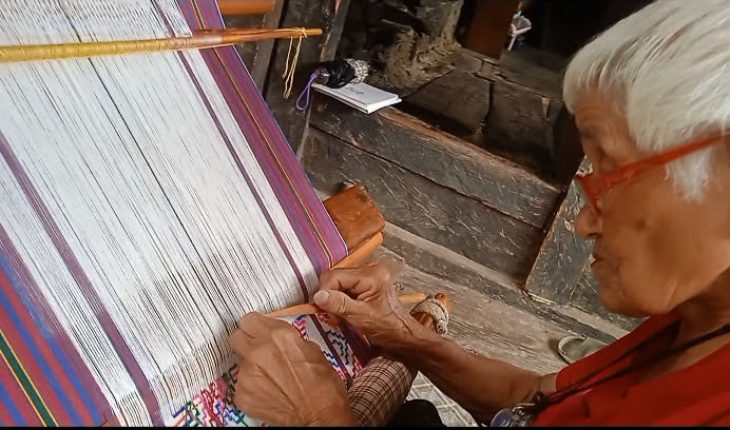
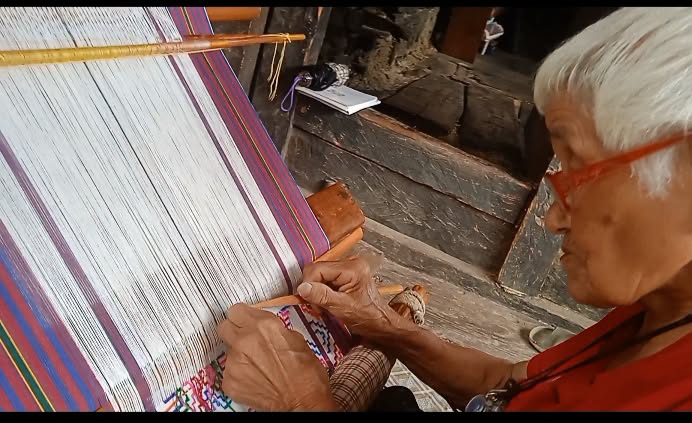
At 92, Sithar Lhamo is among the oldest links in that chain. She first learned to weave at 14 and has spent nearly eight decades at the loom, carrying forward patterns and techniques passed down through generations.
For her, weaving is more than a cultural practice. It remains a source of income and companionship.
Her day begins around 5am. After preparing meals, completing household chores and offering morning prayers, she sits at the loom by about 6am and often continues until dusk.
Even at her age, she continues to weave tablecloths and other textiles, earning an income from a skill she began learning as a young girl.
In 2024, Sithar Lhamo received the Living Legend Award in Weaving Culture from Her Majesty Gyalyum Sangay Choden Wangchuck in recognition of her lifelong contribution to Bhutan’s textile heritage.
Her story reflects both the resilience of Khoma’s weavers and the challenge confronting the community: preserving a demanding craft whose knowledge remains concentrated among experienced artisans.
For many young people, weaving is no longer viewed as a fallback livelihood.
Nidup Zangmo, 56, said weaving offered a dependable means of earning a living for those who could not continue their studies. The choices available to young people have since widened, making traditional weaving less central to their aspirations.
“When we were young, we thought that even if we could not continue our studies, we could sustain ourselves through weaving,” she said.
Sonam Yuden, 34, said Kishuthara designs had improved over the years, demonstrating that the craft continues to evolve. However, she is concerned about the small number of young people taking up weaving seriously.
“If people continue to leave in search of better opportunities, even going as far as Australia, the future of Kishuthara weaving will become more uncertain,” she said.
Lhawang Choden, 25, said the change was also evident in how children spent their free time.
“When we were young, we did not have smartphones, so during our holidays we spent time learning Kishuthara weaving,” she said. “Today, young people spend more time on their phones and social media.”
She said around four women in their 20s in the village were currently engaged in weaving.
The concern extends beyond the declining number of young weavers. Kishuthara depends on practical knowledge acquired through observation, repetition and years of experience. The tension of a thread, the placement of intricate patterns and the adjustments required to operate a loom are skills that cannot be mastered without sustained practice.
When fewer young people spend time alongside experienced weavers, opportunities to learn these techniques diminish. The gradual loss of practitioners therefore risks weakening not only the craft’s workforce but also the informal system through which its knowledge has endured.
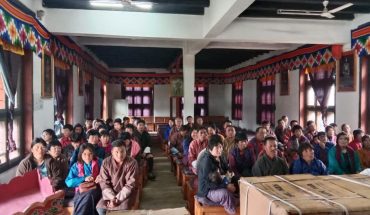
Recognising the importance of sustaining Bhutan’s textile heritage, the Royal Textile Academy (RTA), in collaboration with the Department of Tourism, conducted a textile workshop in Khoma in 2023, with 28 participants.
The workshop aimed to equip weavers with knowledge of natural dyeing, promote the use of natural dyes in textile production and marketing, and encourage the continuation of traditional craftsmanship. Participants were also introduced to developing designs inspired by their surroundings, including biodiversity motifs such as birds and butterflies.
For Sonam Yuden the training offered an opportunity to build on existing weaving knowledge while learning techniques that could be applied to textile production.
“The training helped us understand how to use natural materials to produce dyes and bring out different colours in our textiles. It gave us new knowledge and skills that we can apply to our weaving while preserving traditional practices,” she said.
Natural dyeing can connect textile production more closely with locally available natural materials and traditional knowledge. Combined with thoughtful design development, it can also give weavers additional ways to distinguish their products in the market.
However, training alone cannot guarantee the continuity of a craft. Its longer-term value depends on whether weavers can apply what they learn, access the materials they need and earn enough from their products to justify the time and effort involved.
According to RTA, its wider support for weaving communities includes capacity-building workshops, educational programmes to encourage young people to learn the craft, and textile purchases intended to generate income for artisans.
RTA also purchases textiles and operates a museum shop through which products can reach customers. These efforts provide potential avenues for weavers to market their work while strengthening their existing skills.
A full-time weaver can produce two complete kiras in a year. The intricate patterns require patience and considerable skill, making it difficult for handwoven products to compete with cheaper alternatives on price alone.
Nidup Zangmo said machine-made and imitation Kishuthara products had become more readily available, offering consumers less expensive alternatives.
Weavers say the availability of machine-made and imitation Kishuthara products has also affected interest in traditional weaving.
For traditional weavers, the challenge is to receive a reasonable return for their labour without pricing their products beyond what buyers are willing to pay.
Khoma Tshogpa Sonam Darjay said the price of a kilogram of yarn had increased from about Nu 1,500 previously to around Nu 8,000 today.
“If we get yarn at a reasonable price, we can also sell our products at a reasonable price,” he said. “There has to be a balance.”
He said a dedicated yarn outlet and more training in natural dyeing could help weavers manage production costs and improve the value of locally produced textiles.
The cost of raw materials directly affects how much weavers must invest before a finished product can be sold. For a craft that demands months of work, rising input costs can make production increasingly difficult to sustain.
The Tshogpa said the community needed practical support to help weavers manage these costs and continue producing traditional textiles.
“If you produce, there is no way we cannot sell,” he said.
His assessment points to the importance of linking production with market access. The availability of buyers is one part of the equation; ensuring that sales generate sufficient returns after material costs and labour is another.
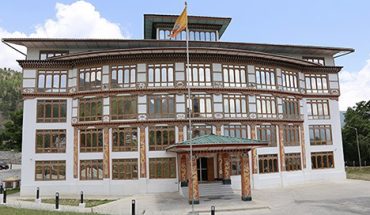
In 2024, the Department of Tourism, with technical support from the United Nations Development Programme and funding from the Global Environment Facility, established a showroom and weaving centre in Khoma.
Managed by the village’s Kishuthara group, the centre provides a place for weavers to display their products and market them directly to visitors and potential buyers.
Nidup Zangmo said “The establishment of the showroom has eased the burden of selling our products. It gives us a direct platform to display and sell our work to visitors and potential buyers, making it easier for people to see and appreciate our textiles.”
The centre offers a practical link between the production of traditional textiles and the people interested in buying them. It also provides visitors with an opportunity to encounter Khoma’s weaving heritage in the village where the craft is practised.
However, the facility can accommodate only four weavers at a time, limiting the number who can use the space simultaneously.
Yangzom said having a place to display and sell textiles could encourage weavers to continue practising their craft.
While the showroom provides a platform for marketing textiles, its longer-term contribution will depend on the extent to which it generates regular sales and whether those sales translate into better returns for the weavers.
Beyond platform, the community also faces a shortage of suitable spaces where weavers can work together and pass on their skills.
Most women weave from their homes, balancing the craft with household responsibilities. Some have built makeshift shelters from locally available materials, using old and torn kiras for additional cover against the scorching heat.
These spaces allow weaving to continue but offer limited conditions for sustained group learning.
A properly equipped community weaving shelter could give experienced artisans and learners a shared space to practise, exchange techniques and organise practical training. It could also allow visitors to observe the process and better understand the labour behind each textile.
Such a facility would complement existing efforts to improve skills and market access. More importantly, it could help reconnect weaving with the everyday life of the village, creating opportunities for younger people to learn directly from experienced artisans.
Khoma Gup Tshering Wangdi said the gewog once had around 2,000 residents, but the population had since fallen by about half. According to the village Tshogpa, 32 individuals from the village had migrated overseas.
A smaller population means fewer people are available to sustain traditional occupations and fewer opportunities for children to learn weaving through the everyday routines of village life.
For generations, children learned by watching their mothers and grandmothers at the loom before gradually mastering the techniques themselves. This informal system allowed skills to be passed on within families without requiring formal instruction.
Today, education and employment opportunities elsewhere have changed those routines. Preserving the craft increasingly requires deliberate efforts to create opportunities for children and young people to learn alongside experienced weavers.
Another weaver, Choney Zangmo, 56, is trying to keep that tradition alive within her own family. She teaches her six- and nine-year-old granddaughters to weave during their summer and winter vacations.
The school holidays offer an opportunity to introduce the girls to the craft, although the limited time available makes consistent practice difficult alongside their education.
Her efforts illustrate the role families continue to play in preserving Kishuthara. Yet individual commitment may not be enough if the wider environment does not provide young people with reasons and opportunities to continue weaving as they grow older.
The village Tshogpa said Khoma planned to organise a Yoesel Dema weaving exhibition to showcase the community’s textile heritage and encourage younger generations to learn the craft.
According to local oral tradition, Yoesel Dema is a legendary figure associated with the origins of Kishuthara weaving in Khoma. An exhibition could provide an opportunity to share that heritage and bring greater attention to the village’s distinctive textile tradition.
Community-led cultural initiatives can help keep weaving visible, while training and market-development programmes can support the practical skills and livelihoods on which its survival depends. Their long-term value, however, will depend on whether young people have sustained opportunities to learn and whether weaving remains economically worthwhile.
For Khoma, preserving Kishuthara does not mean asking young people to abandon education or opportunities elsewhere. It means creating conditions in which traditional weaving can remain a viable choice alongside changing aspirations.
That requires more than cultural recognition. Training must translate into practical skills, market access must lead to viable sales, and the needs identified by weavers must inform future support.
For Choney Zangmo, the responsibility begins within the family. She believes mothers should teach children to weave from an early age so that Khoma’s distinctive weaving culture is not lost.
“If this trend continues, there may come a time when households are left empty, and there will be no one left to talk about weaving,” she said.
Sithar Lhamo’s decades at the loom demonstrate the depth of knowledge held by Khoma’s senior weavers. The challenge is ensuring that this knowledge does not remain confined to their generation.
The looms in Khoma continue to move, carrying patterns and techniques shaped over generations. Whether enough young hands will learn to keep them moving will depend not only on the dedication of individual families, but also on whether the craft receives the skills training, affordable materials, working spaces and market opportunities it needs to endure.
𝑵𝒐𝒕𝒆: 𝑻𝒉𝒊𝒔 𝒔𝒕𝒐𝒓𝒚 𝒊𝒔 𝒑𝒖𝒃𝒍𝒊𝒔𝒉𝒆𝒅 𝒖𝒏𝒅𝒆𝒓 𝒂𝒏 𝑬𝑼-𝒇𝒖𝒏𝒅𝒆𝒅 𝒑𝒓𝒐𝒋𝒆𝒄𝒕 𝒎𝒂𝒏𝒂𝒈𝒆𝒅 𝒃𝒚 𝑺𝒂𝒗𝒆 𝒕𝒉𝒆 𝑪𝒉𝒊𝒍𝒅𝒓𝒆𝒏 𝑩𝒉𝒖𝒕𝒂𝒏 𝒊𝒏 𝒑𝒂𝒓𝒕𝒏𝒆𝒓𝒔𝒉𝒊𝒑 𝒘𝒊𝒕𝒉 𝒕𝒉𝒆 𝑩𝒉𝒖𝒕𝒂𝒏 𝑻𝒓𝒂𝒏𝒔𝒑𝒂𝒓𝒆𝒏𝒄𝒚 𝑰𝒏𝒊𝒕𝒊𝒂𝒕𝒊𝒗𝒆 𝒂𝒏𝒅 𝑹𝑬𝑵𝑬𝑾