KINLEY KHANDU CHODEN | Thimphu
For many Bhutanese living in the country’s major urban centres, finding a home they can afford has become increasingly difficult as rental costs consume a large share of household incomes and the supply of affordable housing remains limited.
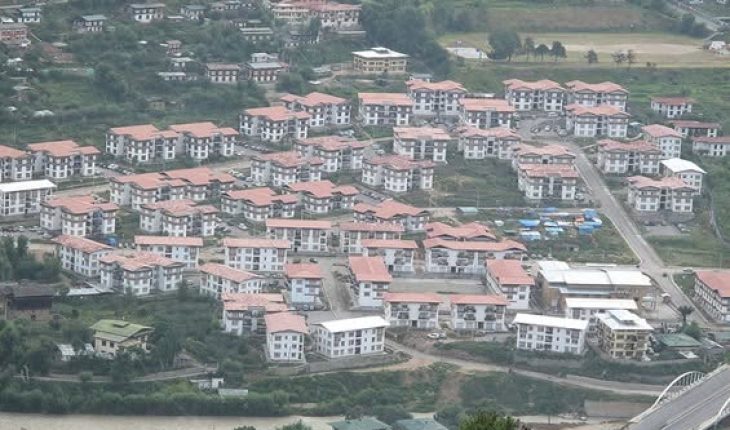
The National Housing Development Corporation Limited (NHDCL) says more than 2,170 applicants are currently on its waiting list for housing across Thimphu, Phuentsholing and Samdrup Jongkhar, with about 60 percent of the total demand concentrated in Thimphu.
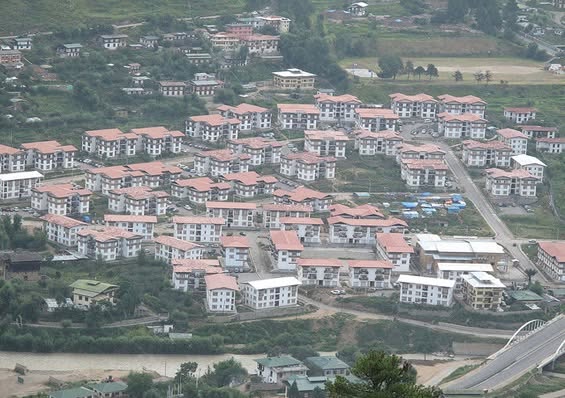
Against this demand, NHDCL currently manages 1,326 housing units in Thimphu, 599 in Phuentsholing and 221 in Samdrup Jongkhar.
The gap between the number of people seeking housing and the available units highlights the scale of the country’s affordable housing challenge.
NHDCL CEO Rinchen Wangdi said the demand for affordable housing remains particularly high in the three major urban centres, while one of the biggest constraints is limited participation from private developers.
“Greater participation from the private sector, complemented by appropriate government support and enabling policies, will therefore be essential to address the growing demand for affordable housing sustainably,” he said.
While NHDCL continues to expand its affordable housing stock, he said the scale of demand and financial constraints associated with housing development limit how much the corporation can address on its own.
For residents, the consequences of the shortage are reflected in the amount of income spent on rent and the compromises households make to manage other expenses.
For 24-year-old Kinga Lhamo, who earns Nu 15,000 a month, rent consumes almost half of her monthly income.
“I earn Nu 15,000 a month, but almost half of my salary goes towards rent. Even a basic room in Thimphu is very expensive,” she said.
After paying for rent, food, transportation and other daily expenses, she said there is little left to save. At times, she said, her income is not enough to cover her monthly expenses, forcing her to borrow money.
“When the next month comes, the debt adds to our financial burden, leaving us with even less money,” she said.
The financial pressure has also affected her ability to support her family. She said she is unable to send money home and is struggling to manage amid rising living costs.
For families, the pressure can be even greater as housing expenses compete with education, food and utility bills.
Ngawang Dorji, 34, lives with his family of four in a two-bedroom apartment. A significant portion of the family’s monthly income goes towards rent, while they also have to meet expenses for food, children’s education, electricity and other necessities.
“Sometimes we have to cut down on other things because rent has to be paid first,” he said.
The family has considered moving to a cheaper home, but affordability is not the only consideration. He said cheaper houses are often located farther from schools and workplaces, making relocation difficult.
“For families like ours, affordable housing would make a big difference,” he said.
The situation is also affecting young people who are entering the workforce.
Pemo, 23, recently graduated and started working. With a relatively low starting income, renting a place alone is beyond his means, leaving him to share accommodation with friends.
Sharing accommodation helps reduce the financial burden because the rent can be divided among several people. However, Pemo said the arrangement comes with a cost to privacy and comfort.
“When our families come to visit, we cannot accommodate them because there is simply not enough space,” she said.
For young workers earning lower salaries, she said spending Nu 8,000 or Nu 10,000 on a room alone is difficult.
“Many young people are facing the same situation. We are not asking for free housing; we just need affordable housing that is within the means of what we earn,” she said.
Another resident, Tandin Wangchuk, 42, said housing remains one of his biggest financial concerns because of his limited income.
He said he sometimes finds houses that are suitable for his family but cannot afford the rent. When rents increase, he said, moving to another place is not always a practical solution because finding an alternative affordable home is difficult.
Tandin Wangchuk is hoping to secure affordable housing through NHDCL, where he expects the rent to be more manageable, although he said the waiting period is long.
“I hope more units will be built for people with lower incomes,” he said.
NHDCL currently provides its housing units on a rental basis across 16 dzongkhags. According to the corporation, rental rates for units under the Affordable Housing Category are generally set around 20 to 30 percent below prevailing market rates.
NHDCL also seeks to maintain rental affordability in line with an internationally recognised benchmark that housing costs should not exceed 30 percent of a household’s income.
However, expanding the supply of such housing remains a major challenge.
Rinchen Wangdi said NHDCL has limited opportunities to mobilise financing from the open market, while high upfront capital requirements and increasing construction costs constrain its ability to undertake large-scale projects.
Under the current financing conditions, he said rental income alone is generally insufficient to service the debt associated with large affordable housing developments.
“Without appropriate government support, particularly in the form of subsidies or other concessional financing mechanisms, it would be practically difficult for NHDCL to undertake large-scale affordable housing projects on a financially sustainable basis,” he said.
Despite these constraints, NHDCL is currently implementing what it describes as one of the largest affordable housing programmes in the country.
Approximately 857 housing units are under construction through the Asian Development Bank-funded Green and Resilient Affordable Housing Sector Project and the Inclusive and Resilient Urban Development Project.
The projects are expected to increase the availability of affordable housing in the major urban centres and directly benefit low- and middle-income households once completed.
For people currently struggling with high rents, however, the demand remains immediate.
The experience of young workers, families and low-income earners show that the housing shortin the country has as is not simply about the availability of buildings. It affects how people manage their income, whether they can save or support their families, where they can live in relation to their workplaces and schools, and the degree of privacy and comfort they can maintain.
With more than 2,170 applicants waiting for housing across the three major urban centres, the pressure on the affordable housing sector remains significant.
For NHDCL, increasing supply will require greater private-sector participation alongside government support and financing mechanisms. For residents, the hope is that more affordable units will become available before rising rents and living costs place an even greater strain on household incomes.