TIL BDR GHALLEY | Thimphu
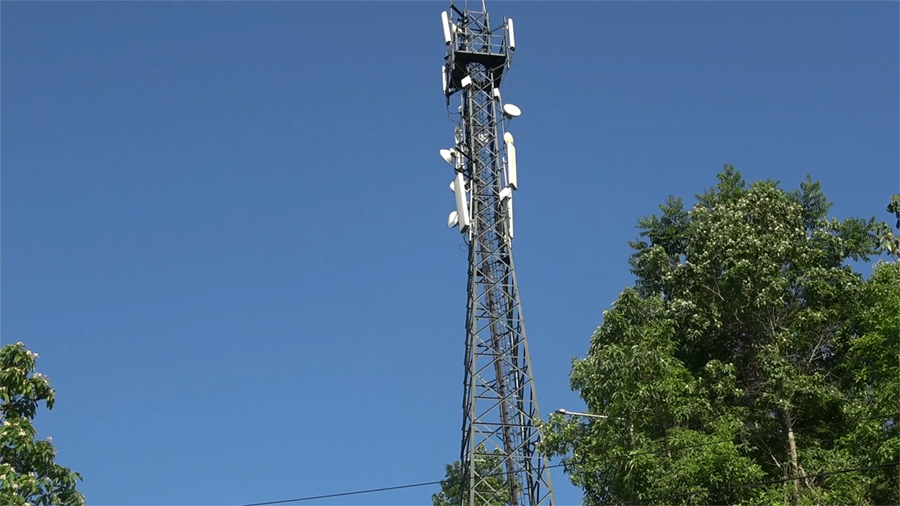
Despite expanding mobile network access to more than 850 villages across the country, unreliable connections, poor service quality and expensive mobile data continue to affect rural communities, raising questions about whether expanded coverage is translating into reliable and affordable connectivity.
Having a mobile signal or access to the internet is no longer enough to define connectivity, the Minister for Industry, Commerce and Employment, Lyonpo Namgyal Dorji, said. Connectivity today also means having seamless access to digital services, including being able to stream videos on platforms such as YouTube without interruptions.
The issue was raised during the 38th sitting of the National Assembly by Dorji Wangmo, Member of Parliament for Kengkhar-Weringla constituency, who questioned the minister on measures being taken to address persistent connectivity problems in rural communities.
During a recent constituency visit, Dorji Wangmo said residents in several villages reported weak mobile reception, frequent disruptions and, in some areas, a complete absence of network coverage. Even basic telephone calls and SMS services remained unreliable in some communities, while connectivity had deteriorated in areas where services had previously been stable.
She said the problems affected people’s access to public services, education, livelihood opportunities and emergency assistance.
“What specific measures is the Ministry taking, or planning to take, and within what timeframe, to address these connectivity problems and ensure reliable mobile network coverage in these underserved communities?” she asked.
Responding, Lyonpo Namgyal Dorji said the Government was addressing the gaps through successive phases of the Rural Connectivity Programme (RCP), with the focus increasingly shifting from expanding geographical coverage to improving the quality of existing services.
He said more than 850 villages across all 20 dzongkhags had access to 2G and 4G services. However, some remote highland settlements and technically difficult locations remained challenging to connect because of the high cost of infrastructure and the small number of households to be served.
The minister said the Bhutan InfoComm and Media Authority (BICMA), in collaboration with local governments, had conducted assessments to identify areas requiring network expansion and those experiencing poor service quality. They focused on identifying two categories of problems: places without mobile network coverage and areas where existing networks were not providing reliable services.
They have also done assessments of five dzongkhagsLhuentse, Samtse, Samdrupjongkhar, Trashiyangtse and Mongar.
Based on the assessment, 26 gewogs and around 40 villages have been identified for intervention under Phase VIII and its supplementary component, according to the minister.
Minister said around 400 million has allocatedfor implementing Phase VIII in Lhuentse, Samdrupjongkhar, Mongar, Trashiyangtse and Samtse.
The Rural Connectivity Programme is primarily financed through the Universal Service Fund, managed by BICMA. The fund receives an annual contribution equivalent to four percent of the revenue of the country’s two telecom operators, Bhutan Telecom and TashiCell, to support services in underserved areas.
The affordability and quality of mobile internet services also featured in the parliamentary discussion. Kinzang Wangchuk, Member of Parliament for Dramedtse-Ngatshang constituency, raised concerns about the need to upgrade SIM cards from 2G and 3G to 4G as mobile networks and devices advance. He questioned who was responsible for ensuring that users could upgrade their SIM cards, noting that some people faced difficulties accessing newer network services.
Concerns were also raised about increasing data consumption and the cost of accessing online services, including difficulties faced by users who need to make digital payments.
The Government is meanwhile pursuing a proposed 50 percent reduction in mobile data tariffs. BICMA completed a mobile costing study and submitted its final report and recommendations to the Ministry of Industry, Commerce and Employment on October 2, 2026.
The study examined the costs of providing mobile services, consumer affordability, investment requirements and the financial sustainability of Bhutan Telecom and TashiCell. Based on the findings, the ministry is expected to submit recommendations to the Cabinet on the proposed tariff reduction. The revised rates for individual packages and the implementation timeline have yet to be announced.
The study found that data traffic on Bhutan Telecom’s B-Mobile network increased from about 13,500 terabytes in 2018 to nearly 119,000 terabytes in 2025. TashiCell’s data traffic also rose from approximately 5,700 terabytes to more than 43,500 terabytes over the same period.
The growth in data traffic has progressively lowered the underlying cost of delivering each gigabyte, according to the study. However, the estimated costs differ between the two operators. For Bhutan Telecom, the model estimated a cost of Nu 46 per GB based on the 2025 cost base and Nu 36 for 2026. TashiCell’s corresponding estimates were Nu 77 and Nu 63.
BICMA’s published prepaid tariff schedule shows that Bhutan Telecom’s Nu 99 monthly package provides 1,330 MB of data, while its Nu 499 package offers 8,499.2 MB, or approximately 8.5 GB, valid for 30 days. The proposed 50 percent reduction in mobile data tariffs is expected to make internet access more affordable, although the revised tariff structure and implementation timeline are yet to be announced.
The parliamentary discussion highlights that expanding network coverage alone will not resolve the country’s connectivity challenges. For rural communities to benefit fully from digital public services, online education and economic opportunities, network expansion must go hand in hand with reliable signals, better service quality and affordable data.