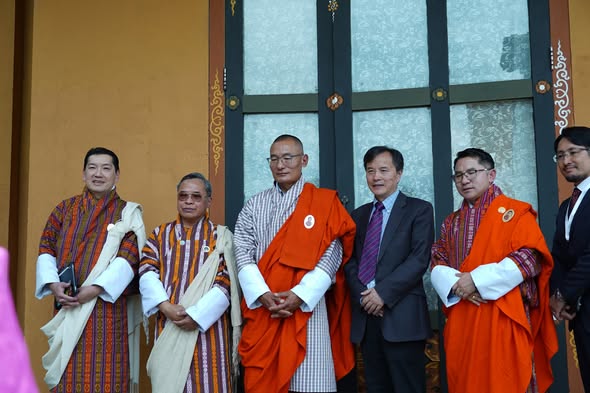
DAWA ZANGMO | Thimphu
Bhutan secured major investment commitments and strategic partnerships worth billions of ngultrums as the Bhutan Agrifood Trade and Investment Forum (BATIF) 2.0 opened in Thimphu on 21 to 22, marking a major push to transform the country’s agrifood sector through private sector participation and international collaboration.
The two-day forum, organised by the Ministry of Agriculture and Livestock (MoAL) in partnership with the Food and Agriculture Organization of the United Nations (FAO), the Asian Development Bank (ADB), and the European Union, brought together international investors, agribusiness leaders, development finance institutions, financial institutions and Bhutanese enterprises to accelerate investment in Bhutan’s agrifood sector.
Five major partnerships are expected to be formalized during the event through Memorandum of Understanding (MoUs), focusing on investment mobilisation, technology transfer and market expansion.
Among the largest commitments announced is a partnership between Advance Agarwood and Dheyma Harvest aimed at strengthening Bhutan’s vegetable supply chain and expanding market access over the next 10 years.
The Asian Development Bank committed USD 2 million in catalytic financing support to the Bhutan AgriSustain Fund (BAF), launched last year to accelerate agrifood transformation initiatives.
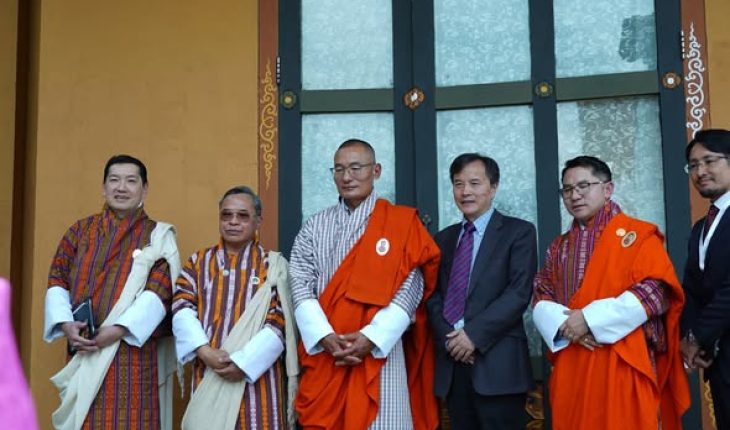
Prime Minister Tshering Tobgay, who attended the opening as chief guest, said BATIF 2.0 reflected a shift from discussions on possibilities to concrete implementation for farmers.
“Earlier, we questioned whether Bhutan’s agrifood sector could become more dynamic and transformational,” PM said. “Today, those questions have already been answered. BATIF is no longer about possibilities, but about executing actionable projects for our farmers.”
The PM described agriculture as central to Bhutan’s economy, culture and identity, adding that Bhutan offers investors a transparent government and a development philosophy rooted in sustainability and long-term trust.
PM also underscored the importance of translating investment commitments into actionable projects that directly benefit farmers. He emphasised that agriculture is not only a means of livelihood but a cultural cornerstone of Bhutan’s rural economy, and called on investors to support initiatives engaging youth, women, and highland communities.
The PM extended an invitation to global investors and partners to bring patient capital into Bhutan, highlighting the launch of a USD 15 million Agri-Sustain Fund dedicated to supporting grassroots farmers.
BATIF 2.0 is designed to be more than just a conference; it is a dynamic marketplace of ideas and a vital bridge connecting local farmers to international markets.
Agriculture and Livestock Minister Younten Phuntsho said BATIF 2.0 represented a move towards implementation-focused partnerships capable of creating visible impact on the ground.
“The BATIF 2.0 forum is not merely about discussions, but about building partnerships that can deliver tangible change on the ground,” the minister said.
He said Bhutan had invested heavily over the past two years in strengthening agricultural infrastructure and production systems, including irrigation systems, farm mechanisation, cold storage facilities, processing units, branding, marketing and market infrastructure, while also promoting high-value commodities and connecting entrepreneurs to regional and international markets.
However, the minister warned that government efforts alone would not be sufficient to transform the sector.
“We are at a critical juncture, facing challenges such as ageing farmers, youth migration, climate change and natural disasters,” he said. “We cannot afford to move slowly.”
He added that investments must directly improve livelihoods and create jobs for farmers so they could experience meaningful economic transformation.
ADB Vice-President for Market Solutions Bhargav Dasgupta said Bhutan’s development model was attracting growing international attention because of its emphasis on sustainability and nature-positive growth.
“Bhutan’s development agenda is not driven by economic growth alone,” he said. “It is guided by a broader national vision that combines private sector-led economic transformation, knowledge and innovation while continuing to champion environmental sustainability.”
According to him, agriculture remains central to Bhutan’s economy and stronger private sector participation and foreign investment would be critical in unlocking sustainable growth opportunities.
Agriculture Organization of the United Nations (FAO) Assistant Director-General and Regional Representative for Asia and the Pacific, Mr Alue Dohong, reaffirmed FAO’s commitment to Bhutan’s agrifood transformation. “BATIF 2.0 demonstrates what is possible when governments, development partners, and the private sector align around a shared vision. FAO is proud to stand alongside Bhutan in translating this vision into real and lasting impact for farmers, rural communities, and future generations.”
Officials from the MoAL said BATIF 2.0 has evolved beyond a dialogue platform into an implementation-oriented investment forum that has already facilitated multiple MoUs, Expressions of Interest and financing partnerships aimed at mobilising capital, promoting technology transfer and improving market access for Bhutan’s sustainable agrifood sector.
Official from ministry stated that the forum created opportunities for investors, agribusinesses and farmers through structured business to business engagements, investment pitching sessions and direct policy dialogue, helping strengthen climate resilient value chains and improve access to finance and technology.
A participant at BATIF 2.0, Wangay of RawBee Agricultural Farming in Samdrupcholing, Samdrup Jongkhar, said Bhutan’s agrifood transformation presents major opportunities for the private sector, particularly in exporting premium organic and sustainable products by leveraging “Brand Bhutan” and the country’s carbon-negative identity in high-value international markets such as the European Union, Singapore and Japan.
Wangay also said platforms like BATIF 2.0 are crucial in connecting businesses with investors, policymakers and development partners, helping transform agricultural ideas into investment-ready projects while promoting supportive policies, financing opportunities and stronger public-private collaboration.
The MoAL expects BATIF 2.0 to mobilise between USD 15 million and USD 20 million in investment commitments for priority agrifood projects and formalise at least three Letters of Intent or MoUs involving government agencies, investors, financial institutions and private sector actors.
The forum was hosted by the Ministry of Agriculture and Livestock in partnership with FAO, ADB, and the European Union.