
KINLEY KHANDU CH0DEN | Thimphu
The Ministry of Education and Skills Development (MoESD) has intensified efforts to address school dropouts and non-enrolment, with poverty, family migration, household responsibilities, distance from schools and learning difficulties identified as some of the key factors affecting children’s participation in education.
The issue of children dropping out of school and those who have never enrolled came under scrutiny following findings from a 2017 study by the Ministry, which showed a high proportion of six- and seven-year-old children had never attended school.
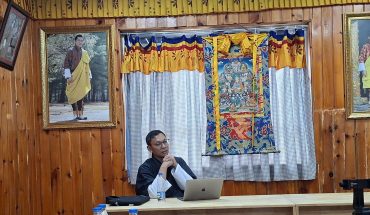
Responding to concerns over whether the Ministry had conducted any assessment to understand the reasons behind school dropout and non-enrolment, MoESDMinister Lyonpo Yeezang De Thapa during meet the press session on 7 Augustsaid a detailed study was conducted in 2018.
“To better understand the issue of school dropout and non-enrolment, the Ministry conducted the Study on Dropout, Repetition and Children Who Have Never Attended School in Bhutan (2018), building on earlier findings from 2017,” Lyonpo said.
The study found that children leave school or fail to enrol for a number of reasons rather than one particular factor.
Poverty, family migration and household obligations were among the major challenges identified. Geographical barriers, including long distances between homes and schools, were also found to affect access to education.
The study also highlighted individual challenges, including disabilities and special educational needs, as well as limited parental awareness, academic difficulties and psychosocial challenges.
The minister said the MoESD continues to monitor these issues through regular assessments conducted at the school level.
“The Ministry continues to monitor these issues through regular school-level assessments to support evidence-based planning and policy decisions,” she said.
The Ministry has introduced several interventions to increase enrolment and prevent students from leaving school.
Among the measures is the expansion of Early Childhood Care and Development (ECCD) services. There are currently 640 ECCD centres across the country.
The Ministry has also strengthened inclusive education programmes for children with disabilities and special educational needs to ensure they are not excluded from the education system.
School feeding programmes have also been expanded to support children, particularly those from vulnerable households.
“School feeding programmes have also been expanded, currently benefiting 31,579 students across 335 schools,” Lyonpo said.
The Ministry has also improved boarding facilities and introduced targeted support for vulnerable learners.
For students facing academic, social or personal difficulties, school guidance and counselling services have been strengthened. The Ministry has also enhanced monitoring systems to identify students who may be at risk of dropping out.
According to the Ministry, early identification of students at risk is important in allowing schools and relevant authorities to provide support before students completely disengage from education.
However, the government is also looking beyond the formal school system to support those who have already dropped out.
Flexible learning opportunities through Non-Formal Education (NFE) and Community Learning Centres (CLCs) have been expanded to allow young people and other learners to continue their education outside the conventional school system.
“To provide alternative learning opportunities, flexible pathways such as Non-Formal Education (NFE) and Community Learning Centers (CLCs) have been expanded. Currently, 277 centers serve 2,402 learners, including youth, enabling them to re-engage in education,” Lyonpo said.
The programmes provide an opportunity for those who have left school to re-engage with learning and acquire skills that can support their future.
At the policy level, the government has also strengthened its commitment to improving access to education through the National Education Policy 2025.
The policy provides a framework for transforming the education system, with a focus on equitable access to quality education, inclusive and lifelong learning, early childhood education, learner wellbeing and teacher quality.
It also promotes flexible learning pathways to ensure that learners who are unable to follow the traditional education system are not left behind.
The National Education Policy is supported by the 13th Five-Year Plan and annual Education Policy Guidelines and Instructions (EPGIs).
The government is also pursuing reforms such as curriculum alignment with international standards, digital transformation and increased education financing to improve student participation and learning outcomes.
Despite these interventions, the Ministry acknowledges that challenges continue to affect school enrolment and retention.
The reasons for dropout can vary depending on a child’s family circumstances, economic situation, location and individual needs. This makes it important for interventions to be targeted according to the needs of individual students and communities.
“The Ministry recognises that ensuring every child is enrolled in school, remains engaged and completes a quality education is a national priority,” she said.
Bhutan has made significant progress in expanding access to education over the years. However, ensuring that access translates into continued attendance and completion remains a challenge.
The Ministry has therefore stressed the need for cooperation among schools, families, communities, local governments and development partners.
While Bhutan has made significant progress in improving access to education, the Ministry acknowledges that challenges persist.
“We remain committed to working closely with schools, communities, local governments and development partners to ensure that every child has equitable access to quality education for a better future.” Lyonpo said.
With interventions ranging from ECCD expansion and school feeding to boarding facilities, inclusive education, counselling and alternative learning programmes, the government is attempting to address both the causes and consequences of school dropout.
However, the continued monitoring of children who are out of school, particularly those affected by poverty, family circumstances, disabilities and geographical barriers, will remain crucial to ensuring that no child is left behind.