DAWA ZANGMO | Thimphu
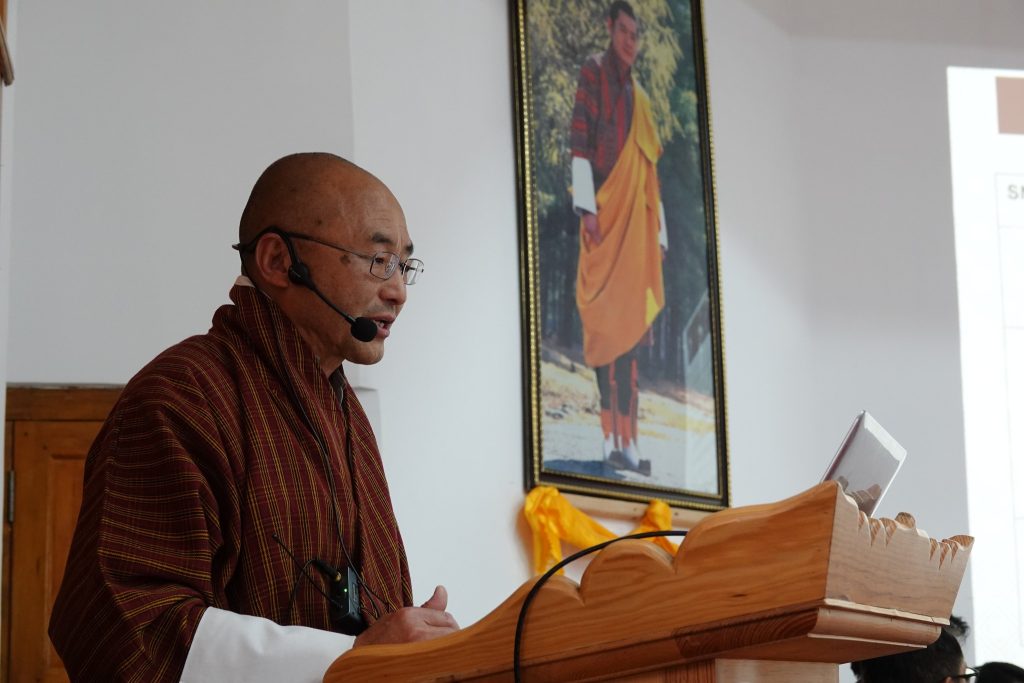
The Jigme Singye Wangchuck School of Law (JSW Law) delivered a detailed presentation of its institutional performance during the Mid-Term Review (MTR) for Central Agencies held on 22 April, highlighting both its accomplishments and areas requiring improvement.
The review, presented before Prime Minister Tshering Tobgay, examined a range of indicators, including key performance benchmarks, institutional developments, financial utilisation, and emerging operational challenges confronting the institution.
Among the notable achievements, the law school reported that all its graduates secured employment within one year of completion, successfully meeting its target of 100 percent employability.
The institution also confirmed that all academic courses have transitioned to blended learning formats, integrating both in-person and digital teaching methods.
In addition, JSW Law introduced three new academic programmes designed to align with the evolving demands of a modern, 21st-century economy.
The institution further achieved its targets in establishing collaborations with partner universities and international organisations, thereby strengthening its global academic engagement.
Despite these gains, the review identified several areas where targets were not fully met.
Faculty qualification levels reached 82 percent, falling short of the intended 100 percent benchmark. Similarly, staff job satisfaction was recorded at 78 percent, below the target of 85 percent.
Participation in professional development programmes also lagged behind expectations, with only 65 percent engagement.
Infrastructure development was reported to be 70 percent complete, while the establishment of academic centres reached three, against an initial target of five.
In terms of institutional progress, the school secured two scholarships for advanced legal studies at leading international universities, marking a step forward in strengthening human resource capacity.
Infrastructure expansion continued with the inauguration of a new residential facility for LLM students in August 2025, alongside the commencement of construction for a major academic building aimed at enhancing teaching, research, and overall institutional capacity.
Curriculum development remained a key focus, with the introduction of a graduate programme in International Climate Change and Environmental Law.
This initiative was complemented by ongoing reviews of existing courses, ensuring their continued relevance, while maintaining strong outcomes in graduate employability.
Efforts to enhance student welfare were also highlighted, including the establishment of a dedicated wellbeing centre in August 2024.
The facility is designed to support mental health and provide student services aimed at improving overall campus wellbeing.
The institution also achieved A+ accreditation, a milestone expected to strengthen its academic reputation and open further opportunities for collaboration and increased student enrolment.
Research and scholarly engagement were advanced through the organisation of international events such as the GNH and Law conference and the Paro Forum.
Additionally, the establishment of the Wisdom Centre for Justice in 2025 marked further progress in delivering specialised legal services and advancing institutional expertise.
On the financial front, JSW Law reported an expenditure of Nu 332.927 million, representing 28.7 percent of the approved outlay and 72.96 percent of the allocated budget.
The institution proposed revisions to its financial allocations, including the reallocation of funds from staff capacity development towards infrastructure projects to support ongoing construction activities.
The review also highlighted several challenges facing the institution, particularly the shortage of specialised faculty in emerging fields of law. Difficulties in attracting and retaining qualified professionals were identified as ongoing concerns.
Recommendations put forward during the review included the engagement of international experts, strengthening capacity-building initiatives, and enhancing recognition and incentive mechanisms for high-performing staff.
Concerns were also raised regarding discrepancies in reported financial outlays, which were attributed to allocations associated with other agencies within the justice sector.
PM Tshering Tobgay acknowledged the progress made by the institution and expressed support for further strengthening its capacity.
He emphasised the importance of enhancing the quality of education, expanding partnerships, increasing funding, and improving the environmental sustainability of the campus. The MTR provided a comprehensive assessment of JSW Law’s current standing, underscoring both its achievements and the strategic areas requiring attention as it continues to develop as a centre for legal education and research.