NGAWANG JAMPHEL| Thimphu
Bhutan’s public debt has climbed to 90.6 percent of the country’s Gross Domestic Product (GDP), raising concerns in the National Assembly over foreign exchange risks and the long-term sustainability of external borrowing.
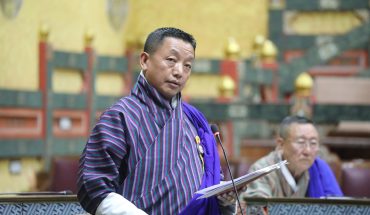
The issue was raised by the Gangzur–Minjey MP, Loday Tsheten, who cautioned that Bhutan’s growing exposure to external debt—particularly loans denominated in convertible currencies—could increase repayment pressures amid global currency fluctuations.
According to the latest Debt Situation Report presented in Parliament, total public debt stood at Nu 306.3 billion as of 31 March 2026. Of this, Nu 285.2 billion is external debt, underlining Bhutan’s continued reliance on foreign financing for development needs.
The report shows that hydropower-related borrowing accounts for 58.3 percent of external debt, while the remaining 41.7 percent is non-hydropower debt. Lawmakers noted that this portion carries higher risk due to its exposure to currencies such as the US dollar.
Much of the non-hydropower external borrowing, the MP pointed out, comes from multilateral institutions such as the World Bank and the Asian Development Bank and is denominated in US dollars or Special Drawing Rights (SDR)-linked currencies.
“This exposes Bhutan to global exchange rate fluctuations and creates repayment uncertainties over the long term,” the MP noted during the session, adding that the country’s currency peg with the Indian Rupee also indirectly transmits the impact of US dollar appreciation.
He questioned the finance minister on whether it had assessed the impact of potential Indian Rupee depreciation, conducted stress tests on debt sustainability, and put in place hedging mechanisms to manage foreign exchange risk.
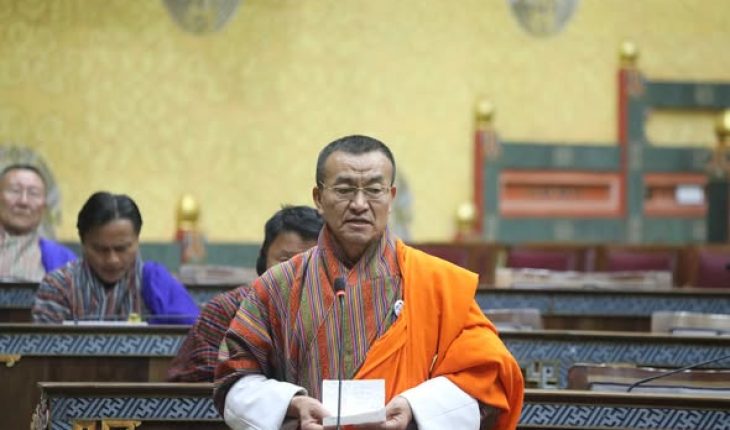
Responding to the concerns, Finance Minister Lekey Dorji said Bhutan’s borrowing structure remains largely concessional and aligned with national development priorities.
“Bhutan’s external debt portfolio continues to be dominated by concessional borrowings aimed at supporting socio-economic development priorities,” said Lyonpo Lekey Dorji.
He, however, acknowledged emerging risks linked to currency exposure, stating, “While the existing debt management framework remains sound, the growing share of debt denominated in convertible currencies requires close monitoring, especially given global exchange rate volatility and Bhutan’s currency peg to the Indian Rupee.”
The minister also highlighted ongoing efforts to strengthen oversight and risk management systems within the Ministry of Finance.
“The Ministry is strengthening its debt management and risk assessment practices to ensure that potential foreign exchange exposures and repayment risks are carefully monitored and managed in a fiscally sustainable manner,” he said.
Providing updated figures, Lyonpo Lekey Dorji informed the House that Bhutan’s convertible currency debt currently stands at Nu 98,269.962 million, of which Nu 91,875.469 million relates to non-hydropower external borrowing. A significant portion, he said, is owed to institutions such as the World Bank and the Asian Development Bank.
He further said that regular monitoring mechanisms are already in place. “The ministry regularly carries out Debt Sustainability Analyses both internally and in collaboration with international institutions such as the IMF and the World Bank,” he stated.
“These assessments include various risk indicators, including exchange rate and currency-related risks,” he added, noting that quarterly reviews are also conducted to track developments in the debt portfolio.
On exchange rate concerns, particularly INR depreciation against the US dollar, the finance minister said scenario-based projections are conducted internally for policy purposes.
“The ministry undertakes scenario-based analyses and repayment projections using different exchange rate assumptions for internal policy and risk management purposes,” he explained.
However, he noted that detailed breakdowns are not made public due to their sensitivity. “Detailed scenario estimates and repayment sensitivities could affect the government’s position in ongoing and future negotiations with hedge and guarantee providers,” he said.
The minister also confirmed that Bhutan is exploring financial risk management tools. “The Ministry is already engaging with hedge and swap providers at the technical level to explore possible hedging transactions,” Lyonpo said.
He added that the government is also assessing the institutional and operational frameworks required for such instruments, noting that “any hedging arrangements would likely involve proxy currencies.”
Lyonpo Lekey Dorji further informed that Bhutan has begun contracting new loans from institutions such as the International Bank for Reconstruction and Development and the International Finance Corporation, with provisions that include cross-currency swap options.
Concluding his remarks, the finance minister reiterated the government’s commitment to financial stability, stating that while debt remains manageable under concessional terms, “the government is committed to strengthening financial resilience and ensuring long-term debt sustainability through improved risk management frameworks and cautious external borrowing practices.”